






Definition and Meaning of Bailment Agreement
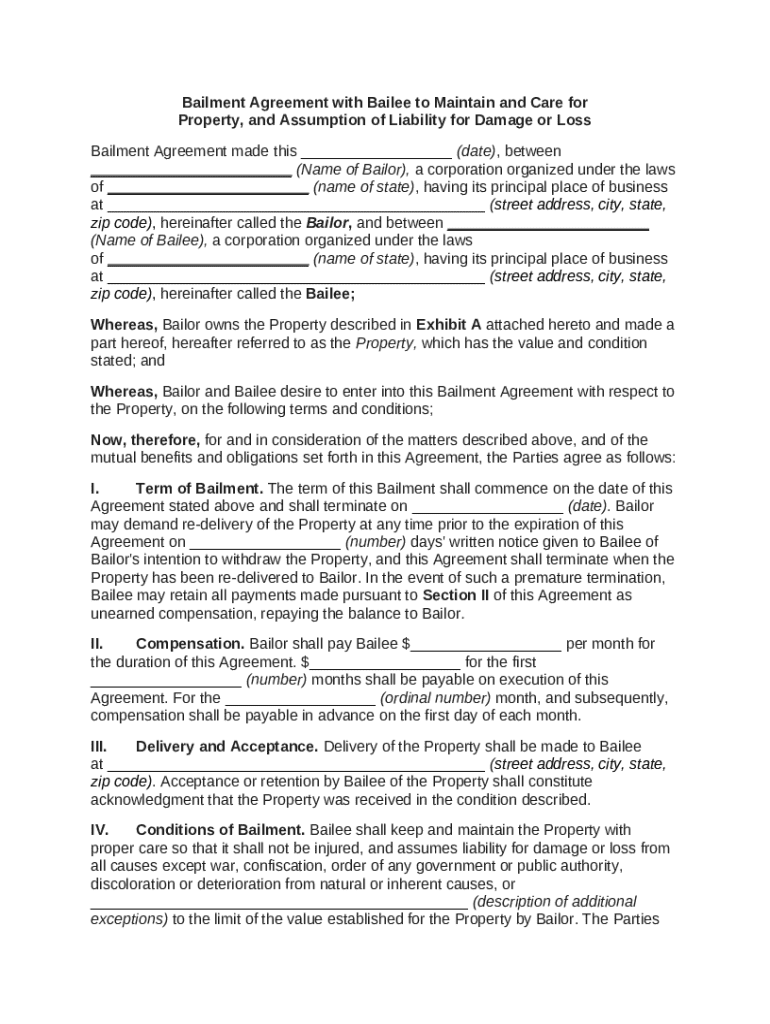
A Bailment Agreement is a legal contract between two parties, known as the bailor and the bailee. The bailor is the person or entity that owns the property, while the bailee is the one who temporarily takes possession of the property. The agreement outlines the terms under which the bailee will hold, care for, and possibly use the bailor's property. This contract is essential for ensuring both parties clearly understand their responsibilities, especially concerning property maintenance, compensation, and liability.
Real-World Examples
- Car Repair Services: A customer leaves their car with a service provider for repairs. The customer is the bailor, and the service provider is the bailee.
- Storage Rentals: A person storing furniture in a rented storage unit entrusts the facility as the bailee while they remain the bailor.
- Equipment Leasing: Companies often lease machines or tools to contractors, where the agreement dictates how these items should be used and maintained.
How to Use a Bailment Agreement
To effectively use a Bailment Agreement, both parties should carefully draft and review the document to ensure all stipulations are clearly understood and agreed upon. Begin by identifying the involved parties and describing the property in detail. Next, outline the duration of the bailment, compensation terms, and specific responsibilities of each party. An agreement should also cover conditions under which the property can be used, the process for returning the property, and liability clauses for potential damages or losses.
Important Considerations
- Condition Assessment: Include a clause for assessing the property's condition before and after the bailment period.
- Insurance Requirements: Specify whether the bailee needs to insure the property during bailment.
- Dispute Resolution: Incorporate a clear process for resolving potential disputes, including arbitration agreements if necessary.
Steps to Complete the Bailment Agreement
- Identify the Parties: Clearly state the full legal names and contact details of the bailor and bailee.
- Describe the Property: Provide a detailed description of the item(s) being bailed, including any identifiable markings or serial numbers.
- Set Timeframe: Agree on the start and end dates of the bailment period, as well as conditions for extension, if applicable.
- Determine Compensation: Clearly state any fees or compensation due to the bailee, including payment terms.
- Outline Responsibilities: Detail the duties each party holds regarding the care and maintenance of the property.
- Specify Liability Terms: Clarify responsibilities for damages, loss, or theft of the property during the bailment period.
- Include Legal Provisions: Add relevant legal clauses on governing law and dispute resolution methods.
Additional Steps
- Review the Document: Both parties should review the agreement, preferably with legal counsel, to ensure understanding and legality.
- Sign and Date: The agreement must be signed and dated by both parties to be enforceable.
- Store Safely: Keep both physical and digital copies securely for future reference.
Key Elements of the Bailment Agreement
Understanding the critical components of a Bailment Agreement helps in executing a watertight contract:
- Identification of Parties: Essential to establish legal identity and responsibility.
- Property Description: Critical for avoiding ambiguities related to what property is being bailed.
- Duration and Timing: Key for establishing the timeline over which responsibility is transferred.
- Duty of Care: Details the expectations for property maintenance and usage.
- Compensation Scheme: Outlines any payments owed for the bailment service.
- Risk and Liability: Specifies who bears the risk for unforeseen circumstances, such as property damage or loss.
- Termination Conditions: Guides the process for ending the agreement amicably.
Legal Use of the Bailment Agreement
A Bailment Agreement serves various legal purposes that protect both parties involved. It creates a legal obligation for the bailee to care for the property and outlines what constitutes a breach of contract. In disputes, courts often refer to the terms outlined in the agreement to decide on matters concerning negligence or default.
Legal Obligations
- Standard of Care: The bailee is legally required to exercise a reasonable standard of care for the property while in their possession.
- Duty to Return: The bailee must return the property in its original condition (barring regular wear and tear) once the agreement period ends.
- Scope of Use: Any unauthorized use by the bailee can result in legal action for breach of contract.
Important Terms Related to Bailment Agreement
Familiarity with key legal terms in a Bailment Agreement is crucial:
- Bailor: The party that owns and bails out the property.
- Bailee: The party receiving the property for the agreed purpose.
- Gratuitous Bailment: When the bailment arrangement involves no compensation.
- Mutual Benefit Bailment: Where both parties receive some benefit, often involving compensation.
- Constructive Bailment: Occurs without an express agreement, based on circumstances or actions.
Practical Implications
Understanding these terms aids in drafting a comprehensive Bailment Agreement that minimizes potential conflicts and clarifies responsibilities.
Why Should You Use a Bailment Agreement
A Bailment Agreement is an essential document for protecting the rights and obligations of both the bailor and the bailee. It ensures a mutual understanding of responsibilities, helps prevent disputes, and provides recourse options if issues arise. The agreement legally binds both parties to the terms, offering security and clarity regarding the handling and return of the property.
Benefits
- Reduced Legal Risks: A formalized agreement helps avert misunderstandings and potential legal issues.
- Clarity and Transparency: Clearly establishes expectations and responsibilities from the outset.
- Dispute Resolution: Offers predetermined solutions for common issues.
State-Specific Rules for the Bailment Agreement
Legal requirements for Bailment Agreements can vary across different states in the U.S., necessitating familiarity with local laws. State-specific legislation may impact elements such as liability, standard of care, and allowable terms related to compensation. Researching local statutes ensures compliance and protects both parties' interests.
Key Differences
- Liability Laws: Some states have unique stipulations on liability for damage or loss.
- Consumer Protection: State laws may dictate additional consumer protection measures.
- Specific Clauses: Certain states might require specific clauses or disclaimers for the agreement to be valid.