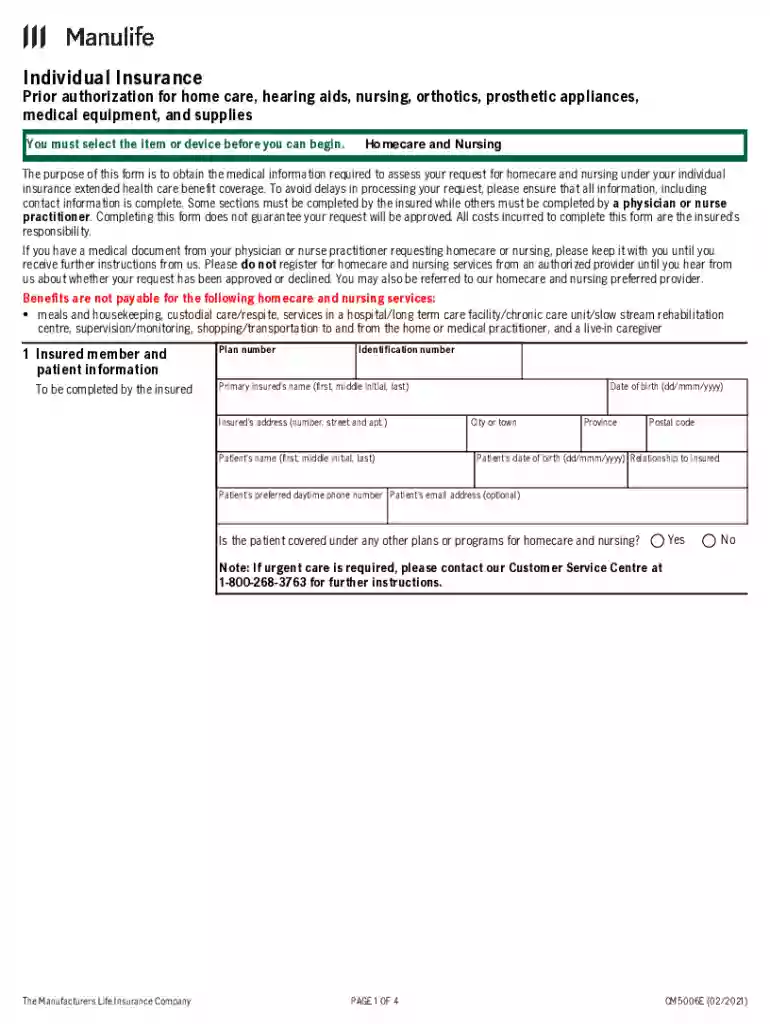
Prior authorization for home care, hearing aids, nursing, orthotics, prosthetic appliances, medical 2026

Get Form
Prior authorization for home care, hearing aids, nursing, orthotics, prosthetic appliances, medical  Preview on Page 1

Here's how it works

01. Edit your form online
Type text, add images, blackout confidential details, add comments, highlights and more.

02. Sign it in a few clicks
Draw your signature, type it, upload its image, or use your mobile device as a signature pad.

03. Share your form with others
Send it via email, link, or fax. You can also download it, export it or print it out.

Definition and Meaning

Prior authorization is a health insurance process that requires approval from a health insurance company before a treatment, procedure, or service is provided. This approval is typically needed for home care services, hearing aids, nursing, orthotics, prosthetic appliances, and other medical devices. The purpose is to ensure that the service or equipment is medically necessary and covered under the patient's insurance policy.

Importance of Prior Authorization

  • Ensures medical necessity: Insurance companies confirm that the proposed treatment aligns with their standards for necessity.
  • Controls costs: Minimizes unnecessary spending on unproven or costly procedures.
  • Manages patient care: Encourages the use of preferred providers or treatments.

How to Obtain Prior Authorization

Obtaining prior authorization for medical services or equipment typically involves several steps and requires coordination between the patient, healthcare provider, and insurance company.

Steps to Secure Authorization

  1. Consultation with Healthcare Provider: Discuss the need for specific services or equipment with your doctor.
  2. Submission of Request: Your healthcare provider submits the necessary paperwork to the insurance company, detailing why the service or equipment is necessary.
  3. Insurance Review: The insurance company reviews the request against predefined criteria.
  4. Notification of Decision: The insurance company informs the provider and the patient of its decision. If approved, services can be scheduled; if denied, an appeal can be initiated.

Key Elements of the Form

When completing a prior authorization form, it is crucial to provide comprehensive and accurate information.

Critical Information Required

  • Patient Information: Full name, insurance ID number, and contact details.
  • Provider Details: Name of the physician or service provider and their contact information.
  • Treatment Details: Precise description of services, procedures, or equipment being requested.
  • Medical Justification: Documentation from the provider explaining the medical necessity.

Required Documents

Certain documents must accompany the prior authorization form to support the request.

Necessary Documentation Includes:

  • Medical records and physician notes
  • Treatment plans or letters of medical necessity
  • Previous treatment outcomes, if applicable
  • Copies of imaging studies or lab results

Legal Use of Prior Authorization

Understanding the legal implications of prior authorization is critical for compliance with insurance processes.

Compliance and Legal Considerations

  • Must align with HIPAA regulations to protect patient information.
  • Understanding patient rights to request a review or appeal if a service is denied.
  • Providers must ensure accurate documentation to avoid legal issues arising from authorization disputes.

Important Terms and Definitions

Understanding terminology related to prior authorization helps navigate the process efficiently.

Key Terms:

  • Authorization Number: A unique identifier assigned upon approval, needed for billing purposes.
  • Denied Claim: Occurs when a service is deemed not covered or necessary by the insurer.
  • Appeal: The process of contesting a denied authorization to seek approval.

Examples of Using Prior Authorization

Real-world scenarios illustrate the practical application of prior authorization.

Scenario Examples:

  • Home Care Services: A patient needs regular home visits by a nurse for wound care management, requiring authorization to ensure coverage.
  • Prosthetic Appliances: Authorization required for a new prosthetic limb to confirm it's deemed necessary for daily activities.

State-Specific Rules

The rules and processes for obtaining prior authorization can vary significantly by state.

Differences Across States

  • Some states mandate standardized forms for prior authorization processes.
  • Varying timelines for review and approval processes.
  • Differences in appeal processes and patient rights across states.

Ensuring thorough knowledge of these sections can ensure smoother navigation of prior authorization processes, which is vital for timely and effective healthcare management.

be ready to get more

Complete this form in 5 minutes or less

Get form

Got questions?

We have answers to the most popular questions from our customers. If you can't find an answer to your question, please contact us.
Contact us
Standard DMEPOS: A durable medical equipment, prosthetic, orthotic or supply that will adequately meet the medical needs of the patient and is not designed or customized for a specific individuals use. Activities of Daily Living: Includes eating, toileting, transferring, bathing, dressing and mobility.
Prior authorization requires your doctor or provider to obtain approval from your health plan before providing health care services or prescribing prescription drugs. Without prior authorization, your health plan may not pay for your treatment or medication. (Emergency care doesnt need prior authorization.)
Common Steps in Prior Authorization for Home Health Care Referral and Documentation: The healthcare provider submits a detailed request including medical records, care plan, and justification. Review by Insurance: The insurance company reviews the request for coverage criteria, medical necessity, and eligibility.
Your durable medical equipment (DME) supplier will work with the provider treating you to send a prior authorization request and required documents to Medicare for approval. Medicare will review the information to make sure youre eligible and meet all requirements for the item.
Why does my health insurance company need a prior authorization? The prior authorization process gives your health insurance company a chance to review how necessary a medical treatment or medication may be in treating your condition. For example, some brand-name medications are very costly.

Security and compliance

At DocHub, your data security is our priority. We follow HIPAA, SOC2, GDPR, and other standards, so you can work on your documents with confidence.

Learn more
ccpa2
pci-dss
gdpr-compliance
hipaa
soc-compliance

People also ask

What is prior authorization for home health care? Its the insurance approval needed before home health services can start.

Related links