






Definition and Purpose of the Wisconsin Real Estate Condition Report
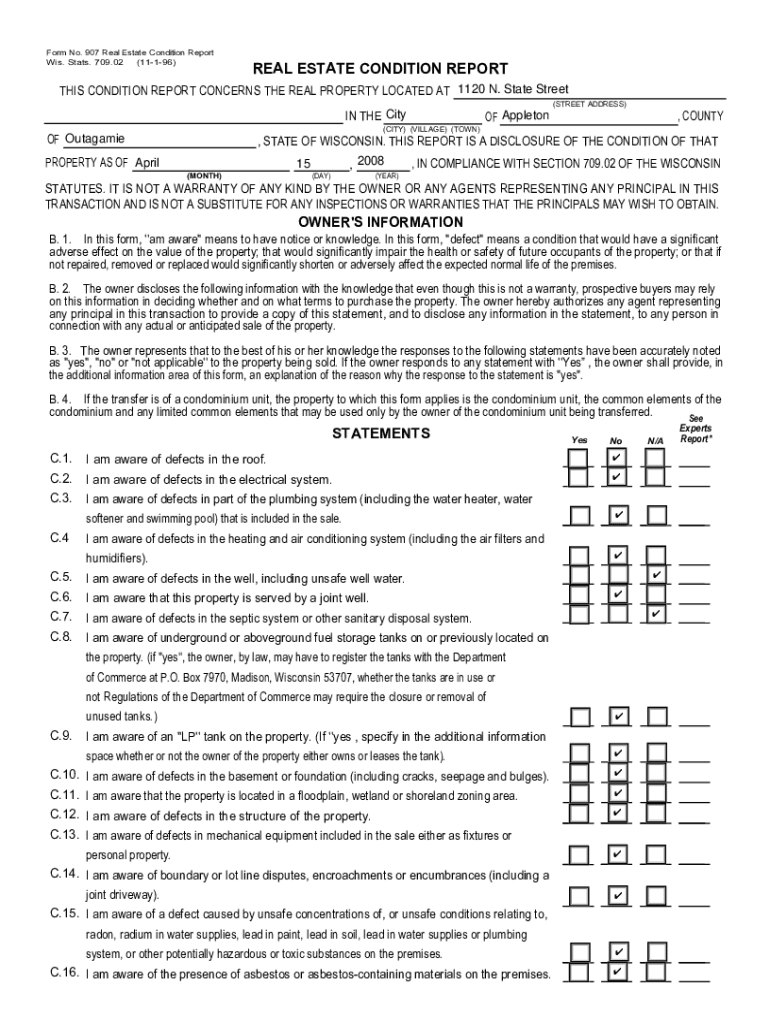
The Wisconsin Real Estate Condition Report, often referred to as Form No. 907, plays a vital role in the real estate transaction process within the state. This document serves as a comprehensive disclosure from the property seller to the potential buyer, detailing the property's current condition. It is a legally required document under the Wisconsin Statutes Section 709.02, intended to inform buyers of any existing defects or issues with the property. Such disclosures are crucial as they provide transparency and help buyers make informed decisions.
- The report covers various aspects, including the condition of the roof, electrical systems, and plumbing.
- Potential environmental hazards are also documented within the report.
- The seller certifies the accuracy of the information but clarifies that the report does not serve as a warranty.
Steps to Complete the Wisconsin Real Estate Condition Report
Filling out the Wisconsin Real Estate Condition Report requires careful attention to detail to ensure all information is accurate and complete. Here’s a step-by-step guide:
- Gather Information: Start by examining all areas covered by the report, such as structural integrity, plumbing, heating, and electrical systems.
- Identify Defects: List any known malfunctions or issues, e.g., a leaky roof or faulty wiring.
- Detail Specific Conditions: Clearly describe the nature and extent of each defect identified.
- Enlist Professional Inspections: While not mandatory, hiring a professional inspector can provide a more detailed assessment.
- Certify the Report: Once completed, the seller must sign to certify the information’s accuracy.
Tips:
- Be honest and thorough, as inaccuracies can lead to legal complications.
- Review the report multiple times to ensure completeness and clarity.
Legal Implications and Requirements
The Wisconsin Real Estate Condition Report has several legal implications and is a critical component of real estate transactions within the state.
- Mandatory Submission: Sellers are legally obliged to complete and provide this report to potential buyers.
- Disclosure Accuracy: Sellers are required to disclose known defects; failure to do so could result in legal disputes or rescission of the sale.
- Not a Warranty: The report specifically states that it is not intended as a guarantee or warranty of the condition.
Key Elements of the Wisconsin Real Estate Condition Report
Several critical elements must be covered in the report to meet state regulations:
- Structural Components: Inspection details of the property's structure, including foundations and roofing.
- Systems Check: Condition of electrical, plumbing, heating, and cooling systems.
- Environmental Concerns: Disclose any potential environmental hazards like asbestos or lead paint.
- Ownership and Legal Issues: Any known legal issues or encumbrances affecting the property.
Important Note:
Properly completing each section is essential to ensure the report adheres to state guidelines and accurately represents the property's condition.
How to Use the Wisconsin Real Estate Condition Report
Understanding how to effectively use this report can smoothen the transaction process for both sellers and buyers:
- Buyers: Use the report to assess whether to proceed with additional inspections or renegotiate terms.
- Sellers: Ensure data accuracy to avoid future legal disputes and enhance transaction transparency.
- Realtors and Agents: Guide clients in understanding the implications and assist in any necessary next steps after receiving the report.
Impact of Non-Compliance with Wisconsin Real Estate Disclosure Laws
Failure to comply with Wisconsin's real estate disclosure laws can have serious consequences:
- Legal Penalties: Sellers could face legal action if defects are not adequately disclosed.
- Rescission of Sale: Buyers may have the right to rescind the contract and seek damages if non-disclosure is discovered post-sale.
- Reputation Damage: Non-compliance can harm a seller’s or agent’s professional reputation within the real estate market.
Examples and Case Studies
Practical scenarios help illustrate the importance and impact of the Real Estate Condition Report:
- Case Study 1: A buyer backed out of a deal after the report revealed significant structural issues, saving on future costly repairs.
- Case Study 2: A seller faced a lawsuit due to omitted information, leading to financial and legal repercussions.
- Practical Example: A diligent inspection followed by a detailed report facilitated a smooth transaction, building trust between parties.
Variations and Alternatives to the Form
While the Wisconsin Real Estate Condition Report is standard, there may be variations or alternatives in other jurisdictions or specific cases:
- Alternate Forms: Some properties might require additional disclosure forms depending on unique features or location-specific requirements.
- State Differences: Other states may have similar but jurisdiction-specific condition reports required by law.
Understanding these elements not only ensures compliance with legal standards but also promotes transparency and trust in property transactions.