Definition and Meaning
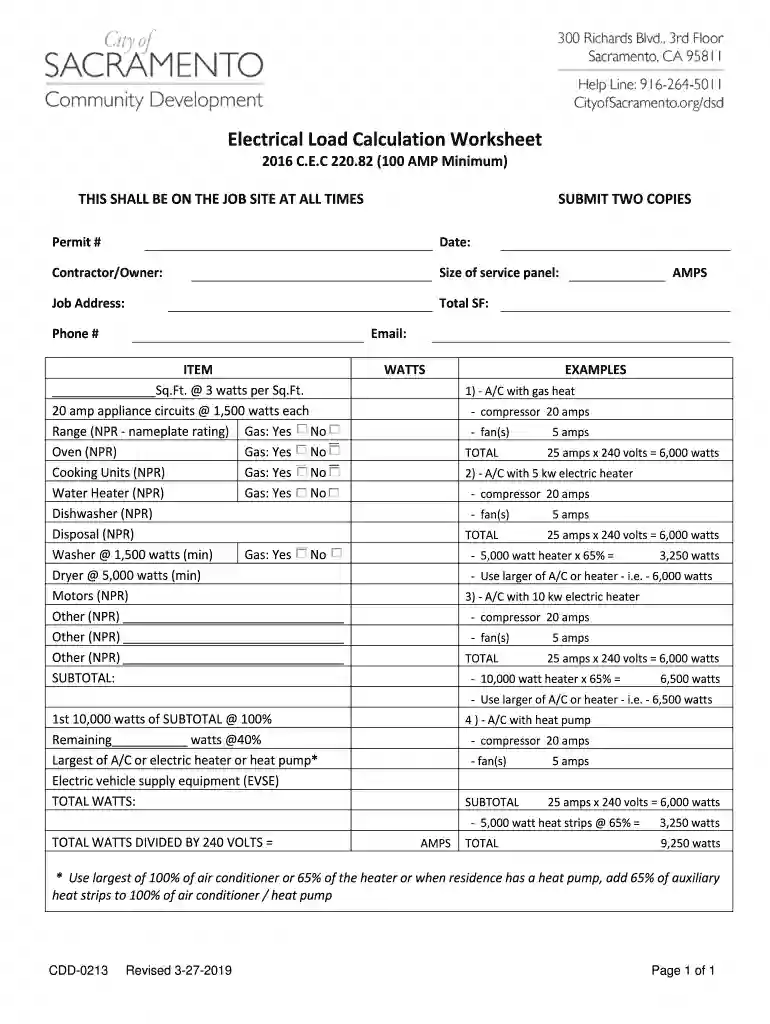
The commercial load calculation worksheet is a critical tool used predominantly in the field of electrical engineering and construction. It is designed to calculate the electrical load requirements for commercial buildings, ensuring that power distribution systems are efficient and meet the necessary safety standards. This worksheet helps in determining the total electrical demand by accounting for various electrical appliances, lighting systems, heating and cooling units, among others. It is essential for ensuring compliance with electrical code regulations and is often a prerequisite for obtaining electrical permits.
Key Elements of the Commercial Load Calculation Worksheet
A comprehensive commercial load calculation worksheet includes several key components:
- Electrical Service Specification: Information about the service panel, including voltage level, phase type, and capacity in amperes.
- Area Specifications: Details about the total square footage of the commercial space, which impacts load calculation.
- Circuit Details: Breakdowns of each circuit, including specific appliances and their rated wattage or amperage.
- Lighting Load Calculations: Enumeration of lighting fixtures and their power requirements, which can vary significantly depending on the design and usage of the space.
- HVAC Load Requirements: Calculations for heating, ventilation, and air conditioning systems, essential for maintaining building climate control.
Steps to Complete the Commercial Load Calculation Worksheet
Completing this worksheet accurately involves several detailed steps:
- Gather Building Plans and Electrical Specifications: Ensure you have complete access to blueprints and electrical details to accurately input data.
- List All Electrical Loads: Inventory every electrical device and fixture, noting the wattage and amperage ratings.
- Calculate Individual Load Requirements: Multiply the number of devices by their respective power ratings to calculate the total wattage for each category.
- Summarize Total Load: Add together the power requirements of all categories to determine the aggregate electrical load.
- Compare to Service Capacity: Ensure that the calculated load does not exceed the service panel's capacity.
Important Terms Related to Commercial Load Calculation Worksheet
Understanding specific terminology is crucial:
- Amperage: A measure of electrical current flow.
- Wattage: The power drawn by an electrical appliance.
- Voltage Drop: A reduction in voltage in a part of a circuit between the power source and the load.
- Diversity Factor: The ratio of the sum of the individual maximum demands to the maximum demand of the entire system.
Why You Should Use the Commercial Load Calculation Worksheet
Utilizing the commercial load calculation worksheet offers numerous benefits:
- Accurate Load Management: Avoid overloading circuits, which can lead to failures or increased utility costs.
- Code Compliance: Meet local and national electrical codes, minimizing the risk of legal complications.
- Safety Assurance: Prevent electrical hazards such as fires or system overloads.
- Energy Efficiency: Optimize energy consumption for cost savings and environmental sustainability.
Examples of Using the Commercial Load Calculation Worksheet
Real-world applications can illustrate the utility of this worksheet:
- New Office Building: An architect uses the worksheet to ensure the design meets electrical safety standards.
- Retail Space Upgrade: A contractor assesses load changes due to new lighting and HVAC systems.
- Industrial Facility: Engineers calculate the electrical demand for heavy machinery to plan for efficient power distribution.
Who Typically Uses the Commercial Load Calculation Worksheet
Various professionals rely on this worksheet for electrical system planning:

- Electrical Engineers: Design systems that meet energy and safety requirements.
- Construction Managers: Oversee project compliance with electrical codes.
- Architects: Integrate electrical requirements into building designs.
- Facility Managers: Maintain and upgrade existing electrical systems in commercial buildings.
Legal Use of the Commercial Load Calculation Worksheet
The worksheet is consistent with numerous legal standards and regulations such as:
- National Electrical Code (NEC): Set forth by the National Fire Protection Association (NFPA) in the U.S.
- Local Building Codes: Vary by state and locality, affecting specific load requirements and permit processes.
- Safety Regulations: Ensure that electrical installations do not pose safety risks.
State-Specific Rules for the Commercial Load Calculation Worksheet
Electrical load calculation requirements can vary significantly depending on state-specific building codes. For example:
- California: Adheres to Title 24 energy standards, requiring detailed load analysis for energy efficiency.
- New York: May require additional documentation for buildings exceeding certain square footage due to dense urban infrastructure.
- Texas: Often includes considerations for frequent extreme weather conditions affecting energy needs.