







Definition and Meaning of "ACORD Certificate of Liability Insurance"
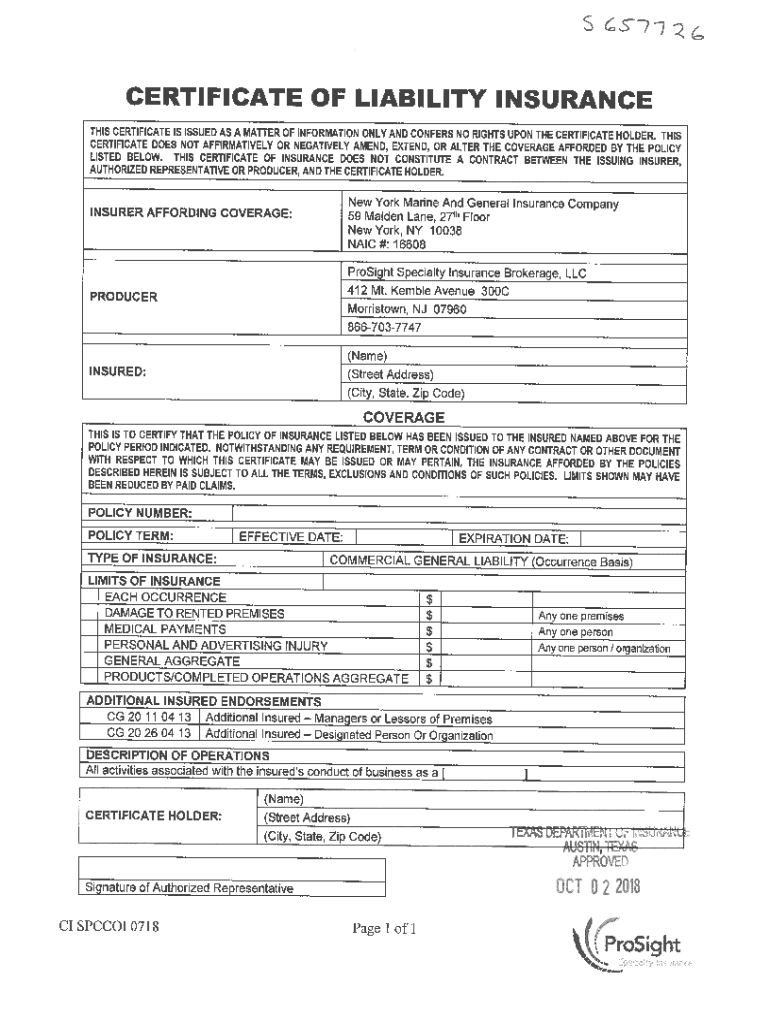
The ACORD Certificate of Liability Insurance is a standardized form that provides a summary of insurance coverages for an insured party. Issued by insurance companies, this document serves as proof of insurance, ensuring that the policyholder holds the necessary liability coverage as stipulated in underlying policy agreements. However, it's essential to note that this certificate does not modify or extend the coverage of the original insurance policy.
Key Elements of the Certificate
- Policyholder Information: The name and contact details of the insured party.
- Insurer Details: Information about the insurance company providing coverage, confirming their legitimacy and ability to pay claims.
- Coverage Summary: Details including the types of insurance provided, such as general liability or auto liability, along with the limits of each coverage type.
- Policy Numbers and Effective Dates: Specific policy identification numbers and the timeframe during which coverage is valid.
- Descriptions of Operations: A brief overview of the business operations or activities covered under the insurance policy.
How to Use the ACORD Certificate of Liability Insurance
Verifying Insurance Coverage
The primary use of an ACORD Certificate of Liability Insurance is to prove that an insured party meets certain liability insurance requirements. It is frequently required in business transactions, particularly where third-party liability is a concern.
- Business Contracts: Companies often need to provide this certificate to prove they have liability coverage before signing contracts or service agreements.
- Permits and Licensing: Certain industries may require proof of insurance before an entity can obtain necessary licenses or permits.
Ensuring Compliance
Clients, vendors, and partners can request an ACORD Certificate to ensure that a business complies with insurance requirements, enhancing trust and reducing risk exposure in business relationships.
Steps to Obtain the ACORD Certificate of Liability Insurance
Contacting Your Insurer
- Identify Coverage Needs: Determine the necessary types and amounts of insurance coverage required for your business operations.
- Reach Out to Your Insurance Agent: Request a certificate from your insurance provider by specifying the details required on the ACORD form.
- Provide Necessary Details: Include information such as names, addresses, and any specific language that needs to appear on the certificate.
Receiving the Certificate
Once your request is processed, the insurer will issue the ACORD Certificate of Liability Insurance. Confirm that all the details are correct and meet the requirements of the requesting party.
Legal Use of the ACORD Certificate of Liability Insurance
Legal Implications
While the ACORD Certificate of Liability Insurance serves as proof of insurance, it is not a contract and does not confer additional rights to the certificate holder.
- Limitations: It explicitly states that it is issued as a matter of information only and confers no rights upon the certificate holder other than those provided in the policy.
- No Amendments: It does not alter, extend, or amend the policy's insurance coverage terms.
Importance in Legal Compliance
Businesses often need this certificate to comply with specific legal and regulatory insurance requirements. For example, many governmental contracts demand proof of adequate insurance via this certificate before awarding contracts.
Important Terms Related to the ACORD Certificate
Common Terminologies
- Certificate Holder: The entity to whom the certificate is issued, typically requesting proof of coverage.
- Additional Insured: An entity that is not automatically included as an insured under the policy but is added at the request of the insured, typically for specific operations.
- Cancellation: The process by which the insurance company may terminate the policy before its expiration date; the certificate typically outlines the advanced notice period required for cancellation.
Who Typically Uses the ACORD Certificate of Liability Insurance


Businesses and Industries
- Construction Companies: Often required to provide these certificates to project owners to demonstrate adequate coverage.
- Vendors and Suppliers: Frequently need to show proof of insurance to enter into service agreements with larger corporations.
- Event Organizers: Required to show proof of liability coverage when booking venues or applying for permits.
State-Specific Rules for the ACORD Certificate
Variations by State
State laws may influence the specific information required on the certificate, such as minimum coverage limits or additional insureds. Always check local regulations to ensure compliance with state-specific insurance requirements.
Digital vs. Paper Version of the Certificate
Modern Trends
While traditional certificates were often issued on paper, most insurers now offer digital versions. These e-certificates provide convenience and speed in sharing and validating insurance information.
- Accessibility: Digital certificates are easily accessible and can be shared quickly via email or online portals.
- Security Features: Often equipped with digital signatures and encryption to prevent unauthorized alterations.
By understanding these aspects of the "ACORD Certificate of Liability Insurance," businesses can navigate their operational and legal insurance requirements more effectively, ensuring they are protected and compliant.




