






Understanding the Purpose of "Ratings (See RATINGS herein)"
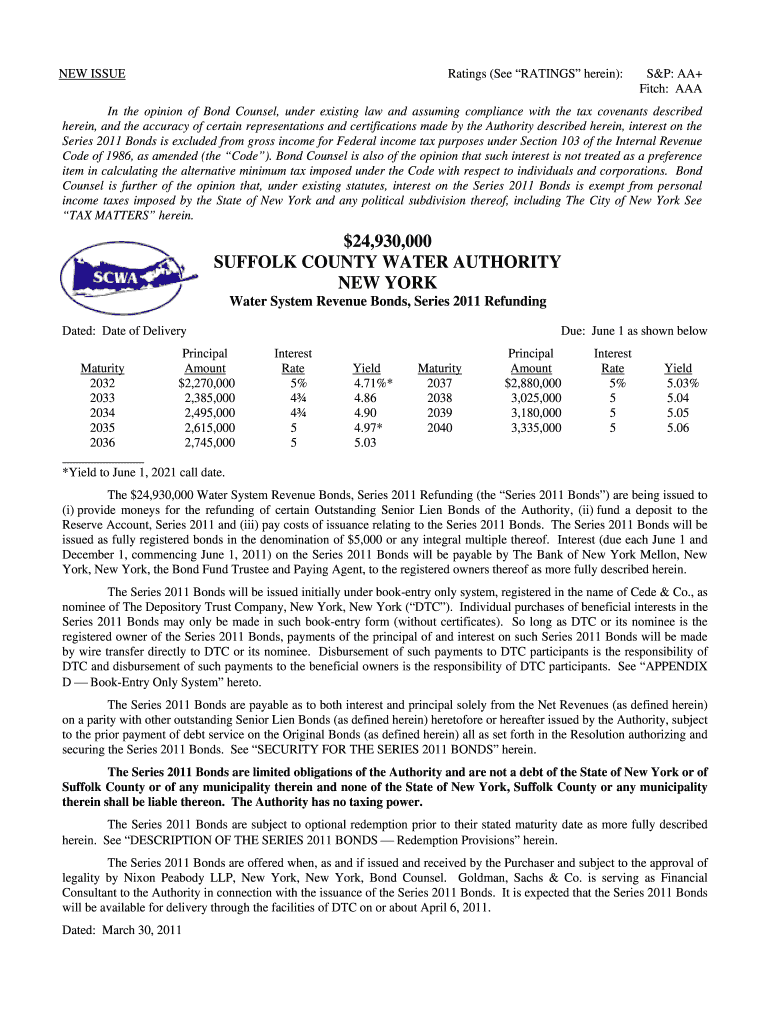
In the context of financial documents such as the issuance of bonds, "Ratings (See RATINGS herein)" refers to the credit ratings provided by agencies like Standard & Poor's and Fitch. These ratings assess the creditworthiness of the bond issuing entity, influencing investor decisions. Credit ratings play a crucial role in determining the interest rates, perceived risk, and overall marketability of a bond issue. In the case mentioned, the Water System Revenue Bonds enjoy strong credit ratings, indicating a stable financial position of the issuer, the Suffolk County Water Authority (SCWA). These cannot be overlooked as they directly impact investment attractiveness and compliance with regulatory standards.
How to Use the Ratings Information
Utilizing the ratings effectively requires a comprehensive understanding of the ratings themselves and their implications. Investors use ratings to gauge risk; higher ratings like AA+ and AAA signify low default risk, making those bonds more attractive. Additionally, credit ratings influence the bonds' yield; higher ratings typically result in lower yield expectations from investors, benefiting the issuer by reducing borrowing costs. Understanding these nuances is key for investors, financial advisors, and analysts in making informed decisions and recommendations.
Steps to Access "Ratings (See RATINGS herein)"
Accessing credit ratings involves engaging with financial documents where these ratings are published, such as bond issuance prospectuses or financial statements. These documents typically list the ratings prominently. Investors can also access ratings through the respective credit rating agencies' reports or financial databases. Understanding the procedure to authenticate these ratings and interpret their implications forms a basis for credible financial analysis and investment strategies.
Importance of Credit Ratings
Credit ratings serve as a measure of credibility, reassuring investors about the security of their investments. For issuers like the Suffolk County Water Authority, maintaining high ratings is critical to issue bonds cost-effectively by attracting broad investor participation at lower interest rates. High credit scores reflect a strong financial outlook, enhancing confidence among stakeholders, regulators, and the community about the issuer's operational stability, financial prudency, and long-term sustainability.
Common Users of "Ratings (See RATINGS herein)"
The primary users of credit ratings in the context of bond issuances include institutional investors, financial analysts, and portfolio managers. These professionals rely on ratings to include bonds in risk-averse portfolios or offer financial advice. Regulatory bodies and auditors may also reference ratings to ensure compliance with financial statutes and reporting standards. Importantly, issuers like municipal or corporate bodies monitor ratings for strategic financial planning and budgeting.


Legal Implications of Using Ratings
Using ratings like the ones referenced in the issuance documents must align with the legal guidelines set by financial regulatory authorities. Unauthorized alteration or misinterpretation could lead to regulatory penalties. Compliance with the U.S. Securities and Exchange Commission (SEC) regulations is mandatory, ensuring truthful representation of creditworthiness and transparency in financial disclosures. Understanding these legal bounds is crucial for both issuers and investors to mitigate potential legal and financial liabilities.
Key Components of "Ratings (See RATINGS herein)"
The "Ratings (See RATINGS herein)" section in bond documentation highlights several components:
- Rating Agencies: Identifies the credit agencies providing the ratings.
- Rating Scores: Indicates the assigned credit grade (e.g., AA+, AAA).
- Rationale: Explains underlying justifications for the assigned ratings, such as economic conditions and financial health of the issuer.
- Outlook: May include future projections, whether stable or anticipated changes in the ratings.
Understanding these components helps stakeholders to interpret the ratings thoroughly and assess future investment risks and opportunities.