
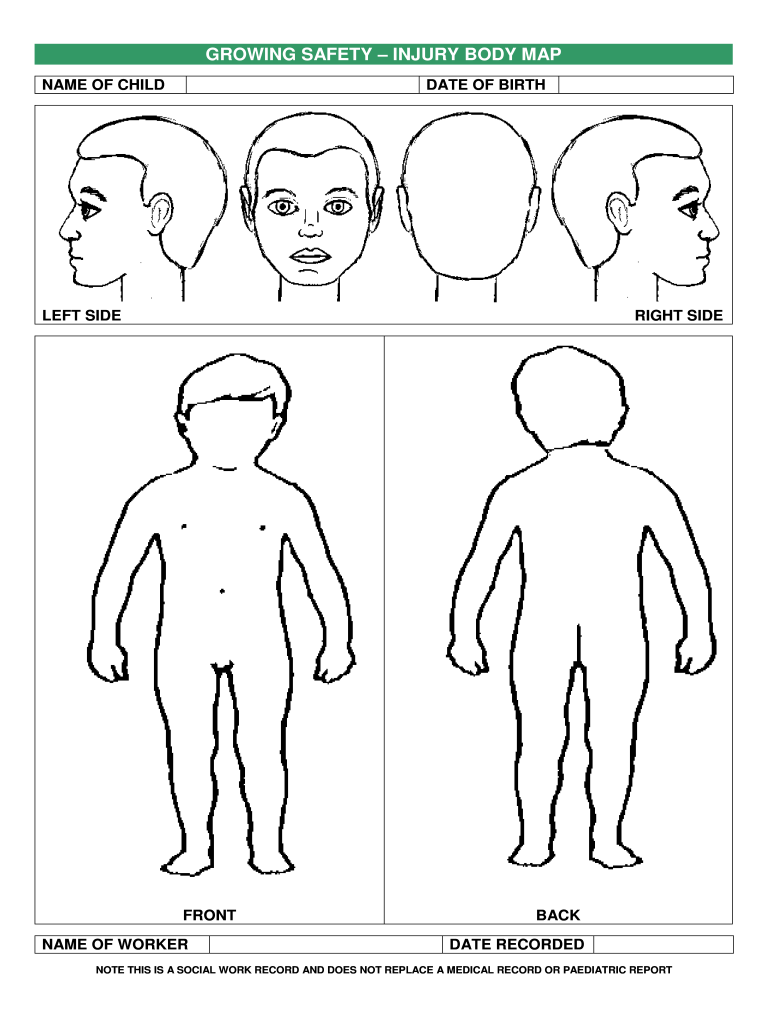







Definition and Purpose of the Growing Safety Injury Body Map
The Growing Safety Injury Body Map is a specialized tool designed to document and visually represent physical injuries, particularly in children where concerns for non-accidental injuries may arise. It aims to provide a clear and structured way to record details about injuries, including their specific locations on the body, type, and conditions under which they were sustained. This Body Map serves as an essential resource in conversations with healthcare professionals, child protective services, and law enforcement, helping to facilitate accurate assessments and discussions regarding the child's wellbeing.
This visual documentation is crucial because it encapsulates the nuances of complex cases, allowing caregivers and professionals to convey critical information succinctly. By utilizing a standard template, the Growing Safety Injury Body Map enables consistent reporting, which can be vital in identifying patterns of injury that may require intervention or further investigation.
Key Benefits of the Body Map
- Visual Clarity: Provides a straightforward way to illustrate injury locations and types.
- Structured Documentation: Ensures consistent recording practices for professionals and families.
- Facilitates Communication: Supports discussions with various stakeholders involved in a child's care.
- Enhanced Assessment: Aids healthcare providers in understanding the context and potential severity of injuries.
How to Use the Growing Safety Injury Body Map
Using the Growing Safety Injury Body Map involves several straightforward steps that ensure comprehensive and accurate documentation of injuries. The following guidelines can assist users in effectively utilizing the Body Map for its intended purpose.
- Preparation: Gather necessary information about the child, including personal details and injury specifics.
- Assessment: Carefully examine the child’s body to identify and record visible injuries. Use a clear physical space with good lighting to ensure accurate observation.
- Mapping Injuries: Employ the Body Map template to mark the precise locations of each injury. Utilize different colors or symbols to represent various types of injuries, such as bruises, cuts, or burns.
- Descriptive Notes: Alongside the visual representation, provide detailed descriptions for each injury, including the date and time they were noted, as well as any relevant context or explanations from the child or caregiver.
- Report Generation: After completing the Body Map, compile all recorded information into a structured report that can be shared with relevant authorities or professionals as needed.
Documentation Tips
- Use clear and concise language when cataloging descriptions.
- Make entries as soon as possible after an injury is noted to ensure accuracy and reliability.
- Review the completed Body Map for completeness before sharing with relevant parties.
Who Typically Uses the Growing Safety Injury Body Map
The Growing Safety Injury Body Map is utilized by various professionals and caregivers engaged in child welfare and safety. Its primary users include:
- Healthcare Professionals: Pediatricians, nurses, and social workers often use the Body Map to document findings during medical assessments or consultations regarding child safety.
- Child Welfare Workers: Caseworkers involved in child protection services rely on the Body Map for investigative purposes, ensuring all evidence is clearly documented and easily interpretable.
- Educators and School Counselors: Staff in educational settings may employ the Body Map when addressing suspicions of child abuse or when children present with unexplained injuries.
- Parents and Guardians: Caregivers can use the Body Map for personal record-keeping, helping them assess and describe injuries they notice in their children.


Impact on Child Safety
The use of the Body Map contributes to a more systematic and thorough approach to monitoring child safety, enabling quicker responses to potential harm.
Legal Considerations for the Growing Safety Injury Body Map
The legal context surrounding the use of the Growing Safety Injury Body Map is fundamental to its effectiveness in documenting injuries. Here are some critical considerations:
- Legality of Documentation: Maintaining accurate and well-documented records is essential for legality. The Body Map should be used alongside other forms of documentation as part of the child’s health record.
- Confidentiality and Consent: Users must consider privacy laws and obtain consent when sharing Body Maps or information with external parties, particularly in cases involving child protection services.
- Reporting Obligations: In many jurisdictions, health professionals and educators are mandated reporters. Upon identifying concerning injuries, they must be aware of laws regarding reporting suspicions of abuse or neglect.
Best Practices
- Ensure the Body Map recording complies with local and state regulations.
- Familiarize yourself with mandated reporting laws specific to your area for timely action.
- Regularly review documentation protocols to stay updated with legal requirements.
Steps to Complete the Growing Safety Injury Body Map
Completing the Growing Safety Injury Body Map involves a systematic approach to accurately capture and represent injury details. Below are the steps to follow:
- Obtain the Body Map Template: Access a printable body injury diagram or download an electronic body map form from a trusted source.
- Collect Background Information: Assemble the child's personal information, including name, age, and any relevant health history that may impact assessments.
- Examine and Document: Carefully assess the child's skin for any marks or injuries, documenting them on the Body Map. Use a front and back representation of the body to ensure thorough coverage.
- Categorize Injuries: Differentiate between types of injuries (e.g., accidental vs. non-accidental) and mark them using color codes or symbols for clarity.
- Add Comments and Observations: Supplement the Body Map with comments that provide context or details about the circumstances surrounding the injuries.
- Review and Finalize: Check your entries for accuracy, ensuring all relevant information has been captured before concluding the documentation.
Additional Considerations
- Conduct thorough examinations for any signs of previous injuries that might not have been previously documented.
- Ensure that all entries are conducted with sensitivity to the child's emotional state and understanding.
Important Terms Related to the Growing Safety Injury Body Map
Understanding specific terms associated with the Growing Safety Injury Body Map is critical for effective communication among all parties involved in child protection and healthcare. Below are important terms to familiarize oneself with:
- Injury Documentation: The process of recording details about an injury, including location, type, and potential causes.
- Non-Accidental Injury: Injuries that are suspected to be caused intentionally rather than by accident, often requiring further investigation by authorities.
- Child Protection Services: State agencies that investigate reports of suspected child abuse or neglect and provide necessary interventions.
- Mandated Reporter: A professional, often in healthcare or education, who is legally required to report any suspected child abuse or neglect to authorities.
- Visual Documentation: The use of images or charts, such as a body map, to visually represent injuries for clarity and understanding.
Benefits of Terminology Understanding
- Enhances communication between professionals and caregivers.
- Assists in ensuring accurate reporting and documentation practices.
- Promotes a clearer understanding of the legal and procedural frameworks related to child welfare.
By comprehensively understanding and utilizing the Growing Safety Injury Body Map, caregivers and professionals can significantly contribute to the safety and well-being of children, fostering environments that are attentive to their physical and emotional health.




