






Definition & Meaning
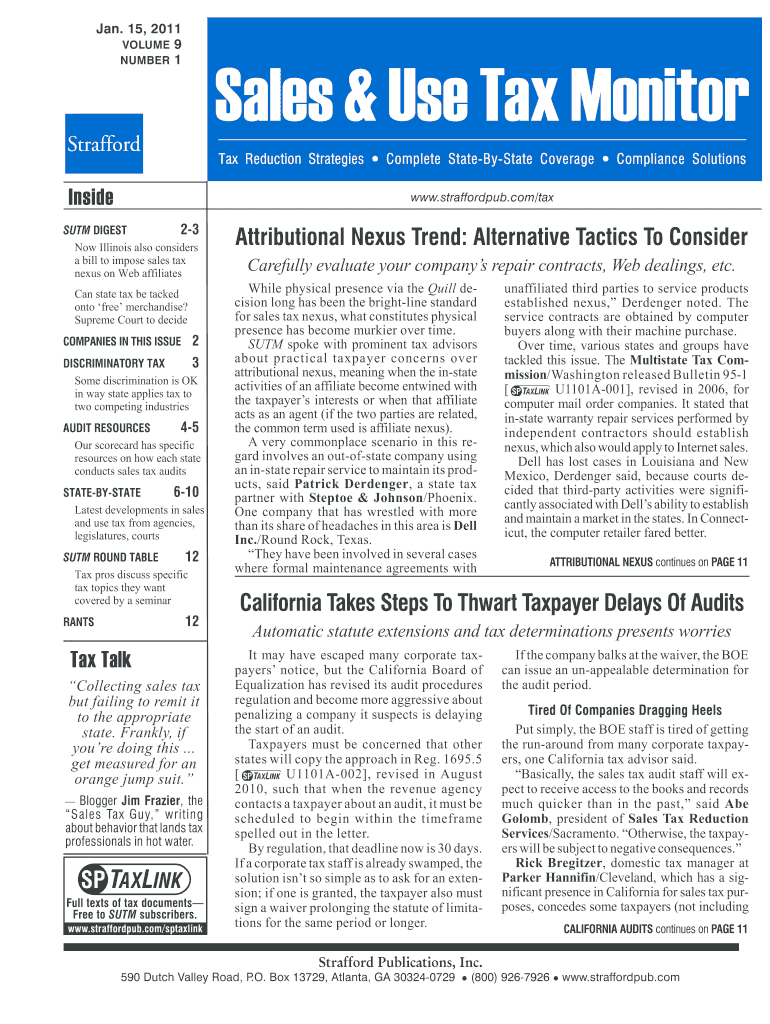
The Sales and Use Tax Monitor is a comprehensive resource designed to provide insights and updates on sales and use tax legislation across various states in the United States. This document serves as a vital tool for understanding the evolving tax landscape, helping businesses and individuals navigate tax compliance more effectively. It typically covers important legislative changes, court rulings, and administrative developments that impact how sales and use taxes are implemented at the state level.
Key Elements of the Sales and Use Tax Monitor
The Sales and Use Tax Monitor delves into several core areas that are crucial for comprehensive tax understanding:
- Legislative Updates: Outlines recent changes in state laws regarding sales and use taxes.
- Court Rulings: Reviews significant court decisions that may affect tax liabilities and processes for businesses.
- Administrative Policies: Examines procedural changes imposed by tax authorities.
- Economic Nexus: Focuses on developments in nexus laws that require businesses to collect tax based on economic presence.
- Industry-Specific Regulations: Highlights regulations affecting particular industries like e-commerce.
How to Use the Sales and Use Tax Monitor
To effectively utilize the Sales and Use Tax Monitor, follow these steps:
- Review Recent Updates: Stay informed about the latest legislative changes and court rulings, particularly those affecting your state or industry.
- Analyze Tax Implications: Assess how these changes impact your business operations or personal tax obligations.
- Compliance Strategy: Develop an updated compliance strategy based on the monitor's insights, incorporating any new tax requirements.
- Consult with Tax Professionals: Consider discussing the findings with a tax advisor to optimize your compliance strategies.
- Continuous Monitoring: Regularly check the monitor for updates to ensure ongoing compliance with evolving tax regulations.
State-Specific Rules for the Sales and Use Tax
Each U.S. state may have distinct rules concerning sales and use taxes, which the Sales and Use Tax Monitor helps to clarify:
- Illinois: Known for imposing sales tax nexus on online retailers, requiring registration and tax collection even without a physical presence.
- California: Enforces rigorous audit procedures to ensure proper tax reporting.
- Texas: Texas has specific sales tax exemptions that vary by industry, creating unique compliance obligations.
By understanding these state-level variations, taxpayers can tailor their strategies to meet specific local requirements.
Who Typically Uses the Sales and Use Tax Monitor
This resource is valuable for a wide range of users, including:
- Business Owners and Management: Benefiting from detailed tax compliance guidance.
- Tax Professionals and Accountants: Utilizing up-to-date information for advisory and planning services.
- Legal Experts: Assisting in the interpretation and application of complex tax rules.
- Government Agencies: Implementing consistent enforcement of tax laws.


Important Terms Related to Sales and Use Tax
Navigation through the Sales and Use Tax Monitor requires familiarity with key terminology:
- Nexus: A legal term indicating a business presence that mandates tax collection.
- Exemption Certificate: A document justifying why a transaction is exempt from tax.
- Resale Tax: Tax obligations tied to goods purchased for resale and not for use.
- Use Tax: Tax on goods used in a state where no sales tax was collected.
Understanding these terms is critical to accurately interpret data and instructions within the monitor.
Filing Deadlines / Important Dates
The Sales and Use Tax Monitor frequently highlights critical filing deadlines that affect businesses and individuals:
- Quarterly Filing Dates: Businesses must usually adhere to periodic filing schedules, such as quarterly tax returns.
- Annual Reconciliation: Often required for reconciling collected and paid sales taxes.
- Special Reporting Periods: Specific reporting timelines might apply during legislative shifts or after new law enactments.
Missing these deadlines can lead to costly penalties and interest charges.
Penalties for Non-Compliance
Non-compliance with sales and use tax obligations, as outlined in the monitor, can lead to:
- Monetary Penalties: Applied for late filings or payments.
- Interest on Unpaid Taxes: Charges incurred for outstanding tax balances.
- Legal Action: Potential for litigation or administrative actions against the offending party.
- Reputational Damage: Negative impact on the public perception of businesses.
Understanding these penalties underscores the importance of maintaining compliance with tax regulations.
State-by-State Differences
The Sales and Use Tax Monitor provides a detailed guide to state-by-state differences in tax law:
- Tax Rates: Varying sales and use tax rates between states require tailored compliance strategies.
- Treatment of Goods and Services: Distinct regulations for taxable and nontaxable items can differ significantly.
- Supplier Registration Requirements: Vary based on the business's operational footprint and the state's nexus criteria.
Tailoring tax strategies to meet different state requirements can ensure better compliance and optimized tax management.