






Definition and Purpose of IRS Internal Revenue Manual Part 4
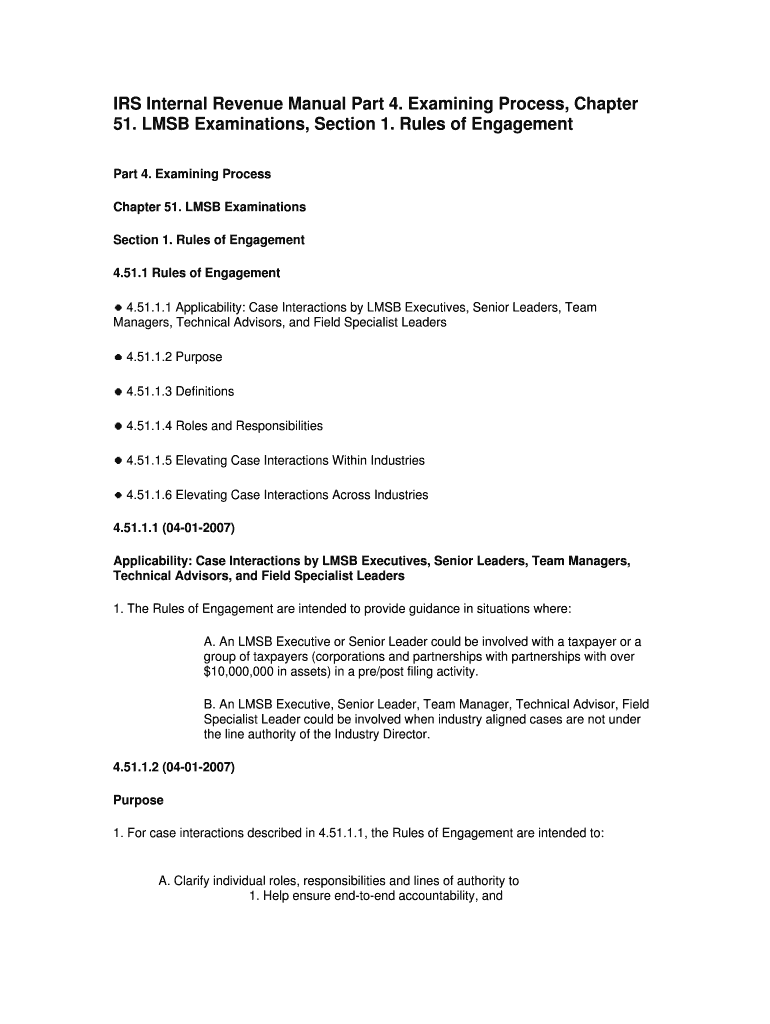
The IRS Internal Revenue Manual Part 4 serves as a comprehensive guide, detailing the processes and protocols for the examination of tax returns within the United States. It primarily covers procedures adopted by the IRS during audit activities for individuals and businesses. This manual is designed to ensure consistency, transparency, and adherence to IRS policies during examinations, thereby facilitating fair treatment of taxpayers.
- Provides structured guidelines for IRS agents.
- Emphasizes consistent application of tax laws.
- Aims at resolving tax discrepancies effectively.
Role in Tax Compliance
Part 4 of the IRS Internal Revenue Manual is critical in maintaining uniformity in tax audits. It outlines methodologies for evaluating tax returns and ensures that all examination activities comply with existing tax laws and regulations. This part of the manual plays a vital role in the accountability and ethical standards maintained by the IRS during reviews.
- Standardizes audit procedures across different cases.
- Upholds ethical examination practices.
Using IRS Internal Revenue Manual Part 4
Navigating the IRS Internal Revenue Manual Part 4 effectively requires understanding its structure and knowing where pertinent information is located. These sections provide step-by-step guidance for auditing processes led by IRS personnel.
Procedures Outlined
The manual consists of various procedural steps for conducting tax examinations, ensuring tax returns are accurate and complete. This includes specific protocols for engaging taxpayers, engaging in correspondence, and documenting findings.
- Examination planning and initial preparation.
- Conducting audits and interviews with taxpayers.
- Documentation and finalization of audit results.
Importance for Tax Professionals
Tax professionals often refer to this manual to understand the IRS's approach to tax audits, helping them prepare clients for potential examinations. It assists practitioners in predicting possible queries or concerns that might arise during an audit.
- Anticipates IRS procedural actions.
- Informs advisory strategies for tax compliance.
Key Elements of IRS Internal Revenue Manual Part 4
Part 4 is comprised of specific sections targeting distinct aspects of tax examinations, from large to mid-sized businesses and beyond. Each section of the manual focuses on different taxable entities and conditions, offering detailed instructions tailored to diverse tax-related scenarios.
Focus on Business Entities
Significant emphasis is placed on the examination of different business structures, ranging from individual proprietorships to large corporations. These guidelines ensure that audits reflect the unique attributes and obligations of each business type.
- Tailored audits for LLCs, corporations, and partnerships.
- Considers variances in fiscal obligations according to business size and type.
Obtaining the IRS Internal Revenue Manual Part 4
Methods of Access
Accessing the IRS Internal Revenue Manual Part 4 is straightforward, as it is publicly available. This ensures transparency and allows taxpayers, tax advisors, and industry professionals to familiarize themselves with IRS processes.
- Available for download from the official IRS website.
- Physical copies may be requested through official IRS communication channels.
Importance of Accessibility
Making the manual readily accessible fosters trust in IRS processes, as taxpayers can understand the regulations and procedures they may encounter during tax return examinations. This transparency encourages cooperative compliance.
Legal Use of IRS Internal Revenue Manual Part 4
IRS Internal Revenue Manual Part 4 holds significant legal value, particularly during tax dispute resolutions. It serves as the foundational reference for auditing standards that IRS officials must uphold.
Compliance and Dispute Resolution
Taxpayers and legal professionals often refer to the manual during disputes to ensure that IRS audits comply with prescribed guidelines. Adherence to the manual can affirm or challenge audit findings during appeals or litigation.
- Legal reinforcement tool in tax disputes.
- Ensures IRS accountability during litigation.
Important Terms and Concepts
Understanding terminology within Part 4 of the IRS manual is crucial to navigating and applying its guidelines efficiently. This section illuminates key terms frequently encountered by IRS officials and tax professionals.
Core Terminology
- LMSB: Large and Mid-Size Business, referring to entities that the manual particularly addresses, detailing audit protocols for medium to large enterprises.
- Case Interaction Protocols: Guidelines for engagements between IRS agents and taxpayers during audits.
Examples and Case Studies
Practical scenarios provided in Part 4 illustrate its application in real-world audits, offering insights into common practices and outcomes within audits of various scope.
Illustrative Scenarios
- Detailed examination of a large corporation's tax filing, highlighting how protocols are employed to assess compliance.
- How mid-sized businesses are audited, focusing on assessments of financial statements and reported income.
Associated Guidelines and Penalties for Non-Compliance
Part 4 outlines not only procedures but also delineates repercussions for failing to adhere to IRS examination protocols. It underscores the importance of compliance among both officials and taxpayers.
Consequences of Non-Compliance
Non-compliance with the outlined processes can lead to administrative penalties or further legal action, emphasizing the necessity for both IRS adherence to the manual and taxpayer cooperation during explorations.
- Administrative actions for IRS officers violating protocol.
- Sanctions for taxpayers obstructing audit processes.
By thoroughly understanding the IRS Internal Revenue Manual Part 4, stakeholders involved in the tax process can navigate examinations with confidence, ensuring adherence to policies and supporting fair tax application.