






Definition and Meaning
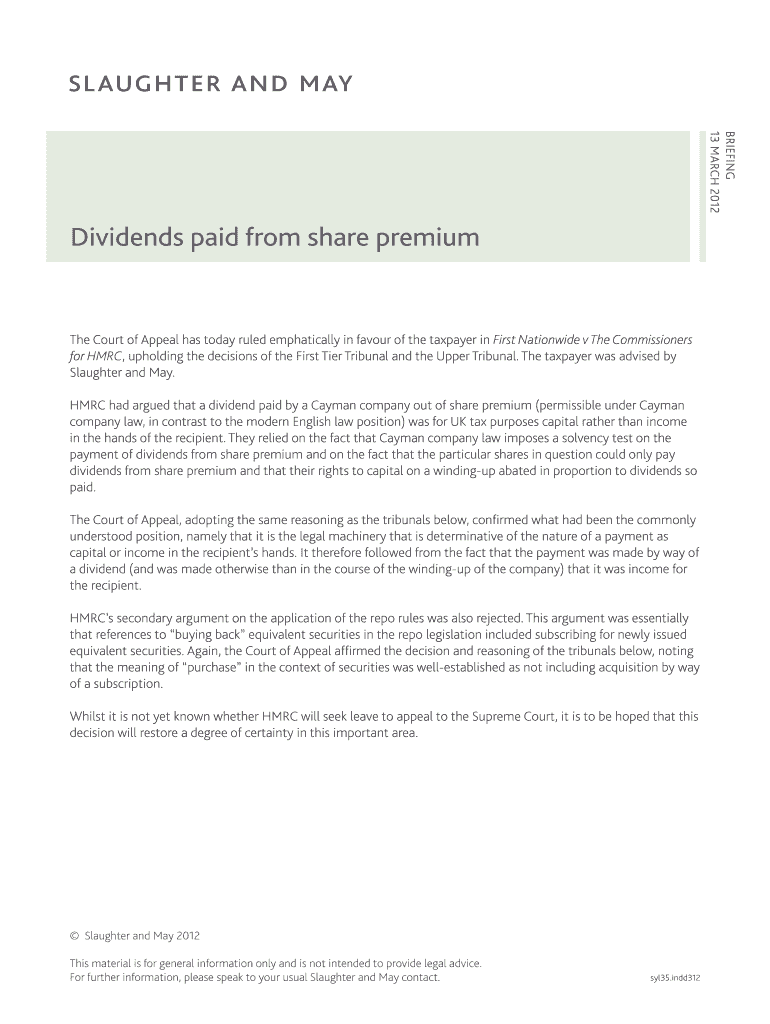
Dividends paid from share premium refer to distributions made by a company to its shareholders that are sourced from the share premium account. The share premium account represents the additional funds collected by a company when its shares are sold above their nominal value. This kind of dividend payment is less common, as dividends are typically paid from retained earnings. However, in specific jurisdictions and under certain regulations, companies may utilize their share premium to issue dividends, as long as they comply with the local corporate laws and financial regulations.
How to Use Dividends Paid from Share Premium
Utilizing share premium to pay dividends requires a clear understanding of the regulatory framework governing such actions. Companies must ensure that they meet all legal requirements and maintain sufficient capital reserves after the distribution. Steps include:
- Verify the company’s eligibility to pay dividends from share premium under local laws.
- Consult the company’s financial statements to ascertain the amount available in the share premium account.
- Gain approval from the board of directors and, if necessary, shareholders through a formal resolution.
- Document the decision and any supporting analyses to provide a clear audit trail.
Legal Use of Dividends Paid from Share Premium
The legality of paying dividends from a share premium depends significantly on local corporate legislation. In the United States, laws vary by state, and some might restrict or require specific conditions to be met before such dividends can be issued. Companies must adhere to applicable statutes that may dictate the minimum capital and solvency conditions to protect creditors and other stakeholders. Non-compliance with these legal standards can have significant financial and legal ramifications.
Important Terms Related to Dividends Paid from Share Premium
- Share Premium Account: The additional funds received by a company over the par value of its shares.
- Nominal Value: The face value of a company’s shares as stated in its corporate charter.
- Retained Earnings: Profits retained in the company rather than distributed as dividends.
- Board Resolution: A formal decision recorded by the company’s board of directors.
Key Elements of Dividends Paid from Share Premium
When considering issuing dividends from the share premium, a company must evaluate several critical elements:
- Financial Health: Ensuring sufficient liquidity and capital reserves post-dividend.
- Shareholder Communication: Clearly communicating dividend details and any associated impacts.
- Regulatory Compliance: Adhering to accounting standards and financial reporting requirements.
State-Specific Rules for Dividends Paid from Share Premium
In the U.S., regulations regarding the use of share premium accounts for dividend payments can vary widely across states. Some states might allow this practice under specific circumstances, while others may prohibit it entirely. Corporations should consult legal counsel or a financial advisor familiar with state laws to ensure they remain compliant.
Examples of Using Dividends Paid from Share Premium
An example scenario would be a company that experienced a significant capital influx during a stock issue. It might choose to reward its shareholders by distributing dividends from this influx, provided it has a robust financial position. Another example is a company wanting to maintain its dividend history despite low retained earnings by using the share premium account.
IRS Guidelines and Compliance
For U.S.-based companies, it's essential to understand Internal Revenue Service (IRS) ramifications. Generally, dividends are taxable to shareholders. When dividends are paid from a share premium, there might be additional or differing tax considerations, depending on how the tax laws categorize these distributions. Companies need to provide clear and thorough documentation regarding the source of the dividend payments, ensuring transparency and compliance with tax regulations.
Required Documents for Issuing Dividends Paid from Share Premium
To facilitate the issuance of dividends from a share premium, the following documents and records are typically necessary:
- Corporate Financial Statements: Including a balance sheet and income statement.
- Board Meeting Minutes: Detailing the resolution and decision-making process.
- Shareholder Agreements: If applicable, for consents and conditions regarding dividend payments.
- Regulatory Filings: Any required disclosures or statements to regulatory bodies.
Business Entity Types and Dividends Paid from Share Premium
Different business entities may have varying capabilities to issue dividends from a share premium. Corporations typically have this option available, subject to compliance with corporate laws and their charters. On the other hand, partnerships or LLCs often follow different rules concerning distribution reserves, requiring careful consideration of both business type and regulatory environment.
Who Typically Uses Dividends Paid from Share Premium
This practice is most commonly associated with public companies seeking flexibility in shareholder returns or private companies aiming to manage their capital efficiently. It might be employed strategically to maintain consistent dividend payouts or capitalize on favorable tax treatments in certain jurisdictions.