




01. Edit your form online
Type text, add images, blackout confidential details, add comments, highlights and more.

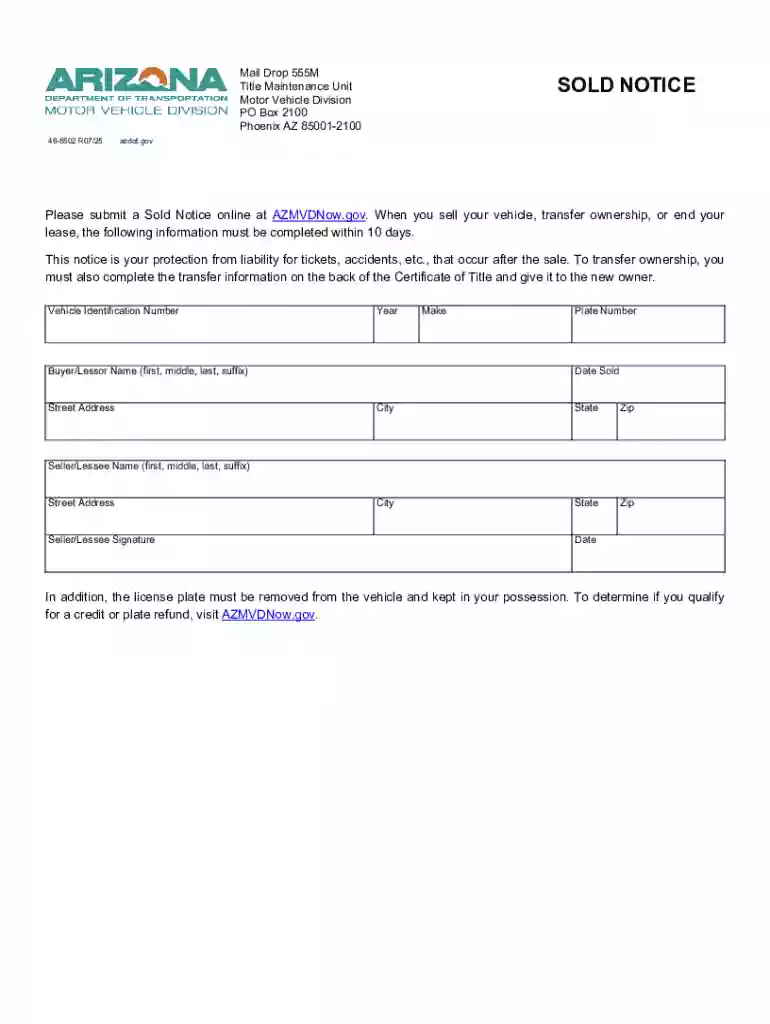
Type text, add images, blackout confidential details, add comments, highlights and more.

Draw your signature, type it, upload its image, or use your mobile device as a signature pad.

Send it via email, link, or fax. You can also download it, export it or print it out.
"Completing a sold notice protects when selling a vehicle" refers to the formal process that sellers must undertake to inform relevant authorities about the transfer of vehicle ownership. This notice is vital to safeguard the seller from potential liabilities associated with the vehicle after the sale has been finalized. Without this step, the original owner may still be considered legally responsible for any accidents, fines, or other liabilities incurred by the vehicle. The regulatory requirement to complete and submit this notice can vary across states, but the underlying objective remains consistent: to ensure the clear transition of legal responsibilities from the seller to the buyer.
Access the Appropriate Platform: Begin by visiting the official state-specific website or department responsible for vehicle title transfers, such as AZMVDNow.gov for Arizona residents.
Gather Necessary Information: Prepare all essential details, including the vehicle’s make, model, year, and Vehicle Identification Number (VIN), as well as the sale date and the buyer’s full name and address.
Fill in the Sold Notice Form: Log into the platform and look for the link to submit a sold notice. Input all required information accurately, taking care to double-check for errors, as inaccuracies can complicate the transfer.
Submit the Sold Notice: Once all the information is complete and verified, submit the form promptly. Confirmation of submission can typically be printed or saved for personal records.
Notify the Buyer: Inform the buyer that the sold notice has been completed, which concludes the seller’s responsibilities concerning legal ownership of the vehicle.
Filing the sold notice is a legal obligation that serves to protect the seller from future liabilities involving the vehicle. Failure to submit this notice could result in undesired consequences, such as being held accountable for parking tickets or accidents that involve the vehicle post-sale. In many jurisdictions, submitting the notice within ten days is mandatory; any delays could attract penalties or complicate the legal transition of the vehicle title.
While the fundamental purpose of a sold notice is consistent across different states, specific details and processes may vary. For instance, some states might require additional documentation or specify particular online systems for processing the notice. It's crucial for sellers to review state-specific guidelines to ensure compliance. In states like Arizona, sellers must keep the license plate after the vehicle is sold, as it remains their personal property and not that of the vehicle’s new owner.
The requirement to complete a sold notice applies broadly to any automobile seller, whether private individuals selling a personal vehicle or businesses engaging in commercial fleet sales. This form is especially used by sellers looking to avoid future liabilities related to the sold vehicle. First-time sellers, seasoned car dealers, and entities with large vehicle inventories all need to adhere to this practice to maintain clear legal separation from the vehicle post-sale.


The sold notice can typically be submitted through several methods, enhancing their accessibility:
Failure to file a sold notice can lead to significant consequences. Sellers might remain unjustly liable for vehicle-related incidents and could face state-imposed fines or penalties for failing to adhere to statutory requirements. Consequently, completing this notice not only protects legal interests but also prevents undue financial and legal burdens.
At DocHub, your data security is our priority. We follow HIPAA, SOC2, GDPR, and other standards, so you can work on your documents with confidence.
Sep 2, 2025 By completing a sold notice, you remove your name as the owner of record for the vehicle and help protect yourself from future
Jun 15, 2011 One of these proposals is to prohibit, with certain exceptions, used-car dealers and rental companies from selling or leasing a vehicle subject
File the Notice of Release of Liability form with the DMV as soon as you sell your car. It will protect you from being responsible for any damage caused by the


