




01. Edit your form online
Type text, add images, blackout confidential details, add comments, highlights and more.

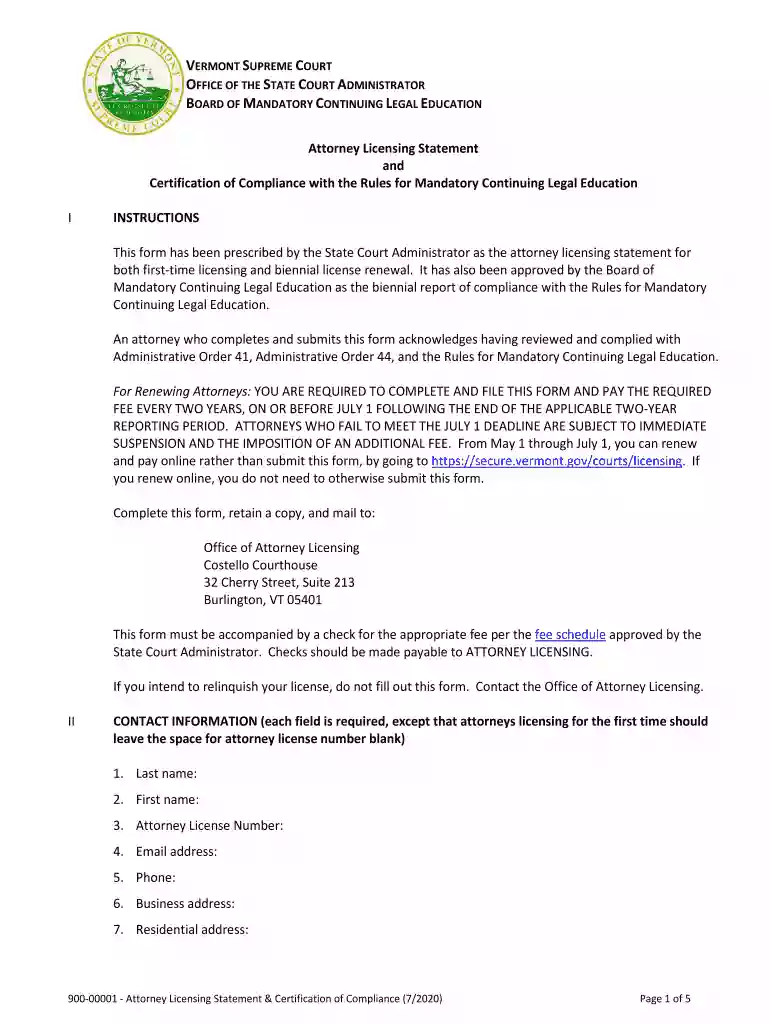
Type text, add images, blackout confidential details, add comments, highlights and more.

Draw your signature, type it, upload its image, or use your mobile device as a signature pad.

Send it via email, link, or fax. You can also download it, export it or print it out.
The Board of Mandatory Continuing Legal Education (MCLE) is a regulatory body essential for maintaining ethical standards and competence among practicing attorneys. It mandates ongoing education to ensure legal professionals stay current with evolving regulations and practices. The form associated with the Board of MCLE serves as a structured method for attorneys to certify compliance with requisite continuing education, thus upholding the quality of legal services.
To properly utilize the MCLE form, attorneys must diligently follow provided instructions to ensure accurate completion. This procedure includes:
Review the Requirements: Familiarize yourself with state-specific MCLE requirements, as each jurisdiction may have different mandates regarding credit hours and course types.
Record Education Activities: Keep detailed records of all qualifying continuing education activities including the name, date, and credit hours of each course.
Complete the Form: Use the collected information to fill out the MCLE form, ensuring all sections are accurately populated with relevant details.
Submit the Form: Choose the appropriate submission method, whether online, by mail, or in-person, in accordance with the governing board's guidelines.
Verify Submission: Confirm receipt of your form by the regulatory body to avoid penalties associated with late or incomplete submissions.
Access the Form: Obtain the MCLE form from your state bar association's or relevant board's website.
Enter Personal Information: Provide your full name, bar number, and contact information in the designated fields.
Document Educational Credits: List all continuing education courses completed, specifying the provider, date, and credit hours for each.
Ensure Compliance: Verify that reported credits meet the mandatory requirements, including any category-specific credits like ethics.
Certify Compliance: Sign and date the form to affirm the truthfulness and accuracy of the information submitted.
Submit the Form: Depending on your state’s requirements, submit the form through the prescribed method by the stipulated deadline.
Attorneys can acquire the MCLE form by:
Visiting the Official State Bar Website: Most forms are available for download from the legal association's or the MCLE board’s webpage.
Contacting the Board Directly: Reach out via phone or email to request a physical copy if online access is an issue.
Utilizing Professional Networks: Networking at legal conferences or through professional groups can provide insights and access to necessary documentation.
The MCLE form encompasses several crucial components:
Personal and Professional Data: Identifying information like name, bar number, and jurisdiction.
Summary of Educational Activity: Detailed records of all educational courses and credits earned, categorized by type.
Certification Statement: A declaration attesting to the accuracy and truthfulness of the submitted information, typically requiring a signature.
Submission Details: Information about where and how the form should be submitted, depending on jurisdictional regulations.
MCLE requirements can vary significantly across different states. It’s critical to understand state-specific rules such as:
Credit Hour Requirements: The number and type of mandatory credit hours can differ, as can the frequency of reporting.
Specialty Credit Needs: Some states necessitate specific credits in areas like ethics, diversity, or technology.
Approval of Courses: Not all continuing education courses will qualify equally across states; some jurisdictions require pre-approval.
Failing to comply with MCLE requirements can result in various penalties, including:
Fines or Penalties: Financial repercussions for late submission or non-compliance with credit hour requirements.
Suspension: The attorney may face a temporary suspension from practicing law until compliance is achieved.
Reinstatement Fees: Additional costs may be incurred to reinstate a license after suspension due to non-compliance.
Practical scenarios illustrating the use of the MCLE form include:
Self-Regulation for Attorneys: Ensuring personal compliance with educational mandates by using the form to organize and submit credit hours.
Compliance Verification: Law firms using the MCLE form to check and verify compliance status of their attorneys, maintaining firm-wide adherence to legal standards.
Training Providers: Institutions offering legal education can assist participants in filling out and submitting their MCLE forms post-course completion, ensuring all credits are accurately recorded.
At DocHub, your data security is our priority. We follow HIPAA, SOC2, GDPR, and other standards, so you can work on your documents with confidence.
Search for CLE courses approved, denied, or pending review by the Minnesota Board of Continuing Legal Education office.
32 hours (16 hours per year) of CLE credits must be completed during the first two years of admission to the bar.
The Committee recommends orientation and continuing education programs to assist directors in skill and knowledge development. The Committee shall be


