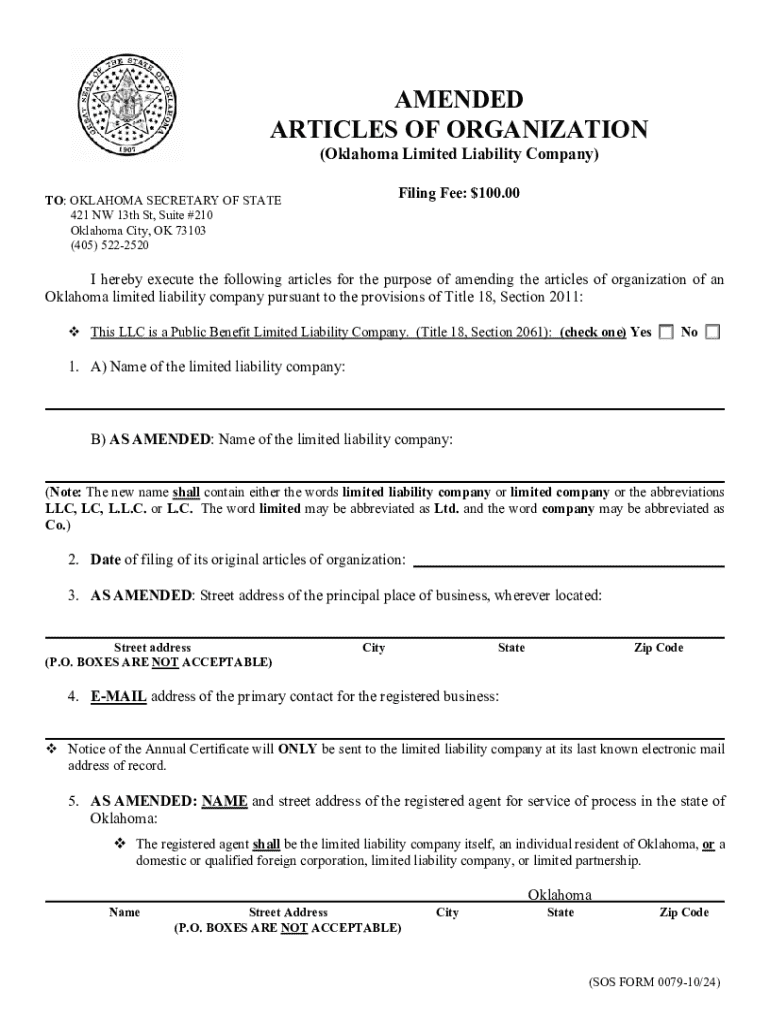







Definition and Purpose of Amending Articles of Organization
Amending the articles of organization refers to the process of officially modifying the founding documents of a Limited Liability Company (LLC), such as changes in the company's name, address, or registered agent details. These changes are essential for maintaining accurate and legal standings with the state and ensuring the company's operations reflect its current state of affairs. When a business evolves, amendments ensure that its documented structure aligns with its operational reality.
Key Reasons for Amending Articles
- Changing the Company Name: Often a result of rebranding or aligning with new markets.
- Updating Company Address: Important for legal correspondence and compliance.
- Modifying Management Details: Adjustments in members or managers to represent current authority figures.
- Adjusting Organizational Goals: Reflecting changes in the company's business pursuits or objectives.
How to Amend the Articles of Organization
Steps to Complete the Amendment Process
- Draft the Amendment: Prepare a detailed document outlining the specific changes.
- Approval from Members: Gain formal approval from LLC members or managers as required by the operating agreement.
- Submit to Secretary of State: File the amendment with the appropriate state office and pay any required fees.
- Receive Confirmation: Obtain confirmation of the filed amendment to ensure compliance and record-keeping.
Required Documents
- Original articles of organization.
- Proposed amendments with a clear description.
- Member or manager authorization, if needed.
- State-specific amendment forms, available from the Secretary of State.
Legal Implications and Requirements
State-Specific Rules
Amendment procedures can vary by state, necessitating a review of local requirements. For example, amendments for an LLC in Oklahoma might differ in processing time and submission methods compared to California. Each state's Secretary of State website provides detailed guidance.
Legal Terms to Know
- Registered Agent: A representative designated to receive legal documents on behalf of the company.
- Operating Agreement: An internal document outlining the management structure and operational guidelines for the LLC.
Filing and Documentation
Form Submission Methods
LLCs have the option to submit their documents either online, by mail, or in-person, dependent on the specific guidelines of their state. Electronic submissions generally expedite the process and provide instant confirmation.
Penalties for Non-Compliance
Failure to properly amend the articles of organization can lead to legal complications, including fines and the possibility of losing good standing with the state, which may impact the LLC's legal protections and business credibility.
Usage and Compatibility
Who Typically Uses This Form
A wide array of business entities, especially LLCs, use this form when organizational changes occur that need legal documentation. This ensures compliance and continued legal protection.
Business Entity Types
- Limited Liability Companies (LLCs)
- Corporations choosing to undergo structural changes
- Partnerships that require amendments to founding agreements
Software Compatibility
While no specific software is mandated, using document management tools like DocHub can help streamline the completion and submission process by allowing for easy editing, signing, and sharing across platforms like Google Workspace, providing efficiency in handling legal documentation.
Practical Examples and Case Studies
Real-World Scenarios
- Example 1: An LLC changing its business focus from manufacturing to technology may amend its name to reflect this new direction.
- Example 2: A company relocating its headquarters would amend the articles to update the new address, ensuring communication and legal documents are correctly directed.
- Case Study: A multi-member LLC documenting a change in management structure for a merger.
These scenarios highlight the importance of timely and accurate amendments to maintain a company's legal and operational integrity.