







Definition & Meaning
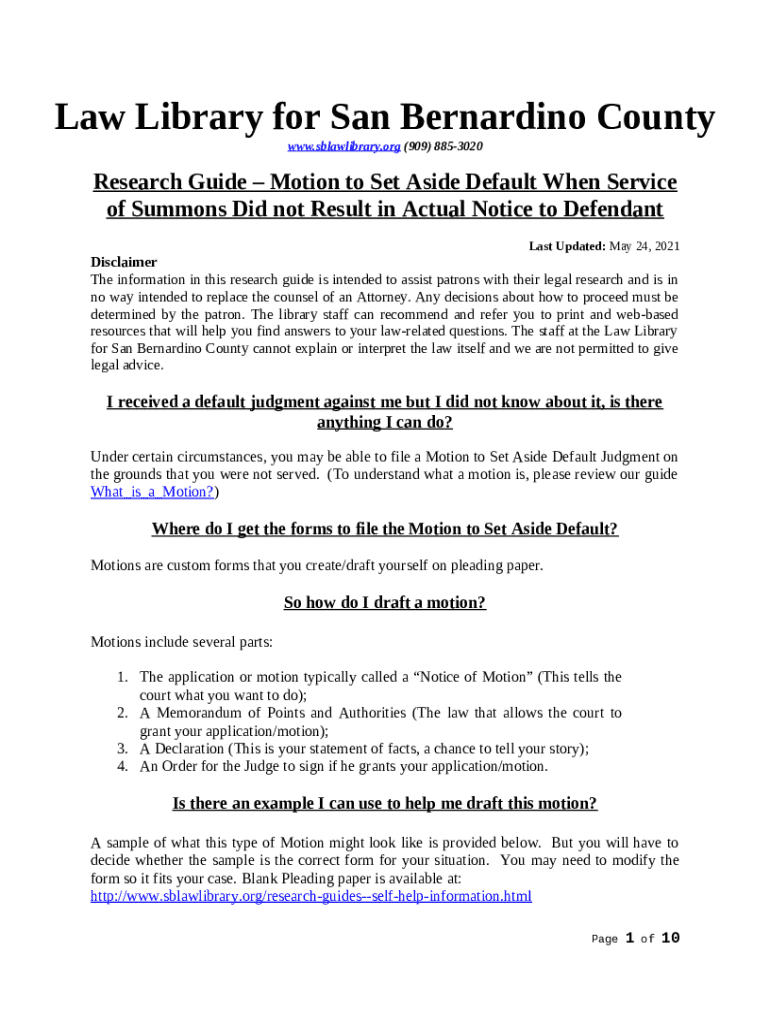
A Motion to Set Aside Default When Service of Summons Did refers to a legal request to overturn a default judgment due to improper service of the summons. In legal terms, a default judgment occurs when the defending party does not respond to a lawsuit within the stipulated time, leading to an automatic win for the plaintiff. However, if the defendant did not receive proper notice of the summons, they can file this motion to request the court to set aside the judgment, enabling them to present their case.
Key Components
- Default Judgment: A ruling made in favor of one party based on the failure of the other party to take action.
- Service of Summons: The delivery of legal documents notifying the defendant of the legal action against them.
- Improper Service: Occurs when the delivery process does not meet the legal requirements.
How to Use the Motion to Set Aside Default When Service of Summons Did
The use of this motion typically involves specific steps to ensure proper legal filing and compliance with court procedures. It is crucial to gather all required documentation and evidence proving that the summons was not served appropriately.
Steps for Using the Motion
- Documentation: Collect evidence demonstrating improper service of the summons, such as lack of notification.
- Consultation: Obtain legal advice to understand the implications and process of filing the motion.
- Drafting: Prepare a thorough motion document, including detailed reasons for the request.
- Filing: Submit the motion to the appropriate court clerk following jurisdictional rules.
How to Obtain the Motion to Set Aside Default When Service of Summons Did
Accessing the required forms to file a Motion to Set Aside Default is an essential step. Various resources are available to obtain these documents, which are needed to initiate the process.
Sources for Obtaining the Motion
- Court Clerk Offices: Visit local court offices to request the necessary forms.
- Online Legal Resources: Many jurisdictions provide downloadable forms on their court websites.
- Legal Aid Services: Seek assistance from organizations that offer free or low-cost legal help.
Steps to Complete the Motion to Set Aside Default When Service of Summons Did
Filling out the motion form requires attention to detail and understanding of legal terminology to ensure accuracy and legitimacy.
Step-by-Step Guide
- Personal Information: Fill in your contact details and the case number.
- Grounds for Motion: Clearly state the reasons for claiming improper service.
- Supporting Evidence: Attach documents supporting your claim, such as affidavits or proof.
- Signature: Sign and date the form before submission.
Why Should You File a Motion to Set Aside Default When Service of Summons Did
There are several valid reasons for filing this motion, primarily to ensure fair legal procedures and the opportunity for defense in court.
Benefits of Filing
- Right to Fair Trial: Ensures you have the chance to contest the case.
- Correction of Procedural Errors: Addresses mistakes in the delivery of legal notices.
- Legal Recourse: Provides an avenue to rectify unjust rulings due to unnotified default.
Who Typically Uses the Motion to Set Aside Default When Service of Summons Did
This motion is commonly used by defendants who have defaulted due to not receiving proper summons.


Common Users
- Individuals: Particularly those involved in civil lawsuits who did not receive their court summons.
- Businesses: Companies facing default judgments due to administrative miscommunications or delivery issues.

Legal Use of the Motion to Set Aside Default When Service of Summons Did
This motion serves as a critical legal tool to overturn default judgments where procedural errors can be demonstrated.
Legal Considerations
- Timeliness: The motion must be filed within a specific time frame after the default judgment.
- Substantiation: Must include valid evidence and reasons to support claims of improper service.
Key Elements of the Motion to Set Aside Default When Service of Summons Did
Understanding the primary components that comprise this motion is essential for correct and successful filing.
Essential Elements
- Jurisdiction Details: Correct court and case identification.
- Basis for Setting Aside Default: Detailed explanation and legal grounds.
- Requested Relief: Explanation of the desired outcome, such as vacating the default judgment.
- Verification: Declaration affirming the truthfulness of the provided information.
State-Specific Rules for the Motion to Set Aside Default When Service of Summons Did
Legal requirements for filing this motion can vary significantly from one state to another, with each jurisdiction having specific rules and procedures.
Examples
- California: Requires the motion to be filed within six months from the entry of default judgment.
- New York: Must demonstrate reasonable excuse and potential merit of the defense.
- Texas: A 30-day time frame is common for filing post-judgment motions for default setting aside.




