






Definition & Meaning
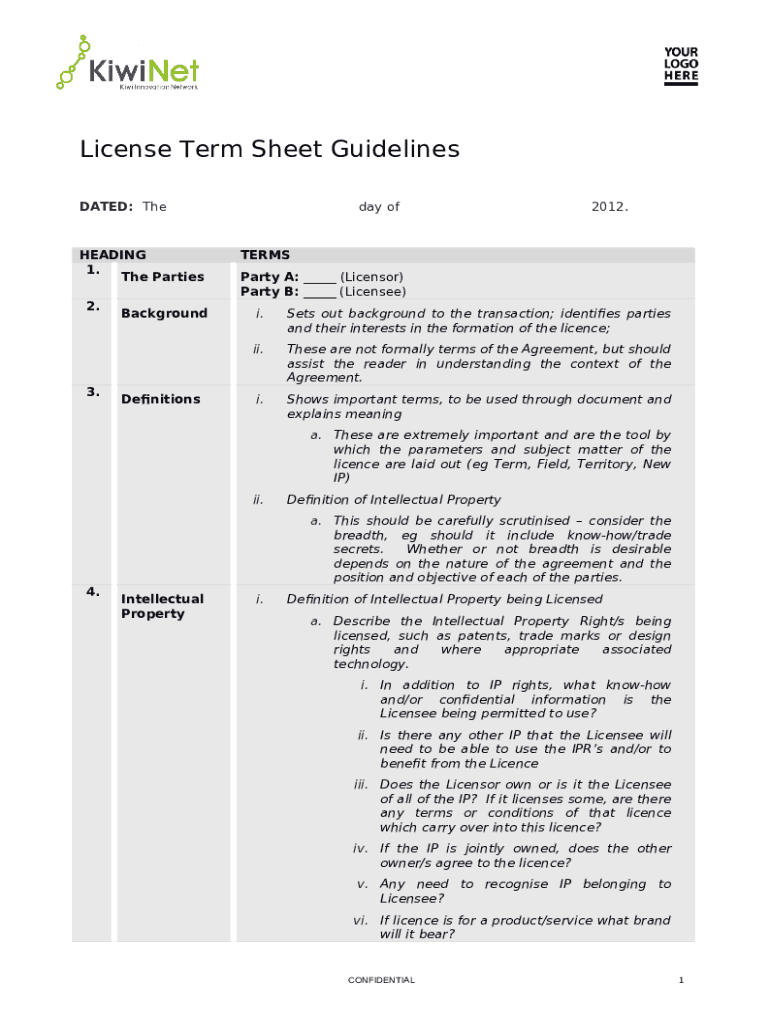
A License Term Sheet is a detailed document outlining the fundamental terms and conditions for a licensing agreement between two parties, typically a Licensor (Party A) and a Licensee (Party B). The term sheet serves as a blueprint for the final contract and is essential in setting clear expectations and responsibilities for both parties involved. Key elements include the scope of the license, financial terms, intellectual property (IP) rights, confidentiality agreements, and obligations for dispute resolution. This term sheet is crucial for ensuring both parties understand their rights and duties before forming a full binding agreement.
Key Elements of the License Term Sheet Guidelines
The License Term Sheet encompasses various critical components that dictate the structure of the licensing agreement. These elements are essential for forming a comprehensive understanding and include:
- Intellectual Property Definition: Clearly outlining what is covered under the agreement.
- Nature of the License: Specifics about whether the license is exclusive or non-exclusive.
- Compensation Structure: Details on royalties, lump sums, or other financial arrangements.
- Duties of IP Protection: Responsibilities for maintaining and defending the IP rights.
- Confidentiality Agreements: Terms to safeguard proprietary information exchanged between parties.
- Termination Clauses: Conditions under which the agreement can be ended.
- Dispute Resolution: Procedures for resolving any conflicts or disagreements that arise.
Each of these elements must be thoroughly detailed in the term sheet to prevent misunderstandings and ensure a smooth licensing process.
How to Use the License Term Sheet Guidelines
The guidelines provide a framework for drafting, negotiating, and finalizing a License Term Sheet. They should be used to:
- Draft Initial Terms: Use the guidelines to outline the essential terms of the licensing agreement.
- Facilitate Negotiations: Ensure both parties have a clear understanding and agreement on key points.
- Create a Preliminary Document: Form a basis for the detailed legal contract that will follow.
- Clarify Roles: Aid in assigning roles and responsibilities to prevent future conflicts.
- Guide Legal Review: Assist in legal counsel reviewing the document to ensure compliance with applicable laws.
Using these guidelines effectively can streamline the process of forming a robust and enforceable license agreement.
Steps to Complete the License Term Sheet Guidelines
Completing a License Term Sheet requires a methodical approach to ensure all components are addressed:
- Identify the Parties: Clearly specify who the Licensor and Licensee are.
- Detail IP Rights: Define the intellectual property involved and the scope of the license.
- Agree on Financials: Set out the payment terms, including any upfront fees and royalties.
- Outline Obligations: State the duties of each party, particularly concerning IP management and confidentiality.
- Include Legal Clauses: Add termination conditions and dispute resolution methods.
- Review and Revise: Both parties should review the draft to make necessary adjustments.
- Finalize the Document: Once agreed, the document serves as the basis for the final binding contract.
Following these steps ensures a thorough and complete License Term Sheet.
Who Typically Uses the License Term Sheet Guidelines
These guidelines are primarily used by:
- Business Executives: Seeking to enter into licensing agreements for their company's IP.
- Legal Professionals: Structuring the initial terms of licensing deals for their clients.
- Intellectual Property Owners: Who want to ensure their rights are protected when granting a license.
- Entrepreneurs and Start-ups: Exploring collaborative business opportunities involving their IP.
These users rely on the guidelines to craft agreements that protect their interests and facilitate successful partnerships.


Important Terms Related to License Term Sheet Guidelines
Understanding key terms is crucial when dealing with License Term Sheets, including:
- Licensor/Licensee: Parties involved in the agreement.
- Exclusive License: Grants rights to one party exclusively, barring others.
- Royalty Payments: Ongoing compensation for use of the IP.
- Confidential Information: Sensitive data shared under the agreement.
- Infringement: Unauthorized use of protected IP.
A solid grasp of these terms aids in clearer communication and more effective drafting of the License Term Sheet.
Legal Use of the License Term Sheet Guidelines
The License Term Sheet Guidelines serve as a legal foundation for drafting a licensing agreement. These guidelines help ensure the document:
- Adheres to Applicable Laws: Aligns with both federal and state regulations concerning intellectual property and contracts.
- Complies with Industry Standards: Reflects standard practices within the given industry for licensing agreements.
- Provides Legal Protection: Offers clear legal recourse in case of a breach.
Consulting with legal counsel is advisable to ensure the guidelines adequately address all necessary legal considerations.
State-specific Rules for the License Term Sheet Guidelines
While the guidelines offer a general framework, specific state laws in the United States may affect how a License Term Sheet is drafted and enforced. Examples include:
- Jurisdiction-specific IP Laws: Variations in how states handle IP protection.
- Enforcement of Non-compete Clauses: Which can vary significantly between states.
- Tax Implications: Specific to the licensing agreements and revenue treatment.
Parties should consider state-specific regulations to ensure compliance and protect their interests adequately. Consulting state-specific legal expertise is recommended for navigating these nuances.
Examples of Using the License Term Sheet Guidelines
Real-world scenarios where these guidelines have been applied include:
- Tech Companies: Licensing their patented technology to manufacturers.
- Authors: Granting publishing rights to multinational publishers.
- Biotech Firms: Allowing pharmaceutical companies to use proprietary processes.
In each case, the License Term Sheet set the stage for a full agreement, ensuring both parties understood their rights and obligations before proceeding.