Definition & Meaning
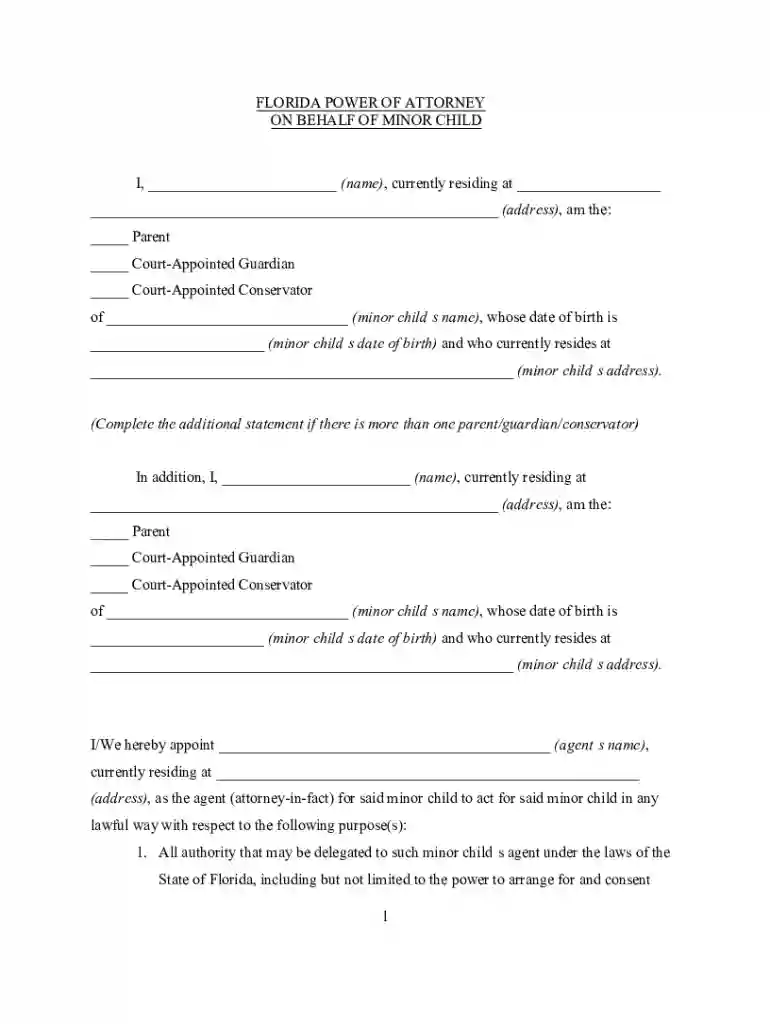
A Florida Minor Child Power of Attorney (POA) form is a legal document that allows a parent or legal guardian to delegate decision-making authority concerning the welfare of a minor child to an appointed agent. This authority can be granted for areas such as medical treatment, education, and general welfare. The form acts as a temporary measure to ensure the child’s needs are met when the parent or guardian is unavailable. It's important to clarify that using this form does not terminate parental rights; it merely grants another party the ability to make decisions on behalf of the child within the scope defined in the document.
Key Elements of the Form
The Florida Minor Child Power of Attorney Template includes several crucial components:
- Principal and Agent Information: This includes the names and contact details of the parent or guardian (principal) and the individual appointed to act on behalf of the child (agent).
- Scope of Authority: This outlines the specific decisions the agent is authorized to make, such as medical, educational, or general welfare decisions.
- Successor Agent: The form may include provisions for naming a successor agent who can step in if the primary agent is unavailable.
- Duration: The timeframe during which the POA is valid, often from a specific start date to an end date.
- Signatures and Notarization: Essential for the document’s validity, including the signatures of the principal, agent, and potentially additional witnesses, along with a notary public's seal.
Legal Use in Florida
In Florida, the execution of a Minor Child Power of Attorney is subject to specific legal standards:
- Temporary Guardianship: The form allows for temporary guardianship, which is particularly useful for short-term situations where the parent will be absent due to military service, travel, or medical treatment.
- Notarization: To ensure legal standing, the document must be notarized. This adds a layer of authenticity and ensures the document is recognized in legal proceedings if necessary.
- Revocation Rights: The parent retains the right to revoke the authority granted at any time, which ensures that they maintain ultimate control over their child's welfare.
How to Use the Form
To utilize the Florida Minor Child Power of Attorney Form effectively:
- Complete the Form: Fill in all sections with accurate information about the parent, agent, and child.
- Define the Authority: Clearly outline the powers you are delegating to the agent. Decide on the specific areas like medical or educational decisions.
- Sign and Notarize: Ensure that the document is signed in the presence of a notary public to meet legal requirements.
- Provide Copies: Give copies to relevant parties, such as the child’s school or healthcare providers, to streamline any decision-making processes during the guardianship period.
Steps to Complete the Form
Completing the Florida Minor Child Power of Attorney Form involves a systematic process to ensure accuracy and legal compliance:
- Gather Information: Collect the necessary personal information about the parent, child, and chosen agent.
- Draft the Document: Use a template to guide the completion, detailing the powers being granted.
- Review Legal Requirements: Before signing, verify that the document meets all legal prerequisites under Florida law, including the necessity for notarization.
- Execute the Document: Sign the form in front of a notary public, and ensure all parties involved are clear about the terms.
- Distribute the Form: Share copies with key individuals and entities involved in the child’s care to ensure smooth operation of delegated powers.
State-Specific Rules
Understanding Florida’s specific legal framework is crucial for the valid execution of a Minor Child Power of Attorney:
- Duration Limits: Florida may impose limitations on how long a Minor Child POA can remain active without renewal.
- Specific Permissions: Certain powers, such as medical decision-making, must align with state healthcare laws and may require explicit consent.
- Legal Representation: In complex situations, seeking legal advice to ensure compliance with state statutes is advised.
Important Terms Related to the Form
When dealing with a Florida Minor Child Power of Attorney, several legal terms are frequently encountered:
- Principal: The parent or guardian who grants authority.
- Agent: The individual receiving the authority to act on the child’s behalf.
- Notarization: The official process of certifying a document with a notary public to confirm its authenticity.
- Revocation: The process of canceling the POA before its term ends.
Who Typically Uses the Form
The Florida Minor Child Power of Attorney Form is most commonly utilized by:

- Military Families: Parents deployed overseas might use this form to ensure their children’s welfare is continuously managed.
- Traveling Professionals: Parents who travel for work may appoint someone to make decisions for their child in their absence.
- Health Situations: In cases where a parent undergoes long-term medical treatments or surgery, this form provides a solution for uninterrupted child care.