







Definition and Meaning of a Quotation Template Document
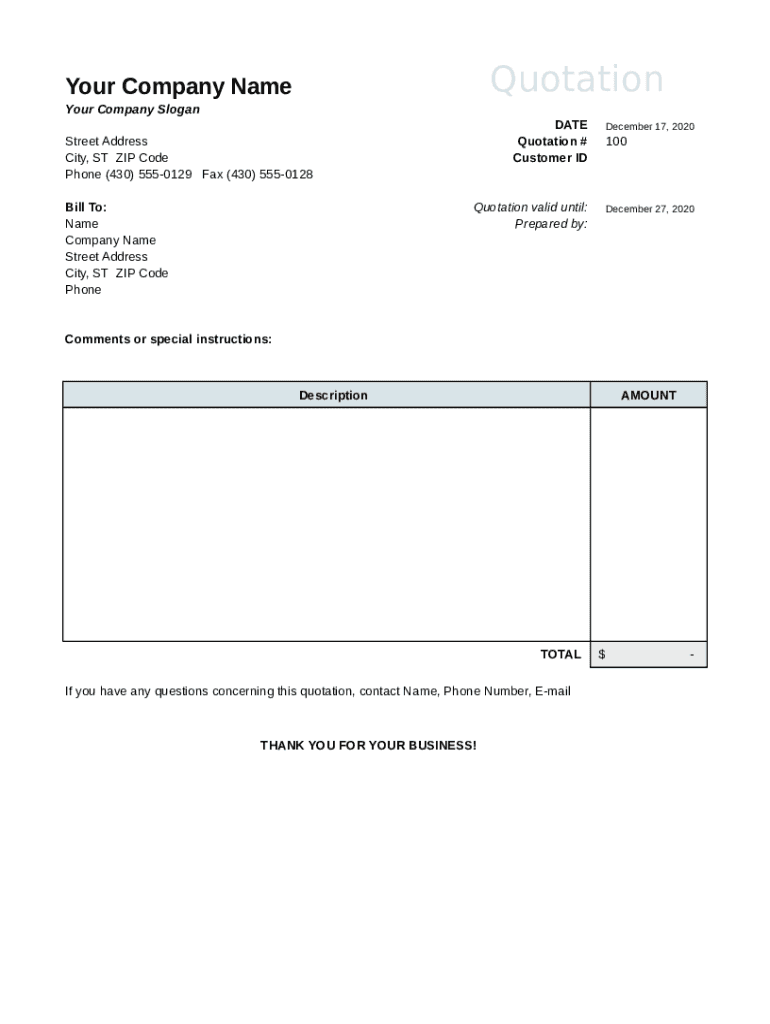
A quotation template document is a structured format used by businesses to present potential costs for products or services to clients. This form includes detailed information such as the date of the quotation, quotation number, customer identification, billing data, and a listing of item descriptions along with associated costs. It serves as a preliminary invoice, providing a summary of what a client can expect in terms of pricing and service details. The document emphasizes transparency by clearly laying out pricing structures, terms, and conditions and acts as a formal offer that can lead to a binding agreement upon acceptance.
How to Use a Quotation Template Document
Using a quotation template document efficiently hinges on understanding its key sections and ensuring accurate information input. Here are the steps to use it:
-
Header Details: Begin with the company name, logo, and contact information at the top of the document. This section is vital for establishing your brand's visibility and providing clients with an immediate point of contact.
-
Customer Information: Enter the customer's name, address, and contact details. This ensures that the quotation is tailored specifically to the client's needs and provides a record for both parties.
-
Quotation Number and Date: Assign a unique quotation number and include the date to help in tracking correspondence and timelines. This is crucial for record-keeping and future reference in case of multiple transactions or disputes.
-
List of Items/Services: Clearly itemize all products or services being quoted, along with their descriptions. This section may include unit prices and quantities to provide a detailed breakdown of the expected costs.
-
Total Costs and Terms: Sum up the totals and include applicable taxes, discounts, or additional service fees. It's important to clearly mention payment terms, delivery timelines, and any other crucial conditions.
-
Confirmation Section: Provide space for the client's signature to confirm acceptance. This transforms the quote into a legally binding agreement upon approval.
Steps to Complete the Quotation Template Document
Completing a quotation template involves a systematic approach:
-
Gather Necessary Information: Before starting the document, collect all relevant data about the services or products, client details, and pricing structures.
-
Template Selection: Choose a template that suits the business's image and communication style while ensuring it is comprehensive enough to include all necessary details.
-
Detail Input: Carefully enter the details into the template, double-checking for accuracy. Missteps here can lead to discrepancies and misunderstandings later.
-
Review and Adjustments: Ensure all entries are correct and make adjustments for any special client-specific terms or personalized offers.
-
Final Approval: Once prepared, review the document with management or concerned department heads for final approval before sending it to the client.
Key Elements of the Quotation Template Document
A comprehensive quotation template should contain:
- Header Information: Company details and branding.
- Client Details: Name, address, and contact information.
- Quotation Number and Date: For tracking and referencing.
- Itemized List: Detailed description of products/services with pricing.
- Terms and Conditions: Payment, delivery, and other policy conditions.
- Approval Section: Space for client signatures and acknowledgments.
Examples of Using the Quotation Template Document
Effective use of a quotation template can be seen in varied scenarios such as:
-
Project Proposals: A construction company provides detailed quotes for potential building projects, outlining costs for materials and labor.
-
Product Sales: A retail business sends a quotation to a large client looking to bulk purchase inventory, detailing unit costs and potential discounts.
-
Service Agreements: An IT service firm drafts a quote for ongoing maintenance and support contracts, emphasizing service-level terms.
Who Typically Uses the Quotation Template Document
Various businesses across industries rely on quotation templates. Key users include:
- Sales Teams: To standardize offers and ensure pricing consistency.
- Service Providers: To clearly define scope and costs for custom services.
- Procurement Departments: For managing vendor offers and comparisons.


Legal Use of the Quotation Template Document
While a quotation document itself is not a binding contract, it can become one upon acceptance. To ensure legal compliance:
- Clear Terms: Define terms clearly to avoid ambiguity.
- Acceptance Clause: Include an acceptance clause where the client can acknowledge agreement by signing or responding explicitly.
- Legal Disclaimers: Add disclaimers stating the quote's validity period and any contingencies.
Digital vs. Paper Versions of the Quotation Template Document
Businesses often weigh the pros and cons between digital and physical formats:
-
Digital Documents: Offer advantages like easy distribution and quick edits, reducing paper waste and increasing efficiency through integration with software tools like QuickBooks.
-
Paper Documents: Still hold merit in face-to-face transactions where physical signatures or paper trails are needed for compliance or perception reasons.
Proper choice depends on the business's workflow preferences, client interaction style, and logistical considerations.




