






Definition & Meaning
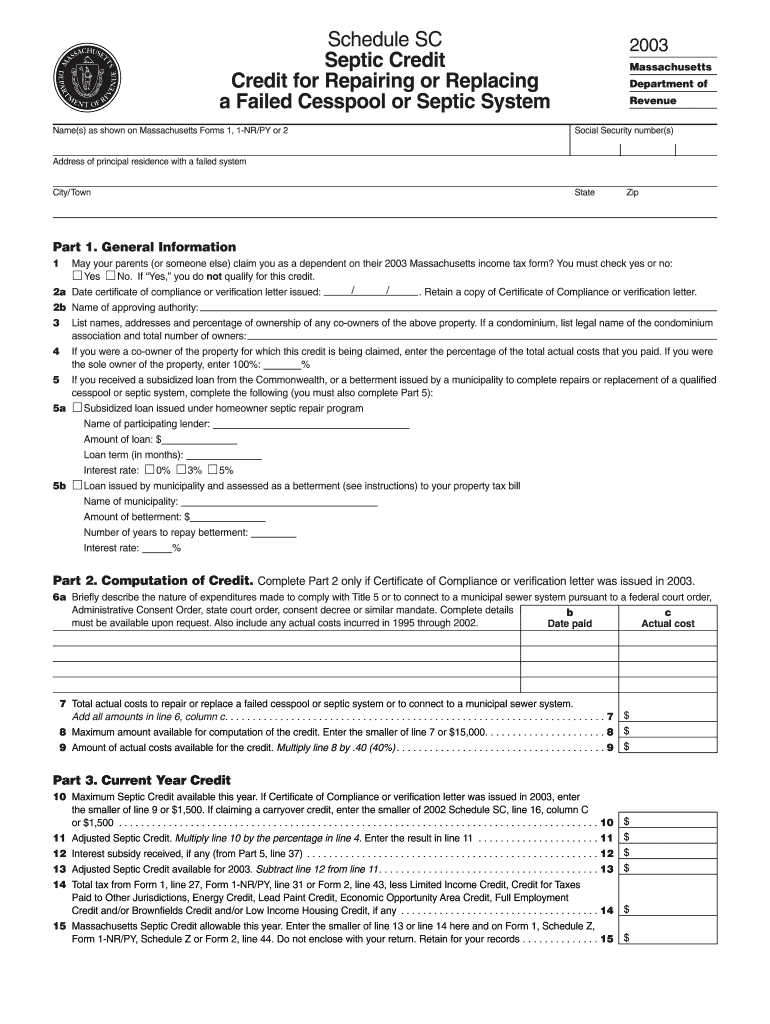
The Schedule SC form is a document used by taxpayers in Massachusetts to claim a septic credit for the repair or replacement of a failed cesspool or septic system. This form is issued by the Massachusetts Department of Revenue and is essential for documenting eligible expenses related to septic system improvements. It includes various sections for providing personal information, credit calculation, and verification of compliance through certificates. The Schedule SC allows taxpayers to determine their eligibility and calculate the available tax credit, which can be applied to their state tax liability.
How to Use the Schedule SC
To correctly utilize the Schedule SC, it's crucial to follow a structured approach. First, gather all relevant personal and financial information, including detailed cost breakdowns of the septic system project. Next, accurately fill out each section of the form, starting with general information, followed by the computation of the septic credit. The form guides you through documenting current year credits, unused credit carryovers, and any applicable interest subsidies. Completing the Schedule SC thoroughly ensures that you can maximize your potential tax credits and meet all legal requirements.
Steps to Complete the Schedule SC
-
Gather Required Documentation:
- Collect personal details like Social Security numbers.
- Obtain cost details related to the septic or cesspool repair.
- Secure compliance certificates and receipts from contractors.
-
Fill Out General Information:
- Input personal identification and address.
- Identify the property where the septic system is located.
-
Calculate Septic Credit:
- Report eligible expenses.
- Determine the credit amount based on full or partial project costs.
-
Complete Unused Credit Carryover:
- Record any remaining credit from previous years.
- Calculate how much credit can be carried forward.
-
Verify Compliance and Eligibility:
- Ensure compliance forms are accurate and complete.
- Review all sections for errors before submission.
Following these steps will help in completing the Schedule SC accurately.
Key Elements of the Schedule SC
Several key elements define the structure of the Schedule SC. The form includes a general information section where taxpayers provide essential identification and property details. Another critical element is the calculation area for estimating the septic credit, requiring precise disclosure of project expenses. The form also features sections for recording existing credits, unused credits, and carryover provisions. Compliance and eligibility verification through certificates is another fundamental component. Together, these elements ensure that taxpayers can legitimately claim their septic credits under Massachusetts tax laws.
Eligibility Criteria
To qualify for a credit via the Schedule SC, taxpayers need to meet specific eligibility criteria set forth by the Massachusetts Department of Revenue. The primary requirement involves owning property where the septic or cesspool system underwent qualified repair or replacement work. The taxpayer must also provide documented evidence of compliance with environmental standards. Eligibility further requires detailed invoices and certificates proving the work was both necessary and properly executed. Understanding these criteria is key, as it directly impacts whether the credit will be granted.


Required Documents
Completing the Schedule SC requires several documents to support the claimed credit:
- Personal identification documents such as a driver's license or state ID.
- Proof of property ownership or a tax bill that confirms the address of the property involved.
- Invoices and receipts detailing all expenses related to the sewage system repair or replacement.
- Compliance certificates from certified engineers or inspectors, verifying completion of the project following state regulations.
These documents ensure that the credit claimed on the Schedule SC is legitimate and fully supported by evidence.
Filing Deadlines / Important Dates
Submitting the Schedule SC comes with specific filing deadlines that must be adhered to for efficient processing. It should be filed concurrently with the annual Massachusetts state tax return. The typical deadline is April 15; however, it is advisable to verify each tax year as slight variations can occur. Missing the filing deadline can result in a loss of the opportunity to claim the septic credit for that tax year. Planning ahead is essential to ensure the necessary documents and information are ready well before the deadline.
Examples of Using the Schedule SC
Imagine a homeowner in Massachusetts who replaces an old septic system due to frequent malfunctions and environmental concerns. They incur significant costs, which can be reduced by filing a Schedule SC. By documenting expenses such as contractor fees and compliance inspections, this homeowner can apply for a septic credit to reduce their state tax liability. Another example might include a property owner carrying forward unused credits from a partial system replacement to subsequent years, thereby spreading out tax benefits. These scenarios underscore the form’s utility in financial planning for property upgrades.
In summary, the Schedule SC is a valuable tool for taxpayers in Massachusetts seeking to offset some of the financial burdens associated with septic system improvements. Proper use of this form involves staying informed on eligibility requirements, gathering necessary documentation, and adhering to filing deadlines to maximize available benefits.