






Definition & Meaning
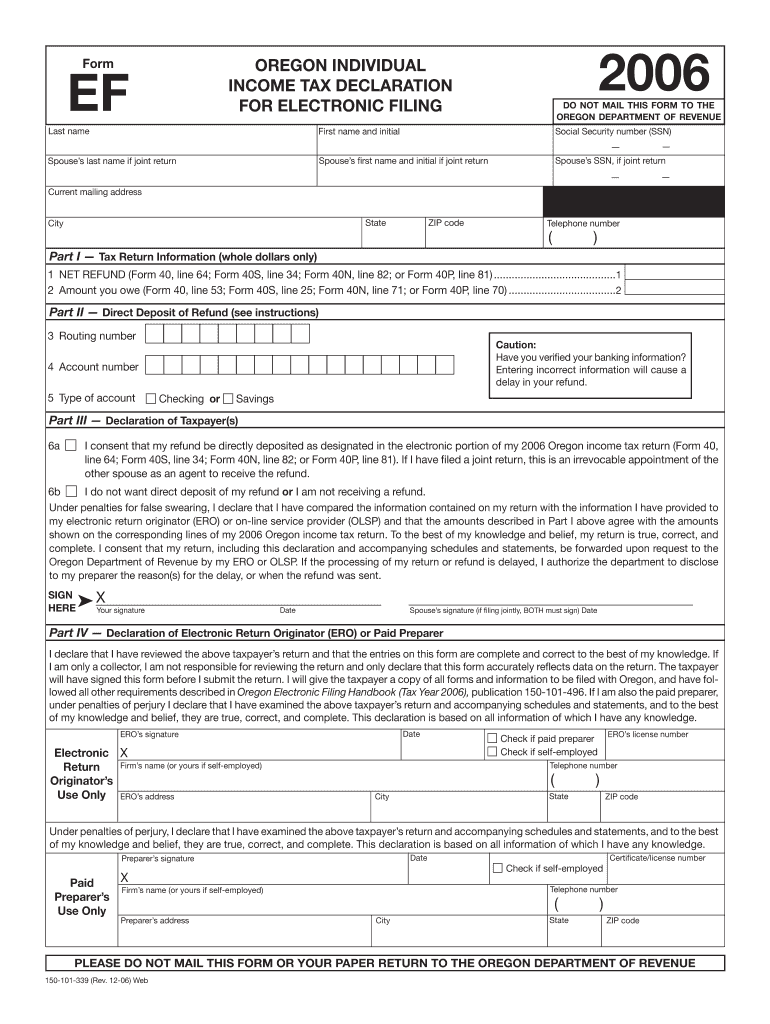
The Oregon Individual Income Tax Declaration for Electronic Filing, commonly referred to as Form EF, is a critical document used in the electronic submission of individual income tax returns to the Oregon Department of Revenue. It serves multiple purposes, including verifying the accuracy of the tax return, facilitating electronic filing, and authorizing direct deposit of tax refunds. The form is an integral part of the digital tax filing ecosystem, ensuring that both taxpayers and electronic return originators (EROs) confirm and agree on the information being submitted.
Key Purposes
- Verify taxpayer and spouse information.
- Confirm the accuracy of the submitted tax return.
- Authorize direct deposit of tax refunds into designated bank accounts.
- Serve as a legal confirmation by the taxpayer and ERO regarding the submitted data.
Steps to Complete the Oregon Individual Income Tax Declaration for Electronic Filing
Properly completing the Form EF involves several specific steps to ensure compliance and the successful processing of your tax return.
Step-by-Step Instructions
-
Enter Taxpayer and Spouse Information: Input full names, social security numbers, and contact details accurately. This section is crucial for identifying the individuals associated with the tax return.
-
Confirm Tax Return Details: Review and confirm all tax return amounts, including income, deductions, credits, and calculated refunds or taxes owed. Ensure that these figures align with the electronic filing data.
-
Provide Banking Details for Direct Deposit: If opting for a direct deposit of your refund, enter the bank's routing number and your account number. Double-check for accuracy to avoid delays or errors in refund processing.
-
Complete Declarations: Both the taxpayer and the ERO or paid preparer must certify the accuracy of the information by signing the declaration. This step is essential to validate the electronic filing process.
Important Terms Related to Oregon Individual Income Tax Declaration for Electronic Filing
Understanding the terminology associated with Form EF can aid in accurately completing the form and ensuring compliance with filing requirements.
Key Terms
- Electronic Return Originator (ERO): A person or entity authorized to participate in electronic filing by preparing and transmitting tax data on behalf of the taxpayer.
- Direct Deposit Authorization: A section within Form EF allowing taxpayers to specify banking information for electronic refunds.
- Taxpayer Declaration: A legal statement affirming the accuracy and completeness of the tax return.
How to Obtain the Oregon Individual Income Tax Declaration for Electronic Filing
Obtaining Form EF is a straightforward process, as it is widely accessible through different channels.
Methods of Acquisition
- Electronic Sources: The form can be downloaded in PDF format from the Oregon Department of Revenue's official website.
- Tax Software Integration: Many tax preparation software systems, such as TurboTax and QuickBooks, include Form EF as part of their electronic filing services, offering automatic completion and submission within the software.
Legal Use of the Oregon Individual Income Tax Declaration for Electronic Filing
Form EF serves as a legally binding document that validates the electronic filing of your tax return.
Legal Implications
- Taxpayer Compliance: Signing the form indicates acknowledgment of the correctness of the tax return information and agreement to submit the data electronically.
- Authorization for EROs: Ensures that EROs have the taxpayer's permission to submit returns on their behalf, legally binding both parties to the document's contents.
State-Specific Rules for the Oregon Individual Income Tax Declaration for Electronic Filing
While Form EF follows a standardized structure, certain state-specific regulations apply.
Key State Requirements
- Oregon-Specific Fields: The form may include particular sections adhering to state legislation, such as unique deductions or credits applicable within Oregon.
- Direct Submission Guidelines: It must be noted that Form EF should not be mailed to the Oregon Department of Revenue. The submission is exclusively electronic.
Filing Deadlines / Important Dates
Understanding the timelines associated with Form EF is crucial for timely filing.
Critical Deadlines
- Traditional Deadline: Aligns with federal tax filing deadlines, often April 15.
- State Extensions: Oregon may grant extensions for electronic filings under specific circumstances, following a granted federal extension.
Exceptions and Variations
- Emergency Extensions: Extensions may be available in cases of federal emergencies or special tax legislation changes affecting filing dates.
Penalties for Non-Compliance
Failing to comply with requirements related to Form EF can result in penalties.
Common Penalties
- Failure to File: Missing the electronic submission deadline can result in accrued interest and penalties on any taxes owed.
- Accuracy-Related Penalties: Providing false or misleading information can incur additional fines or legal consequences.
Understanding these aspects of the Oregon Individual Income Tax Declaration for Electronic Filing helps ensure accurate and compliant participation in the electronic tax submission process.