






Understanding the DR-26S Form
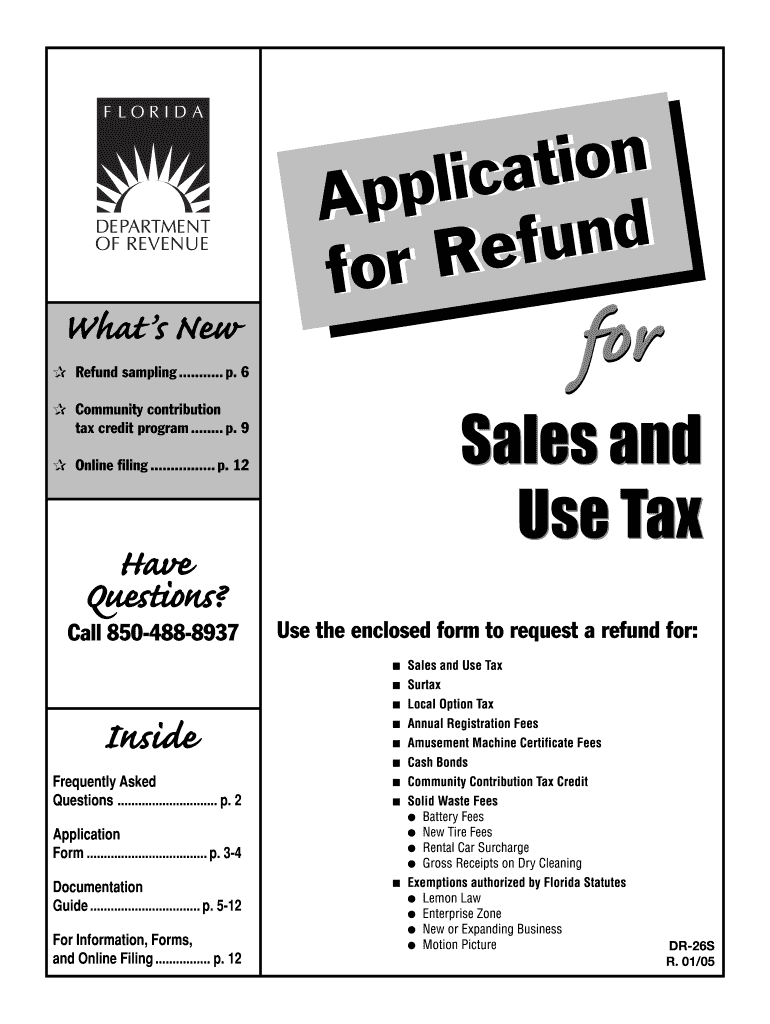
The DR-26S form is a crucial document for individuals and businesses seeking refunds on sales and use tax overpayments in Florida. It serves as a formal request to recover funds that were overpaid due to various eligible circumstances. Understanding the specific elements and intended purpose of the DR-26S is key to navigating the refund process effectively.
Definition and Purpose of DR-26S
- The DR-26S form is used primarily to apply for refunds of sales and use taxes that have been overpaid.
- This form can cover different refund scenarios, such as duplicate payments, exemptions, and erroneous tax collections.
- Knowing the form's purpose helps applicants align their submissions accurately and ensures adherence to refund protocols.
Steps to Complete the DR-26S Form
Filling out the DR-26S can be an intricate process, requiring careful attention to detail. Follow these sequential steps to complete the form accurately:
- Identify the Overpayment Scenario: Start by determining the specific reason for your overpayment, such as a duplicate payment or a qualified tax exemption.
- Gather Required Documentation: Collect all necessary records that support your refund claim. This might include receipts, transaction records, and documentation proving exemptions.
- Complete the Form Sections: Fill in all sections of the form meticulously. Ensure that personal and business information is accurate and legible.
- Review for Accuracy: Double-check all the details entered to confirm they are correct. Errors can delay processing or result in denied claims.
- Submit the Form: Once completed, submit the form through the designated channel, either online, via mail, or in person, depending on your preference and the available options.
Important Terms Related to DR-26S
Familiarizing yourself with key terminology associated with the DR-26S is essential for proper form completion and submission:
- Refund Claim: The process of requesting the return of overpaid taxes.
- Eligibility Criteria: Specific conditions that determine whether a refund can be legitimately obtained.
- Supporting Documentation: Documents that substantiate the claim of overpayment, required for claim validation.
- Exemption: Conditions under which tax payments can be reduced or waived, impacting the eligibility for a refund.
Who Typically Uses the DR-26S Form
The DR-26S is commonly utilized by a diverse range of taxpayers who have experienced tax overpayments:
- Individual Taxpayers: Those who have paid more than the required amount in sales tax or used tax might file for a refund via the DR-26S.
- Licensed Businesses: Enterprises that have overpaid taxes as part of their routine transactions, such as importers and retailers, frequently use this form.
- Non-Profit Organizations: These entities often file refund claims for taxes paid on exempt transactions.

Required Documents for Submission
Accurate submission necessitates the inclusion of specific supporting documents. These are critical to the approval of refund claims:
- Proof of Payment: Receipts or bank statements evidencing the overpaid amount.
- Tax Exemption Certificates: If applicable, submit exemption documentation, valid at the time of payment.
- Detailed Explanation of Overpayment: A narrative or formal documentation that outlines and justifies the overpayment case.
State-Specific Rules for the DR-26S
As a state-specific form, the DR-26S is governed by Florida's tax laws and requirements. Key aspects include:
- The form must comply with Florida law regarding sales and use tax.
- The submission deadlines adhere to timelines specified by the Florida Department of Revenue.
- Any variations in city or county tax rates within Florida must be accurately reported.
Penalties for Non-Compliance
Failing to follow correct procedures while filing the DR-26S can lead to:
- Denial of the refund claim, potentially forfeiting the right to recover overpaid funds.
- Future restrictions on filing similar claims if discrepancies are found.
- Accrued interest on unpaid taxes if overpayment claims were inaccurately reported.
Form Submission Methods
Depending on personal or corporate preferences, there are several methods to submit the DR-26S:
- Online Submission: Direct electronic filing through the Florida Department of Revenue's official website is efficient for quick processing.
- Postal Mail: Physical forms can be mailed to the designated state tax office.
- In-Person Delivery: While less common, in-person submission ensures receipt and immediate acknowledgment.
By understanding these elements and steps, applicants can effectively manage and submit the DR-26S form to secure refunds on sales and use tax overpayments. Comprehensive preparation and attention to detailed requirements ensure the streamlined execution of the claims process.