






Definition and Meaning
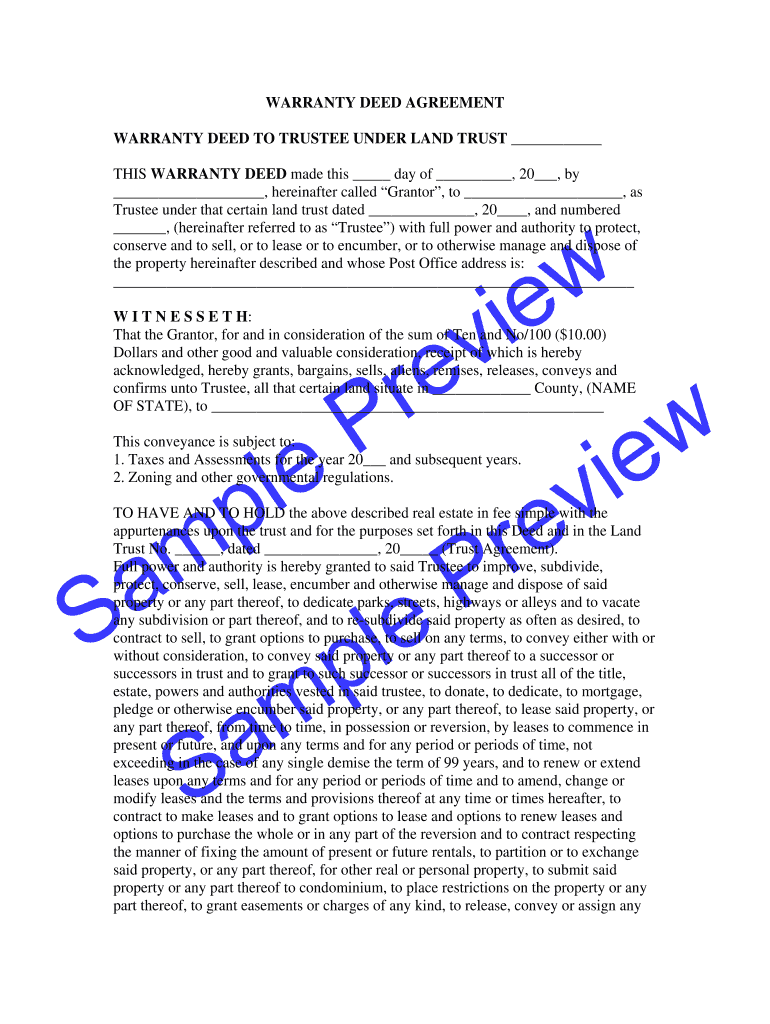
A Warranty Deed Agreement is a legal document used in real estate transactions to transfer ownership of property from the grantor, who owns the property, to the grantee. It provides a guarantee that the grantor holds a clear title to the property and has the right to sell it. This deed includes warranties that protect the grantee from any claims or encumbrances that may arise, ensuring that the property is free from undisclosed issues.
How to Use the Warranty Deed Agreement
Using a Warranty Deed Agreement involves several steps:
- Prepare the Document: Gather necessary details such as property description, the names of both parties, and any specific terms.
- Review with Legal Assistance: It's advisable to consult with a legal professional to ensure that the agreement complies with local laws.
- Execute the Agreement: Both parties must sign the document in the presence of a notary public.
- Record the Agreement: Submit the completed deed to the local county recorder's office to make it a part of the public record.
Steps to Complete the Warranty Deed Agreement
- Identify Parties: Fill in the names and information for the grantor(s) and grantee(s).
- Describe Property: Include the exact legal description of the property as stated in existing deeds or title documents.
- Warranties and Covenants: Outline the warranties provided by the grantor, including any specific covenants agreed upon.
- Notarization: Both parties must sign in front of a notary, who will then notarize the document.
- Recording: File the document with the appropriate local governmental authority to ensure it is legally binding.
Key Elements of the Warranty Deed Agreement
- Grantor and Grantee Information: Full legal names and addresses.
- Legal Property Description: An accurate and complete description that uniquely identifies the property.
- Guarantees: Multiple warranties, including the covenant of seisin, ensuring the grantor owned the property and had the right to convey it.
- Signatures: Required signatures of both parties, notarized to ensure authenticity.
- Recording Information: Details on the jurisdiction where the document is recorded.
State-Specific Rules for the Warranty Deed Agreement
Different states have varying requirements and rules for warranty deeds. For example:
- California: Requires additional disclosure forms to accompany the deed.
- Florida: May require additional stamps or fees at the time of filing.
- Texas: Requires clear details on property boundaries due to specific state laws on easements.
Legal Use of the Warranty Deed Agreement
Warranty Deed Agreements are used primarily for:
- Transferring Ownership in Sales: Ensures buyer protection against title defects.
- Clarifying Title Histories: Helps clear past issues, providing a clear chain of ownership.
- Providing Legal Recourse: Gives the grantee legal standing to sue if warranties are violated.
Important Terms Related to the Warranty Deed Agreement
- Covenant of Seisin: Ensures the grantor owns the property and has the authority to convey it.
- Encumbrances: Third-party claims or liens on a property that could affect its transfer.
- Covenant of Quiet Enjoyment: Ensures that the grantee can possess the property without disturbance from previous owners' claims.
Examples of Using the Warranty Deed Agreement
- Residential Sales: A homeowner sells their property, and a warranty deed guarantees the buyer's title protection.
- Trust Transfers: Property placed in a trust for beneficiaries, involving a warranty deed to secure the transfer.
- Family Transfers: Transferring property between family members with guarantees against future title disputes.