






Definition & Purpose of the Form
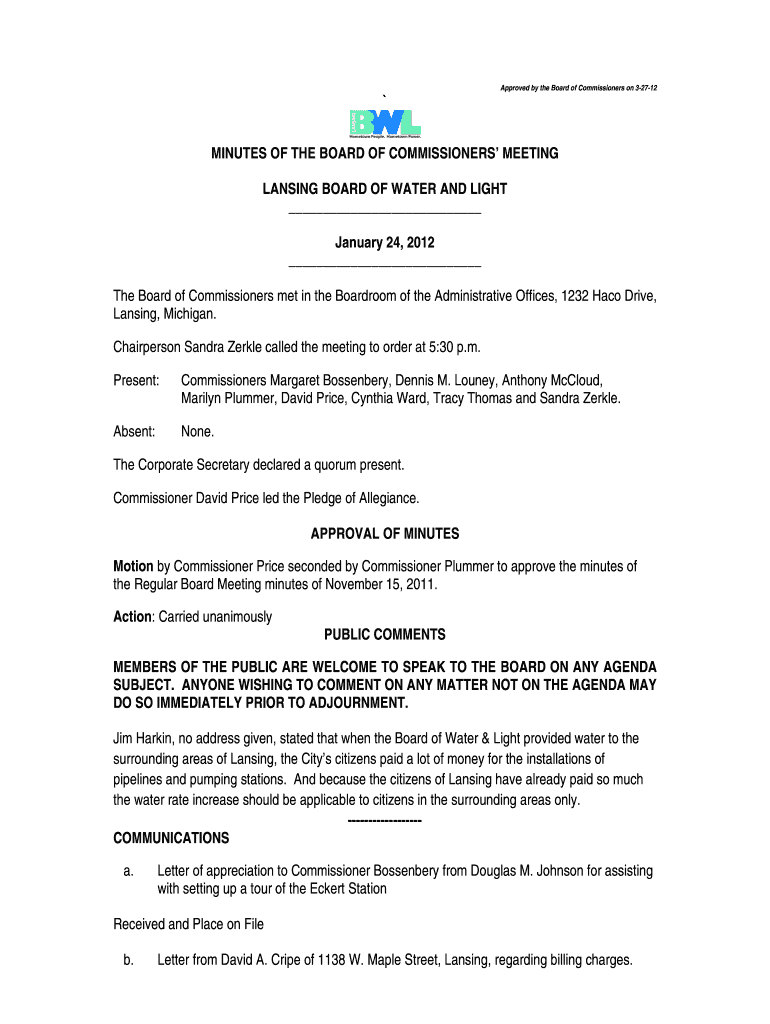
"Approved by the Board of Commissioners on 32712" refers to a specific document or resolution approved by the Lansing Board of Water and Light's Board of Commissioners meeting held on January 24, 2012. This approval marks the official sanctioning of the actions, decisions, policies, or rates as agreed upon during the meeting. Understanding the meaning of this form is crucial for stakeholders, as it formalizes the discussed changes and provides a clear directive for implementation.
How to Use the Form
Utilizing the "Approved by the Board of Commissioners on 32712" form involves acknowledging and implementing the resolutions and changes documented in the meeting minutes. This may include executing new rate schedules, adjusting operational procedures, or adapting strategic plans in line with the approved changes. For organizations and individuals affected by these resolutions, such as local businesses or residents, accurately interpreting and applying the form's content is essential for compliance and adaptation.
Key Elements of the Form
This document contains several critical aspects, such as:
- Approval of Previous Meeting Minutes: Each session's continuity depends on the formal acceptance of prior minutes.
- Public Comments: Feedback regarding water rate increases provided by community members is carefully documented.
- Communications and Reports: Insights shared by citizens and retirees about healthcare costs, along with committee reports, offer a holistic view.
- Rate Changes: Proposed rate alterations for water, steam, and electric services reflect strategic adjustments.
- Resolutions for Bond Refunding: Approved resolutions aim at reducing debt service costs and improving financial health.
- Awards and Updates: The Board's achievements and ongoing project updates are recognized.
Steps to Complete the Form
Ensuring completeness involves:
- Review Meeting Minutes: Carefully analyze all documented resolutions and comments.
- Acknowledge Resolutions: Ensure that all resolutions, especially those regarding rate changes and financial adjustments, are understood and accepted.
- Implement Changes: Execute approved rate schedules and administrative adjustments.
- Coordinate with Stakeholders: Engage with affected parties such as citizens and businesses for a smooth transition.
- Monitor Compliance: Establish a framework to ensure all directives are followed correctly.
Who Typically Uses the Form
The form is primarily utilized by:
- Local Government Officials: Engage with the document for policy execution.
- Utility Managers and Staff: Implement operational changes.
- Community Members and Businesses: Adapt to new rates and service structures.
- Regulatory Bodies: Ensure compliance with mandated resolutions.


Legal Use & Compliance
Adherence to the approved resolutions is mandatory. The document serves as a legal framework guiding the implementation of changes in rates and procedures. Non-compliance could result in penalties or operational setbacks, emphasizing the importance of understanding and following the form's content thoroughly.
State-Specific Considerations
Given its localized context, specific rules and applications pertain to Michigan-based entities interacting with the Lansing Board of Water and Light. The document may reflect state-specific regulatory requirements needing careful attention by stakeholders to implement adjustments properly.
Examples of Usage
Real-world applications include:
- Rate Adjustments: Utility companies updating bills and service agreements in compliance with newly approved rate structures.
- Community Engagement: Citizens and organizations providing feedback on proposed changes during public consultations.
- Operational Execution: Administrative departments revising procedures to incorporate board decisions.
Important Dates and Filing Deadlines
Key dates associated with this form include the initial approval date (January 24, 2012) and the effective date for rate changes (March 1, 2012). Attending to these deadlines ensures timely execution of directives and mitigates the risk of non-compliance.