




Definition and Meaning
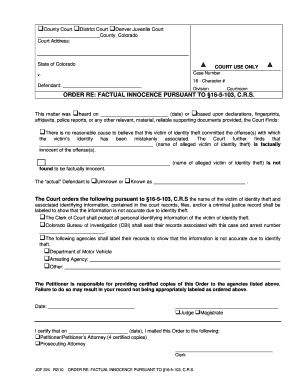
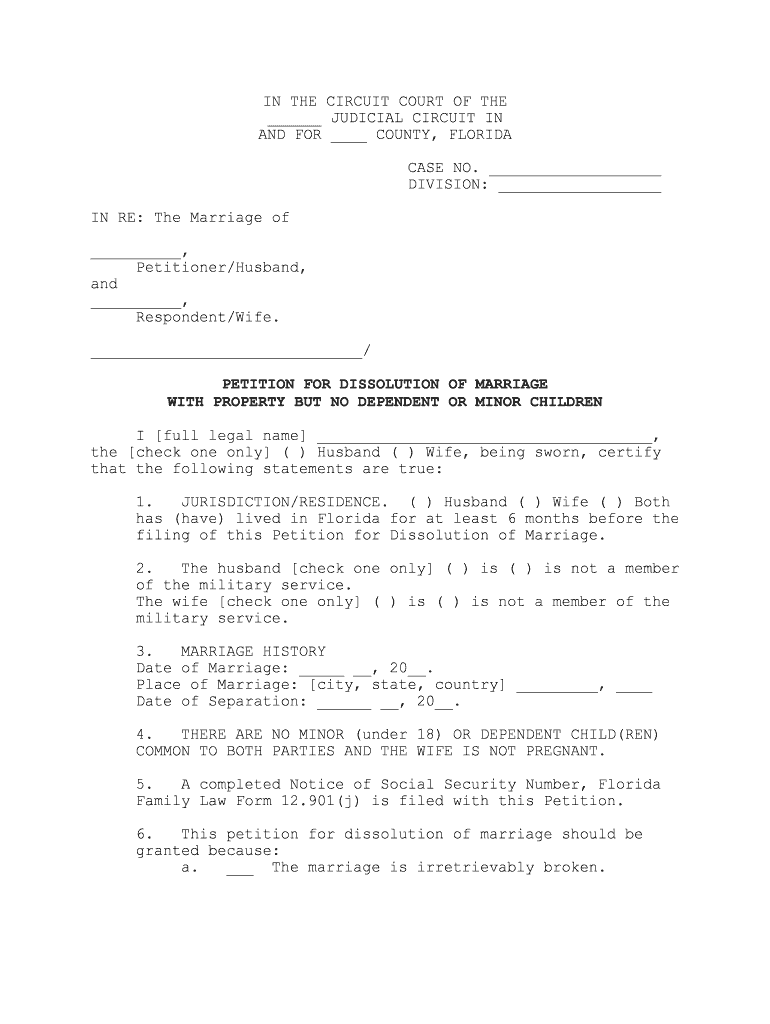
A "Petition for Dissolution of Marriage with Property but No Dependent" primarily addresses the legal termination of a marriage where there is property involved but no dependent children. This type of form formally requests the court to dissolve the marriage due to irreconcilable differences. It is essential for individuals who wish to arrange for the division of marital assets and responsibilities without addressing any child custody or child support issues.
Key Elements of the Petition for Dissolution of Marriage
Understanding the primary elements of the form is crucial for accurate completion. The petition typically includes:
- Marital History: Details of the marriage, such as date and location of marriage.
- Irretrievable Breakdown: Confirmation that the marriage cannot be salvaged.
- Property Details: A comprehensive listing of marital property and any division proposals.
- Spousal Support Requests: Indications of any requests for spousal maintenance.
These components ensure that the court receives a complete picture of the marriage and the proposed arrangements post-dissolution.
Steps to Complete the Petition
Completing the Petition for Dissolution of Marriage involves several steps:
- Gather Necessary Information: Collect all relevant documents related to marriage and property ownership.
- Complete Personal Details: Fill in the full names, contact information, and marital details for both parties.
- Detail the Marital Property: Accurately list all assets and assign values to them.
- Finalize the Petition: Review the completed form carefully and make necessary revisions.
Each step requires thorough attention to detail to minimize errors that could delay the process.
How to Obtain the Petition
Accessing the Petition for Dissolution of Marriage can vary by state:
- Online Resources: Many states provide downloadable forms on their court's website.
- Clerk of Court: Visit your local courthouse to obtain a paper copy directly from the Clerk of Court.
- Legal Assistance Offices: Seek help from legal aid or advocacy groups that provide resources and guidance.
Being aware of multiple options ensures accessibility regardless of personal circumstance.
Legal Use and Implications
Filing a Petition for Dissolution of Marriage carries significant legal implications:
- Judicial Review: A judge reviews the petition to ensure fairness in property division.
- Legal Representation: Both parties may require legal counsel to navigate complexities.
- Court Orders: Once approved, court orders become binding regarding asset distribution and spousal support.
It is essential to understand the legal weight behind each decision within the petition to ensure compliance.
Who Typically Uses the Petition
Typical users of this form include:
- Spouses without Children: Those seeking an amicable divorce with property division issues.
- Individuals with Complex Assets: Those who have multiple or high-value properties requiring detailed division.
- Self-Representing Individuals: Those comfortable handling the dissolution without full-time legal representation.
Understanding the user demographic helps in tailoring the document's complexity to suit personal capabilities.


Important Terms Related to the Petition
Several terms are essential to know when dealing with this form:
- Petitioner and Respondent: The parties involved in the petition.
- Marital Property: Assets acquired during the marriage subject to division.
- Equitable Distribution: Fair, not necessarily equal, division of property according to state laws.
Familiarity with these terms ensures clarity in legal discussions and when filling out the form.
State-Specific Rules for Petitions
Different states have unique rules governing the dissolution process:
- Residency Requirements: Most states require one or both parties to meet specific residency conditions.
- Waiting Periods: Many states impose a mandatory waiting period before a divorce can be finalized.
- Specific Grounds: Some states may have distinct guidelines on what constitutes valid grounds for dissolution.
Recognizing these variations ensures that parties are fully compliant with local regulations.
Filing Deadlines / Important Dates
The timeliness of filing is crucial:
- Initial Filing Deadlines: Submit the petition within specific timeframes to initiate legal proceedings.
- Response Timeframes: The respondent has a particular period to reply to the petition.
- Finalization Dates: Be aware of hearing dates and deadlines for any additional paperwork.
Adhering to these deadlines avoids unnecessary delays and potential legal complications.