






Definition & Meaning of Rent-to-Own Lease Agreements
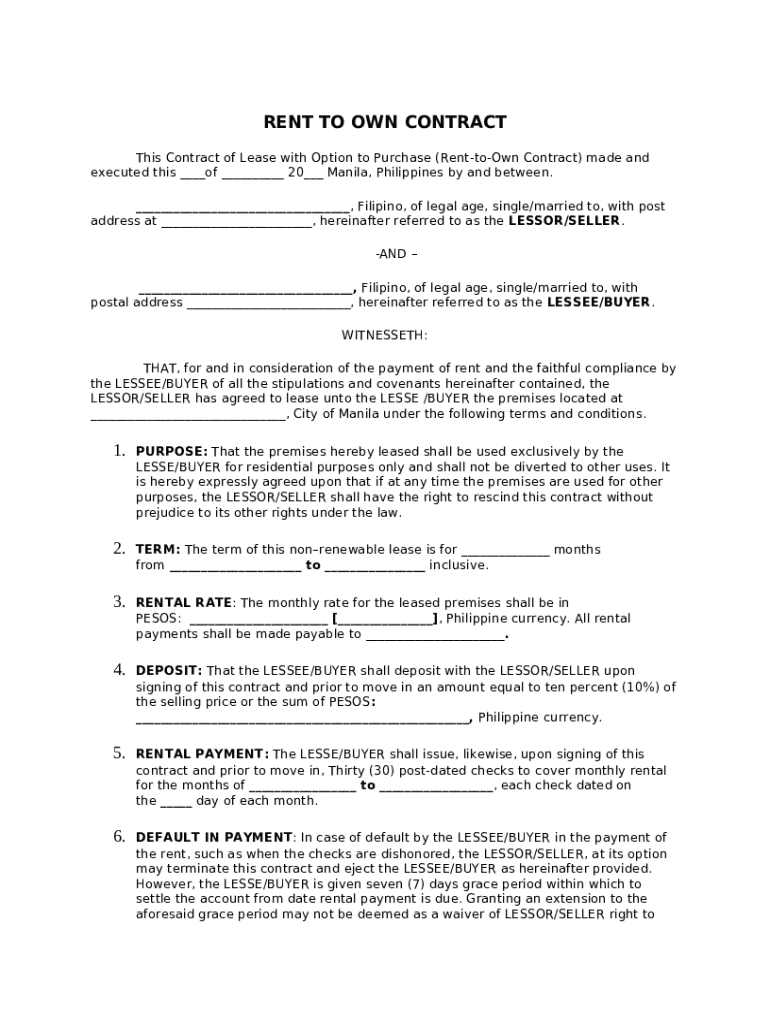
A rent-to-own lease agreement is a contractual arrangement where a LESSOR/SELLER leases property to a LESSEE/BUYER, providing an option to purchase the property at the end of the lease term. This type of agreement merges elements of both rental contracts and purchase options, offering flexibility to the lessee while providing potential future ownership benefits. The rent-to-own contract typically delineates rental terms, the purchase price or formula, option fees, and conditions under which the purchase option can be exercised.
Practical Examples
- Example 1: John, a tenant, leases a house with the intent to buy it at the end of his two-year lease. During the lease, John can save money and improve his credit score, positioning him to secure favorable mortgage terms.
- Example 2: Mary enters a rent-to-own agreement for a condo. During her lease, she experiences the neighborhood's lifestyle before committing to purchase, minimizing buyer’s remorse.
Real-World Scenarios
- For Homebuyers: Ideal for individuals wanting to test their compatibility with a property before purchase.
- For Sellers: Useful for sellers seeking consistent rental income with the prospect of a future sale.
Steps to Complete the Rent-to-Own Lease Agreement Forms
Completing a rent-to-own lease agreement requires detailed inputs from both parties to ensure mutual understanding and compliance with legal standards.
- Identify Parties Involved: Clearly state the names of the lessor/seller and lessee/buyer.
- Specify Terms of Lease: Include lease duration, rental amount, and payment schedule.
- Set Purchase Price: Define the purchase price or the method to determine it at the end of the lease.
- Outline Option Fee: An option fee may be required. This should be specified clearly.
- Detail Responsibilities: Specify responsibilities for utilities, maintenance, and other aspects of property care.
- Establish Rights and Obligations: Outline lessee's rights to purchase and any penalties for breaching the agreement.
Considerations
- Legal Review: It is advisable for both parties to consult with legal professionals to review the agreement.
- Financial Planning: Assess financial capacity to fulfill both lease and purchase commitments.
Key Elements of Rent-to-Own Lease Agreements
These agreements consist of several crucial components that both parties must understand and agree upon:
- Lease Terms: Details such as monthly rent, lease period, and payment method.
- Purchase Option: The option to buy, including how and when it can be exercised.
- Option Fee: Any upfront fee paid for securing the purchase option.
- Maintenance Responsibilities: Define who is responsible for repairs and maintenance during the lease.
- Rental Credits: Any portion of rent payments credited towards the eventual purchase price.
Edge Cases and Variations
- Adjustable Purchase Price: Some agreements might adjust the purchase price based on market conditions.
- Refundable Option Fee: There may be provisions for refunding the option fee under specific circumstances.
State-Specific Rules for Rent-to-Own Lease Agreements
Different states in the U.S. may have specific legal requirements and restrictions pertaining to rent-to-own leases.
- Disclosure Requirements: States may mandate specific disclosures about fees and terms.
- Consumer Protection Laws: Some regions offer enhanced protections for lessees to prevent exploitation.
- Default Remedies: States may vary in terms of remedies available for defaults or breaches of contract.
Case Study
- California: Requires detailed disclosures to protect buyers from exorbitant fees.
- Texas: Offers guidelines to ensure fair valuation of property for option exercise.
Important Terms Related to Rent-to-Own Lease Agreements
- Option to Purchase: The right but not the obligation to purchase the property.
- Lease Term: Duration for which the property is leased.
- Option Fee: A non-refundable fee paid to hold the purchase option.
- Rent Credit: Portion of rent credited towards the purchase price.
Glossary
- Lessor/Seller: The property owner leasing the property.
- Lessee/Buyer: The tenant renting property with an option to buy.
Legal Use of Rent-to-Own Lease Agreements
Rent-to-own agreements must adhere to federal and state laws to ensure they are legally binding.
- Compliance with ESIGN Act: Essential for electronic signatures, ensuring legal enforceability.
- Consumer Protections: Agreements must not include unfair clauses that could exploit lessees.
- Validation: Must comply with the state’s statute of frauds, requiring the agreement to be in writing.
Legal Scenarios
- Dispute Resolution: Provisions should outline processes for resolving disputes, possibly through mediation or arbitration.
- Penalties for Breach: Clear stipulations on consequences for non-compliance by either party.
Who Typically Uses Rent-to-Own Lease Agreements
These agreements attract a diverse range of users due to their flexibility and benefits.
- First-Time Homebuyers: Those looking for a pathway to ownership but need time to secure financing.
- Sellers in Sluggish Markets: Homeowners looking to make properties attractive to potential buyers.
- Investors: Buyers uncertain about immediate purchase but interested in investment properties.
User Profiles
- Low Credit Score Individuals: Provides an opportunity to inhabit homes while working to improve credit ratings.
- Sellers with Idle Properties: Allows sellers to generate rental income while waiting for potential purchase.
Legal Guidelines and Compliance in Rent-to-Own Agreements
Understanding the legal underpinnings ensures compliance and reduces risks of litigation.
- Federal Laws: Ensure compliance with federal housing and consumer contracts statutes.
- State-Specific Regulations: Adherence to local ordinances and housing guidelines.
- Contractual Transparency: Must provide all parties with a clear understanding of terms and rights.
Compliance Strategy
- Regular Reviews: Regularly review contracts for compliance with evolving laws.
- Legal Support: Engage legal advisory services for drafting and reviewing agreements.