
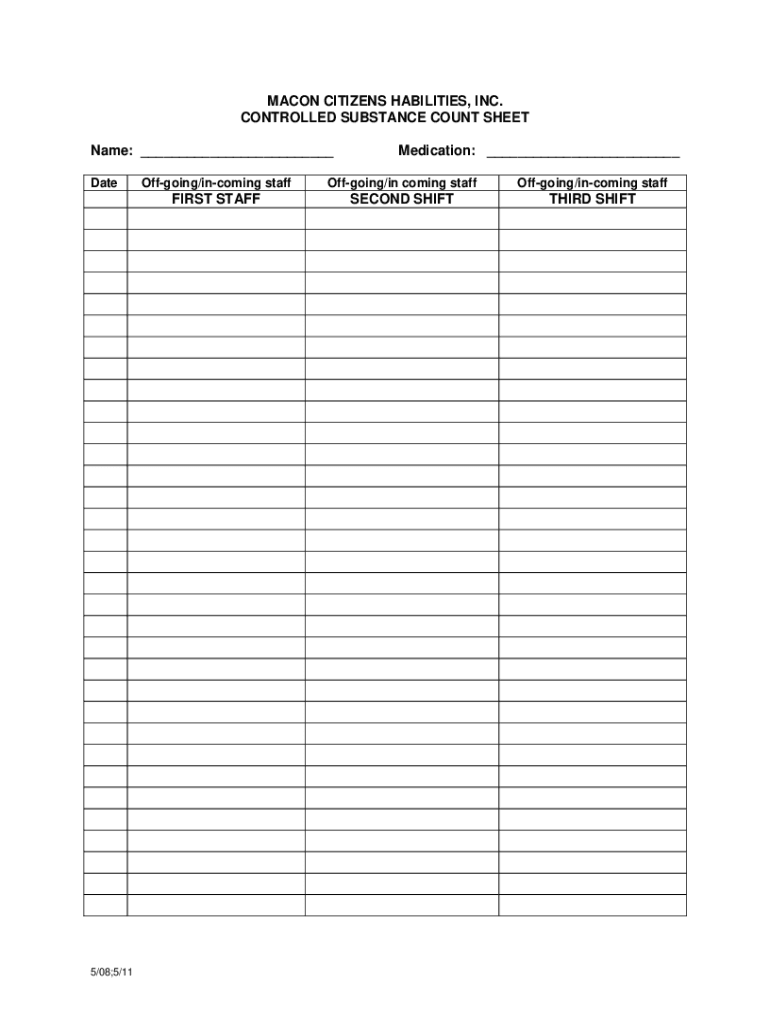







Definition and Purpose of the Controlled Substance Count Sheet
The Controlled Substance Count Sheet is a critical document used to meticulously track the administration and wastage of controlled medications. This form is particularly vital in healthcare settings, like those served by Macon Citizens Habilities, Inc., to ensure the responsible handling of medications that are prone to misuse or require stringent management due to their strength or regulatory status. The count sheet includes sections for capturing key information such as the name of the medication, dates of administration, and personnel details across shifts. By having a structured approach to tracking medication, healthcare facilities can ensure compliance with legal regulations, maintain accurate medical records, and enhance patient safety.
How to Obtain a Controlled Substance Count Sheet
Facilities looking to implement a Controlled Substance Count Sheet can typically acquire this form through their in-house medical records department or an administrative supervisor. Healthcare facilities often develop their customized version of the count sheet tailored to their specific operational needs. In some instances, regulatory bodies may also provide standard templates to ensure compliance with local laws. Understanding the protocol for obtaining and using these sheets is crucial to maintain adherence to both state and federal guidelines governing the handling of controlled substances.
Steps to Complete the Controlled Substance Count Sheet
Filling out the Controlled Substance Count Sheet requires careful attention to detail to ensure all necessary information is accurately captured:
- Document the Medication Details: Begin by entering the name, strength, and dosage form of the medication.
- Record Dates: Accurately input the date of each administration or wastage event.
- Shift Change Documentation: Include the names of both off-going and incoming staff involved in the handover process.
- Signature Collection: For any medication wastage, ensure that two witnesses sign off to validate the act.
- Review and Confirm Entries: Before submitting, review all entries for accuracy and completeness to prevent any discrepancies or audit issues.
Each step ensures that the document remains a reliable and legal record of substance management.
Who Typically Uses the Controlled Substance Count Sheet
The primary users of Controlled Substance Count Sheets include healthcare professionals such as nurses, pharmacists, and physicians in hospitals, clinics, rehabilitation centers, and long-term care facilities. These professionals are responsible for the precise documentation of medication administration and wastage to ensure patient safety and regulatory compliance. Staff members involved in medication distribution and monitoring across shifts also rely on these sheets to maintain continuity of care and accountability.


Legal Requirements for Using the Controlled Substance Count Sheet
In the United States, legal requirements for using a Controlled Substance Count Sheet are outlined under the Controlled Substances Act. Facilities handling controlled substances are mandated to maintain accurate inventory records and documentation, which includes using count sheets. These records must be readily available for inspections by regulatory bodies, such as the Drug Enforcement Administration (DEA), to ensure compliance with federal and state laws. Non-compliance can lead to serious legal and financial repercussions, including fines and revocation of licensure for healthcare entities.
Key Elements of the Controlled Substance Count Sheet
Critical components of a Controlled Substance Count Sheet include:
- Medication Information: Name, strength, and dosage.
- Administration Details: Date, time, and quantity administered.
- Staff Information: Names and signatures of administering and witnessing staff.
- Wastage Documentation: Details and validation of any wastage, including signatures from two witnesses.
- Shift Handover: Documentation of any shift changes relating to medication custody.
Ensuring each of these elements is diligently recorded guarantees the accuracy and reliability of the count sheet.
Examples of Using the Controlled Substance Count Sheet
Consider a scenario where a healthcare facility is administering a high-potency painkiller to a patient recovering from surgery. The Controlled Substance Count Sheet would be used to document each dose provided, tracked against the original prescription to prevent any misallocation or accidental overdose. In the case of any leftover or wasted medication, the sheet would require dual verification through signatures to ensure that the unused portion is accounted for properly.
Why the Controlled Substance Count Sheet is Necessary
Using the Controlled Substance Count Sheet is essential for:
- Ensuring Compliance: Adhering to legal standards for substance handling.
- Enhancing Safety: Reducing the risk of medication errors and potential abuse.
- Facilitating Audits: Providing clear, documented evidence of responsible medication management.
- Improving Communication: Helping maintain an open line of communication between shifts and staff handling sensitive drugs.
This necessity is underscored by the critical role these documents play in maintaining the integrity of healthcare operations and patient care.




