Record of Fire Safety Risk Assessment 2026

Get Form
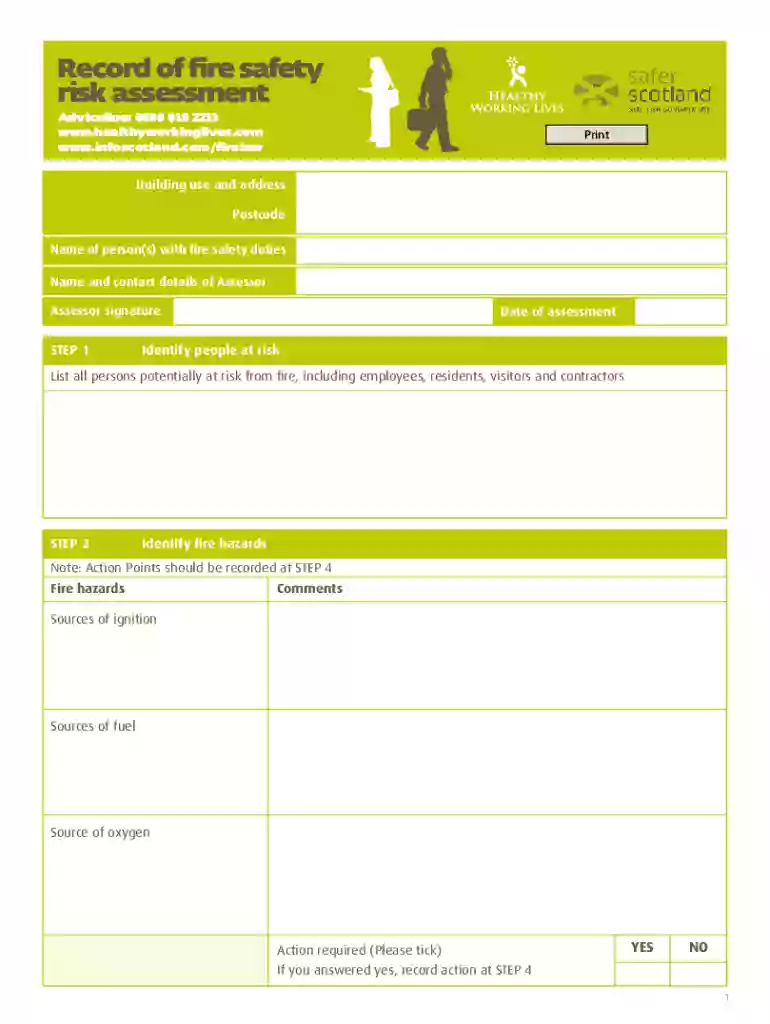
Record of Fire Safety Risk Assessment Preview on Page 1

Here's how it works

01. Edit your form online
Type text, add images, blackout confidential details, add comments, highlights and more.

02. Sign it in a few clicks
Draw your signature, type it, upload its image, or use your mobile device as a signature pad.

03. Share your form with others
Send it via email, link, or fax. You can also download it, export it or print it out.

Definition & Meaning

A fire safety risk assessment is a systematic evaluation of a building or facility to identify and manage potential fire hazards. This assessment aims to ensure the safety of individuals by outlining procedures and preventative measures to minimize fire risks. The document comprehensively records all findings, recommended actions, and safety checks, serving as both a preventive tool and an official record of diligence in managing fire safety.

Key Concepts in Fire Safety Risk Assessment

  • Identification of Hazards: Recognizing elements that could lead to a fire, including sources of ignition, fuel, and oxidizers.
  • Risk Evaluation: Determining the likelihood and potential impact of identified hazards.
  • Preventative Actions: Setting measures to reduce or eliminate risks.
  • Emergency Planning: Establishing protocols for evacuation and emergency response.

Key Elements of the Record of Fire Safety Risk Assessment

A properly documented fire safety risk assessment typically includes several critical components to ensure comprehensive coverage and usability.

Critical Components

  • Risk Identification: Detailed description of potential fire hazards found within the premises.
  • Vulnerability Analysis: Assessment of areas or groups who might be at increased risk, such as children, the elderly, or disabled persons.
  • Existing Safety Measures: Current fire prevention strategies in place, such as fire alarms, extinguishers, and emergency lighting.
  • Action Plan: A prioritized list of measures required to mitigate identified risks.
  • Review Schedule: Regularly updated revision dates to ensure ongoing compliance and safety.

Steps to Complete the Record of Fire Safety Risk Assessment

Completing a fire safety risk assessment necessitates a structured approach to ensure no critical areas are overlooked.

  1. Survey the Premises: Conduct a thorough inspection to identify potential fire hazards.
  2. Identify At-risk Individuals: Determine who might be especially vulnerable in the event of a fire.
  3. Evaluate Current Safety Measures: Examine existing fire safety equipment and protocols.
  4. Record Findings: Document all hazards, people at risk, and existing safety measures.
  5. Implement Improvements: Develop and prioritize actions to enhance safety.
  6. Review Regularly: Set consistent review intervals to maintain up-to-date safety measures.

Practical Example

A warehouse might identify flammable materials as potential hazards, require installation of additional fire extinguishers, and schedule quarterly reviews to ensure compliance.

How to Use the Record of Fire Safety Risk Assessment

Utilizing the record effectively is crucial for maintaining safety standards and ensuring preparedness in the face of potential fire incidents.

Steps for Utilization

  • Daily Operations: Integrate findings and recommendations into daily safety protocols.
  • Training: Use the record as a training resource during safety drills or staff onboarding.
  • Audits and Inspections: Employ the document as proof of compliance during official safety audits.
  • Incident Response: Refer to action plans during fire drills and actual evacuations to improve response efficiency.

Why You Should Conduct a Fire Safety Risk Assessment

Conducting a fire safety risk assessment is essential for several reasons, primarily centered around safety, compliance, and liability.

Primary Benefits

  • Enhanced Safety: Proactive identification and elimination of risks significantly reduce injury and loss.
  • Regulatory Compliance: Ensures adherence to local fire safety laws and regulations.
  • Insurance Requirements: Many insurance providers require a documented fire safety risk assessment to process claims effectively.
  • Liability Protection: Provides legal protection by documenting proactive safety measures.

Who Typically Uses the Record of Fire Safety Risk Assessment

The fire safety risk assessment document is vital across various sectors, each with specific uses and considerations.


decoration image ratings of Dochub

Common Users

  • Businesses: From offices to factories, businesses utilize these assessments to ensure employee safety and legal compliance.
  • Schools/Universities: Educational institutions use the records to protect students and staff.
  • Healthcare Facilities: Hospitals and clinics rely on thorough assessments to safeguard vulnerable patients.
  • Public Buildings: Government facilities require regular assessments to protect public visitors.
decoration image

Legal Use of the Record of Fire Safety Risk Assessment

The record serves as an official document supporting legal compliance with fire safety regulations.

Legal Considerations

  • Documentation Proof: Acts as evidence of compliance with fire safety legislation during legal inspections.
  • Incident Examinations: Provides a record to review in case of fire-related incidents, aiding in investigative processes.
  • Compliance Audits: Helps demonstrate adherence to required safety protocols during audits conducted by regulatory bodies.

Examples of Using the Record of Fire Safety Risk Assessment

Practical application examples demonstrate the utility and adaptability of fire safety risk assessments across different scenarios.

Case Studies

  • Factory Setup: A manufacturing plant uses the assessment to identify high-risk areas, managing machinery heat and combustible materials, resulting in reduced incidences and insurance premiums.
  • Office Environment: An office building regularly updates its assessment to accommodate changing team sizes and layouts, ensuring evacuation plans remain efficient.
  • Educational Institutions: Schools conduct assessments pre-term to ensure all changes in facilities meet safety standards, keeping students and faculty secure throughout the academic year.
be ready to get more

Complete this form in 5 minutes or less

Get form

Security and compliance

At DocHub, your data security is our priority. We follow HIPAA, SOC2, GDPR, and other standards, so you can work on your documents with confidence.

Learn more
ccpa2
pci-dss
gdpr-compliance
hipaa
soc-compliance
be ready to get more

Complete this form in 5 minutes or less

Get form