






Definition & Meaning
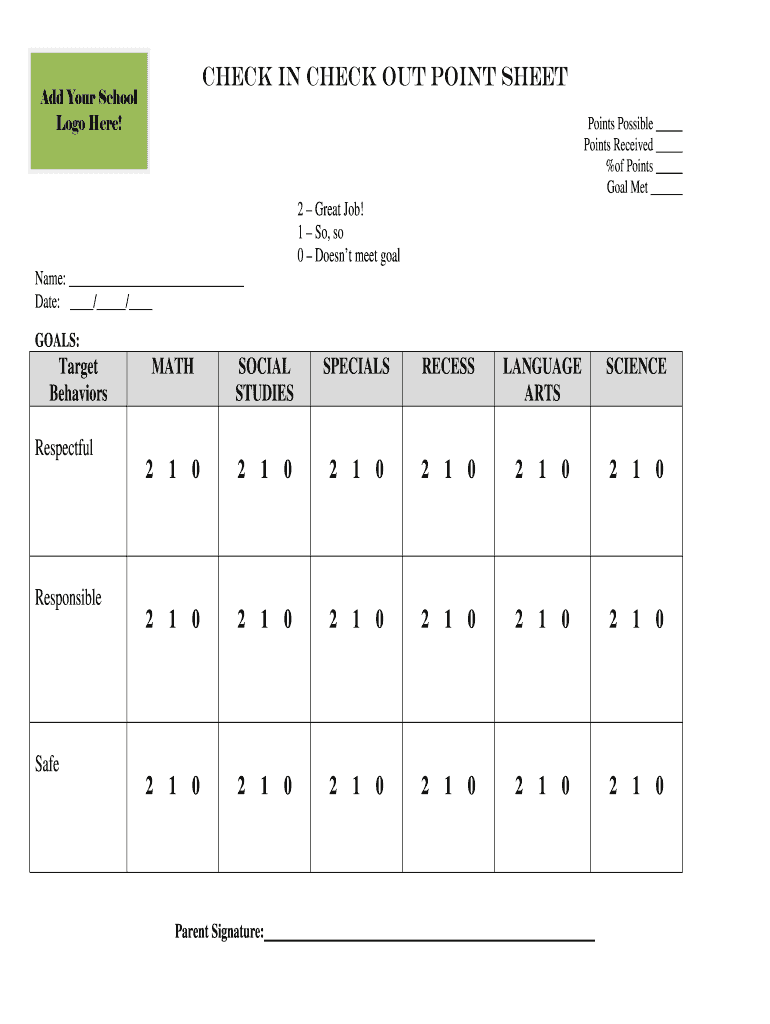
The "Check in Check Out Point Sheet" is a behavior tracking document used largely in educational settings to monitor and assess student behavior and academic performance. This sheet serves as a structured tool, allowing educators to record various dimensions of student conduct and academic success across different subjects. The primary function of this form is to facilitate consistent feedback on student behavior, focusing on target behaviors such as respectfulness, responsibility, and safety. This document helps identify areas where students excel and where improvements are necessary, creating a basis for individualized intervention plans.
How to Use the Check in Check Out Point Sheet
Using the Check in Check Out Point Sheet effectively requires understanding its components and systematic implementation. Typically, educators distribute the sheet at the start of the day or week. Students receive feedback on specific behaviors, rated using a standardized scale, often on a daily basis. Here’s a typical process:
- Preparation: Identify the target behaviors and goals for each student based on previous assessments and set clear expectations.
- Recording: Throughout the day, educators observe students and record points based on observed behaviors in various subject areas.
- Feedback: At designated times, the sheet is reviewed with the student, discussing strengths and areas needing improvement.
- Reflection: Students may be encouraged to reflect on their performance, setting personal goals for the following period.
Educators should engage with students in meaningful conversations about their behavior, emphasizing improvement and growth.
Who Typically Uses the Check in Check Out Point Sheet
The Check in Check Out Point Sheet is predominantly used by educators, including teachers and school support staff, to tailor behavior management to individual student needs. Given its role in monitoring behavior, these sheets are often part of broader behavioral intervention strategies and are particularly effective in special education environments, or in cases where students require additional support. Beyond educators, school psychologists and behavioral specialists may also utilize the form to gather data that informs individualized education plans (IEPs) or behavior intervention plans (BIPs).


Key Elements of the Check in Check Out Point Sheet
Key elements of the Check in Check Out Point Sheet include sections for:
- Student Information: Name, class, date, and identifier codes.
- Behavioral Categories: Specific behaviors being monitored, such as respectfulness, attentiveness, and cooperation.
- Subject Areas: Different academic subjects where behavior is assessed, reflecting comprehensive coverage.
- Scoring System: A clear scale for rating behaviors (e.g., points possible, points received).
- Feedback Section: Space for personalized comments and suggestions from educators.
Each of these components ensures a holistic view of the student's daily performance.
Examples of Using the Check in Check Out Point Sheet
In practice, a Check in Check Out Point Sheet can illuminate how a student interacts across various situations. For instance, a student might consistently receive high marks on respectfulness in math class but exhibit challenges in cooperative behavior during group activities in social studies. This contrast offers valuable insights, directing educators to focus on specific interventions. Real-world scenarios include improving a student’s participation by highlighting positive behaviors while noting areas for growth. Such concrete examples showcase the sheet’s efficacy in customizing behavioral plans and enhancing educational outcomes.
Steps to Complete the Check in Check Out Point Sheet
Completing the Check in Check Out Point Sheet is a straightforward process:
- Identify Behavioral Goals: Establish the desired outcomes and target behaviors for assessment.
- Daily Observations: Record observations at regular intervals throughout the day to ensure accurate and relevant feedback.
- Score Behaviors: Utilize the scoring system to assign points based on observed behaviors in each category.
- Provide Feedback: Engage with the student to discuss performance, using the form to provide structured, constructive feedback.
- Review & Adjust: Regularly review the accumulated data to adjust behavioral goals and interventions as necessary.
Careful adherence to these steps ensures methodical tracking and maximizes the form’s effectiveness in promoting positive behavior.
Important Terms Related to Check in Check Out Point Sheet
Several pertinent terms accompany the use of Check in Check Out Point Sheets:
- Target Behaviors: Specific student behaviors identified as focal points for observation and feedback.
- Behavioral Goals: Objectives set for student behavior improvement, aligned with educational and behavioral standards.
- Points Possible/Received: Metrics denoting potential and actual behavioral scores, aiding in quantitative analysis.
Understanding these terms facilitates proper use of the point sheet and enhances communication among educational stakeholders.
Variations and Alternatives to the Check in Check Out Point Sheet
While the Check in Check Out Point Sheet is a valuable tool, some educators may employ variations tailored to specific needs. Alternatives might include digital versions for ease of distribution and tracking, or simplified versions focusing on key behavioral concerns for younger children. Additionally, schools may have proprietary versions integrating broader educational software for automated tracking and reporting, providing seamless data management and enhanced analysis capabilities. Each variant aligns with the core purpose of supporting and measuring student behavioral progress.
Digital vs. Paper Version
Choosing between digital and paper versions of the Check in Check Out Point Sheet depends on several factors:
- Accessibility: Digital versions offer easy sharing and storage, enhancing collaboration among teachers, students, and parents.
- Ease of Use: Paper versions are straightforward to implement, particularly in settings with limited technological resources.
- Data Management: Digital formats facilitate automated analysis, easing the tracking of progress over time compared to manual aggregation required by paper sheets.
Both versions serve the essential function of enabling behavior monitoring, with the choice largely contingent on logistical considerations and resource availability.