




01. Edit your n164 online
Type text, add images, blackout confidential details, add comments, highlights and more.

Type text, add images, blackout confidential details, add comments, highlights and more.

Draw your signature, type it, upload its image, or use your mobile device as a signature pad.

Send n164 form via email, link, or fax. You can also download it, export it or print it out.
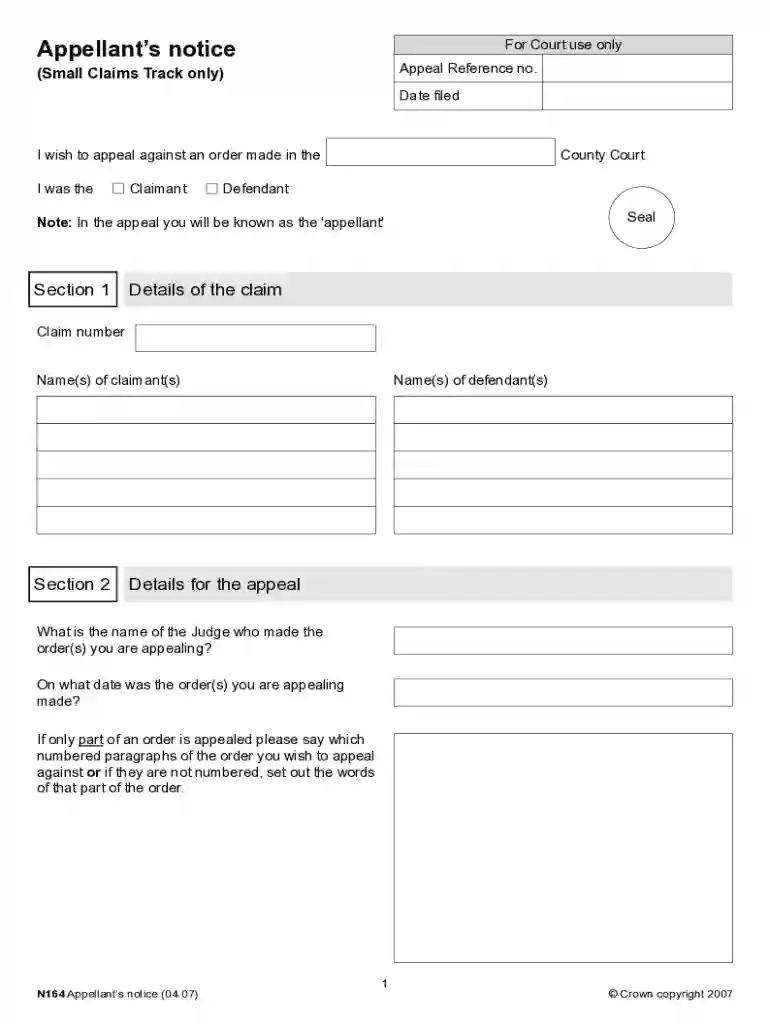
The N164 form is an Appellant's Notice used in the U.S. legal system. It is primarily utilized in a County Court to initiate an appeal against a decision. This document is essential for individuals or entities seeking to challenge a previous order made by a judge. By outlining the grounds for appeal, this form allows appellants to clearly articulate their reasons for disputing a decision and highlight any perceived errors in the initial ruling. The N164 ensures that the appellate process is formally documented and creates a structured path for re-evaluation of a case.
To use the N164 form effectively, it's critical to understand its structure and the details required. Start by thoroughly reviewing the previous order that prompted the appeal. The form will prompt you to fill in your personal details, the specifics of the original case, and the court where the case was held. You will then need to articulate your reasons for appeal, specifying any legal grounds or errors that you believe were made. It is also important to attach any supporting documentation that reinforces your claim and clearly addresses the judge's findings.
Obtain the Form: Access the N164 from the court's website or request a physical copy from the court clerk.
Fill Out Personal Information: Include your full name, address, and contact information.
Case Details: Enter the case number, court location, and judge’s name related to the original order.
State Grounds for Appeal: Clearly describe the basis of your appeal and any legal arguments supporting your position.
Attach Supporting Documents: Compile necessary documentation that justifies your appeal, such as transcripts or affidavits.
Review and Submit: Double-check all information for accuracy, then submit the form according to the court’s guidelines.
Appellant Information: Captures the identity and details of the appellant.
Original Case Information: Includes the case number, court, and judge's details.
Grounds for Appeal: A critical section where appellants explain the reasons for the appeal.
Supporting Documents: Necessary attachments that substantiate the grounds for appeal.
Declaration: Signature section affirming the truthfulness of the information provided.
The N164 form is primarily used by appellants, often individuals or legal representatives, who are dissatisfied with a County Court's decision. It is common for parties involved in civil litigation, family law cases, or small claims matters to use this form when they believe the initial ruling was flawed or unjust. Legal firms and attorneys often assist clients in completing the N164 to ensure the appeal is filed correctly and all arguments are properly documented.


Filing the N164 form initiates the legal process of appeal, formally requesting a higher court to review and potentially overturn the initial decision. This legal mechanism is critical for ensuring justice and correcting potential judicial errors. It's important to note that using this form implies agreeing to abide by the appellate court's final decision. Additionally, the form's submission and content must adhere to strict legal standards and timelines to be considered valid.
Original Court Order: A copy of the decision being appealed.
Supporting Evidence: Any documents that support the grounds for appeal, such as witness statements or expert reports.
Transcripts: Official records of court proceedings that are relevant to the appeal.
Exhibits: Physical or electronic evidence used in the original case to bolster the appeal's validity.
While the N164 is used broadly in the U.S., each state may have specific rules and procedures for filing the form. This can include variations in submission deadlines, documentation requirements, and filing fees. Therefore, it is crucial to consult with local court officials or legal professionals to ensure compliance with state-specific regulations. Accessing resources from state judiciary websites can also provide detailed guidance on tailoring the form to meet local legal standards.
At DocHub, your data security is our priority. We follow HIPAA, SOC2, GDPR, and other standards, so you can work on your documents with confidence.
N164 The application process includes completion of the application form and submission of appropriate letters of recommendation from faculty and a
These adjudication forms provided the adverse event term. (verbatim), the date of study surgery, the date of event onset, the date of resolution, the event
All Other Expenses - report all other operating and other expenses associated with card operations. This includes servicing, cardholder billing, processing


