






Definition & Meaning
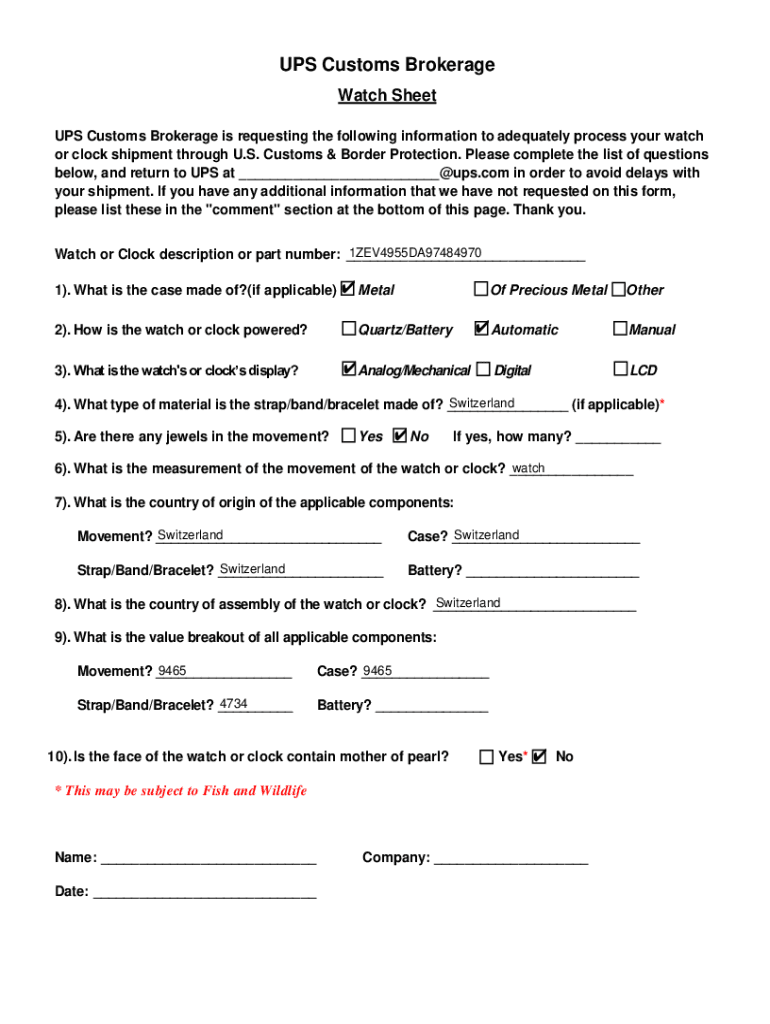
The UPS Customs Brokerage - Watch Sheet is a specialized form used to provide necessary information about the shipment of watches or clocks to satisfy U.S. Customs & Border Protection regulations. This document plays a crucial role in ensuring that shipments are compliant with customs requirements, providing details such as materials used, origin, and value. The form's primary function is to prevent shipment delays by ensuring that all goods are properly documented and meet the legal standards set by customs authorities.
Steps to Complete the UPS Customs Brokerage - Watch Sheet
-
Gather Necessary Information:
- Collect details about the materials used in the watch or clock, including the type of metals and any gemstones.
- Determine the power source of the item, such as battery-operated or mechanical.
- Identify the display type, whether analog, digital, or a combination of both.
-
Fill Out Basic Details:
- Enter the country of origin and assembly, providing clarity on where each component was manufactured and assembled.
- Break down the value of various components to ensure accurate pricing and duty calculation.
-
Review and Validate:
- Double-check all entries for accuracy and completeness. Ensure all required fields are filled out and that the information is consistent with supporting documents.
-
Submit the Form:
- Return the completed Watch Sheet to UPS to facilitate customs clearance. Adhering to submission protocols helps avoid delays in shipment.
Key Elements of the UPS Customs Brokerage - Watch Sheet
-
Materials and Parts Specification: Detailed description of materials used in watches or clocks, including components like straps and cases.
-
Power Source and Display Type: Identification of whether the item is battery-operated, solar-powered, or mechanical, along with its display nature.
-
Country of Origin and Assembly: Information on where each part was produced and where the assembly took place, crucial for customs declarations.
-
Value Breakdown: Comprehensive assessment of the item’s value by component, helping in the proper calculation of customs duties and taxes.
Who Typically Uses the UPS Customs Brokerage - Watch Sheet
-
Importers and Exporters: Businesses involved in international trade of watches or clocks, ensuring adherence to legal and customs requirements.
-
Customs Brokers and Agents: Professionals who facilitate the movement of goods across borders, using this sheet to simplify and expedite customs clearance processes.
-
Manufacturers: Companies that produce watches or clocks, providing essential information to UPS for smooth shipping operations.


Legal Use of the UPS Customs Brokerage - Watch Sheet
The UPS Customs Brokerage - Watch Sheet is legally mandated when shipping watches and clocks internationally, particularly into the United States. It supports compliance with customs laws and helps avoid penalties associated with incomplete or inaccurate documentation. By providing full transparency about the shipment’s content, origin, and value, this form ensures that all legal requirements are met, protecting both shippers and recipients from potential legal issues.
Important Terms Related to UPS Customs Brokerage - Watch Sheet
-
Duty: A tax imposed by a government on imported or exported goods.
-
Customs Declaration: An official document listing and detailing the goods that are being imported or exported.
-
Assembly Location: The place where the final product is put together, which can affect duties and compliance.
Examples of Using the UPS Customs Brokerage - Watch Sheet
-
A luxury watch manufacturer exporting high-end timepieces to a retailer in the U.S. must complete the UPS Customs Brokerage - Watch Sheet to ensure detailed documentation of costly components like precious metals and jewels.
-
An online retailer regularly shipping electronic clocks from China to the U.S. provides the sheet to UPS to streamline customs clearance by detailing the items’ power source and assembly origin.
Software Compatibility
The UPS Customs Brokerage - Watch Sheet can be integrated with document management systems like DocHub for efficient processing and storage. Software such as QuickBooks can assist businesses in maintaining records of all transactions related to customs clearance. Using digital solutions ensures that documents are both accessible and securely stored, preventing data loss and facilitating smoother operations during audits or compliance checks.