
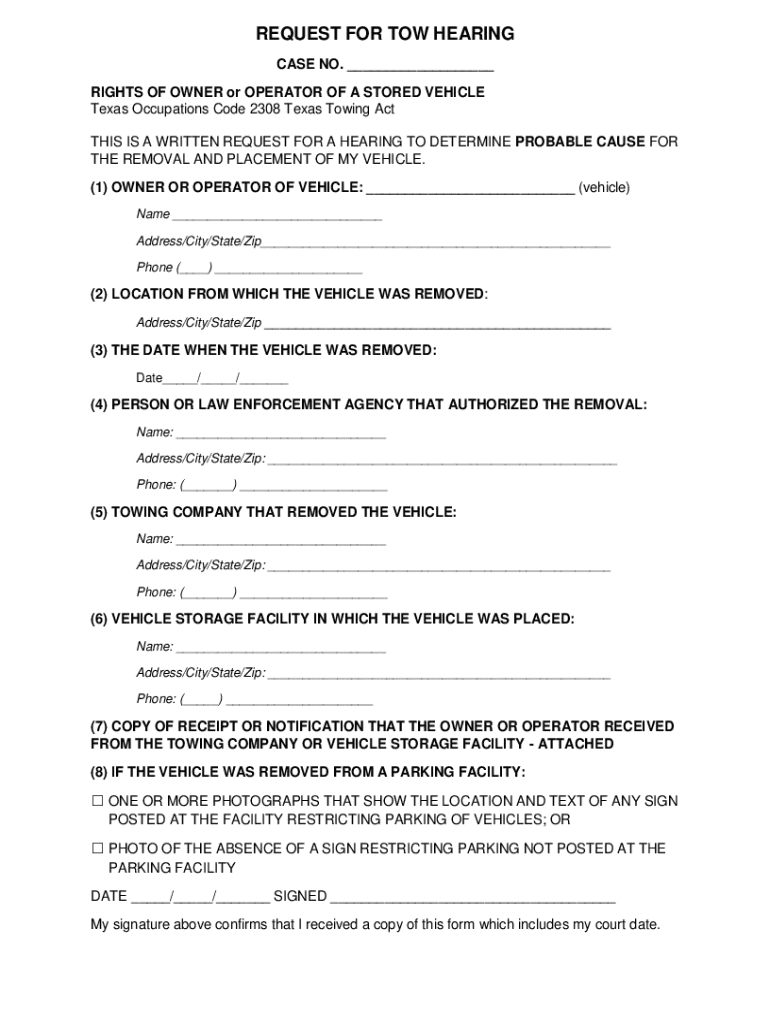







Definition and Meaning
The "tow trucks, operators and vehicle storage facilities law" generally refers to the regulatory framework governing the operations of towing services, the conduct of operators, and the requirements for vehicle storage facilities. This law ensures that towing practices are consistent, fair, and legal, providing guidelines for handling vehicles that are towed due to violations, accidents, or requests by property owners. These laws typically cover the rights and responsibilities of both the service providers and vehicle owners, addressing issues like towing rates, notification requirements, and storage fees.
Key Aspects
- Scope: Defines who the law applies to, including tow truck operators, vehicle owners, and storage facility managers.
- Regulations: Outlines rules for towing operations, such as obtaining proper permits and adhering to safety standards.
- Consumer Protections: Includes provisions to prevent predatory towing practices and ensure clear communication with vehicle owners.
Key Elements of the Tow Trucks, Operators, and Vehicle Storage Facilities Law
Understanding the fundamental components of this law is crucial for compliance and operational efficiency. Key elements often include licensing requirements, operational standards, and consumer rights.
Licensing and Permits
- Operator Licenses: Tow truck operators may need specific licenses to legally operate within certain jurisdictions.
- Facility Permits: Vehicle storage facilities often require permits that ensure they meet safety and zoning regulations.
Operational Standards
- Vehicle Safety: Mandates regular maintenance checks and standards for tow trucks to ensure safe operation.
- Record Keeping: Operators must maintain detailed logs of towed vehicles, including times, dates, and reasons for towing.
Consumer Rights
- Notifications: Requires operators to notify vehicle owners promptly about the towing situation and storage location.
- Fee Transparency: Provides guidelines on disclosing towing and storage fees upfront to avoid disputes.
Steps to Complete the Tow Trucks, Operators, and Vehicle Storage Facilities Law Requirements
Navigating the compliance landscape involves several important steps to ensure adherence to the law.
- Understand Local Regulations: Begin by researching specific state or city regulations that apply to towing and storage activities.
- Obtain Necessary Licenses: Acquire all required licenses and permits for tow truck operations and vehicle storage facilities.
- Implement Proper Documentation: Create systems for documentation and record-keeping to track all towing activities and communications with vehicle owners.
- Ensure Regular Vehicle Maintenance: Establish a schedule for regular vehicle inspections and maintenance for safety compliance.
- Train Staff Properly: Conduct training sessions for staff to ensure that they understand legal requirements and customer service protocols.
Who Typically Uses the Tow Trucks, Operators, and Vehicle Storage Facilities Law?
This law is utilized by a variety of stakeholders, each with specific interests and needs.


Tow Truck Operators
Operators use this law to guide their daily operations, ensuring they meet legal standards and provide quality service.
Vehicle Storage Facilities
Facilities need to understand these regulations to operate legally and handle vehicles responsibly, including maintaining clear records and setting appropriate storage fees.
Vehicle Owners
Owners become involved when their vehicle is towed and need to be aware of their rights under the law to contest fees or reclaim their vehicle.
State-Specific Rules for the Tow Trucks, Operators, and Vehicle Storage Facilities Law
Different states may have unique rules and variations of the law, influencing how tow truck services and storage facilities operate.
Example Variations
- Texas: Known for the Texas Towing Act, which includes detailed protocols for hearings and disputes over vehicle removal.
- California: Features stringent environmental regulations impacting tow trucks emissions standards.
Importance of Local Compliance
- Operators and facilities must stay informed about changes or updates to local laws to ensure ongoing compliance and avoid penalties.
Legal Use of the Tow Trucks, Operators, and Vehicle Storage Facilities Law
The legal framework provides a basis for resolving disputes, enforcing contracts, and ensuring fair business practices.
Dispute Resolution
- Hearing Requests: Includes processes for vehicle owners to request hearings regarding towing actions.
- Industry Oversight: Regulatory agencies monitor compliance and address consumer complaints.
Contract Enforcement
- Ensures that agreements between property owners, operators, and facilities are legally binding and transparent.
Required Documents for Compliance
Certain documents are universally needed to align with the tow trucks, operators, and vehicle storage facilities law, ensuring all parties adhere to legal expectations.
Documentation Examples
- Towing Authorizations: Written permissions from property owners or law enforcement to tow vehicles.
- Fee Schedules: Clearly outlined towing and storage fee documents available to consumers.
- Operational Logs: Detailed records of towing incidents, including dates and locations.
Important Terms Related to the Tow Trucks, Operators, and Vehicle Storage Facilities Law
Familiarity with specific legal terms is essential for proper application and understanding of the law.
Common Terminology
- Predatory Towing: Refers to unethical practices like overcharging or illegal towing without proper notification.
- Lienholder: A party that holds an interest in the vehicle, often involved when vehicles are towed or stored.
- Impoundment: The process of seizing and holding a vehicle due to legal violations or other reasons.
By thoroughly understanding these elements and requirements, stakeholders can navigate the complexities of the tow trucks, operators, and vehicle storage facilities law effectively.




