
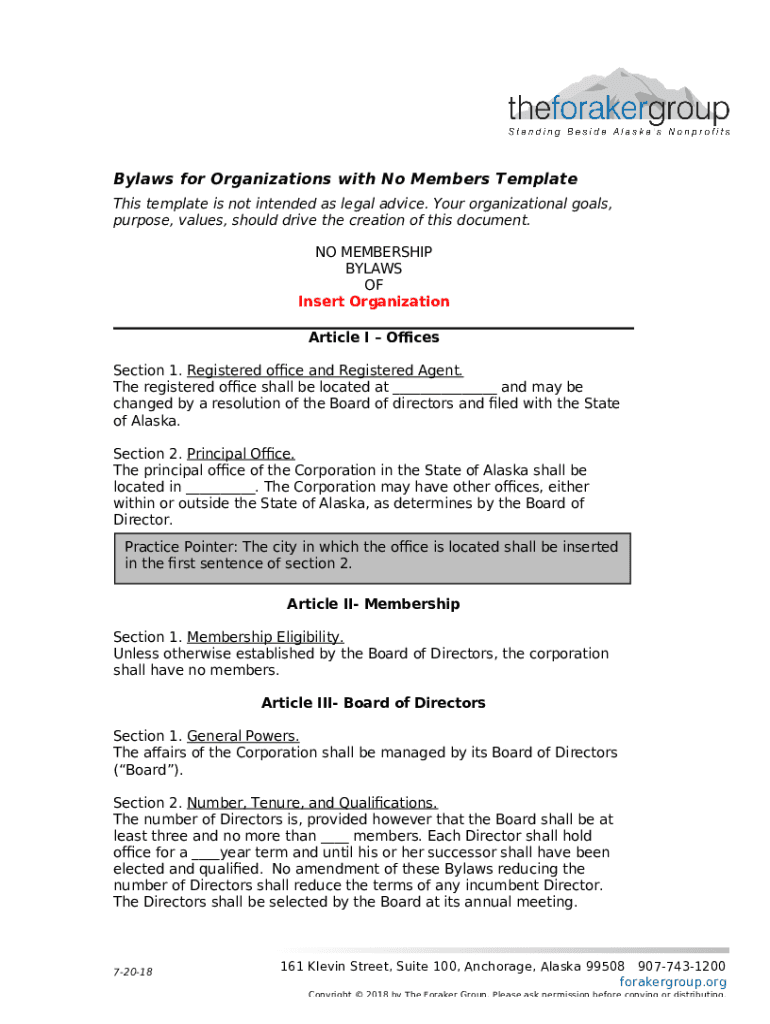







Definition and Meaning
Nonprofit bylaws are formal documents that outline the internal rules governing a nonprofit organization. They serve as a blueprint defining the structure and function of the board of directors, clarifying how decisions are made, and detailing the roles of officers. These bylaws are essential for maintaining order and ensuring the organization adheres to its mission and regulatory requirements.
Key Elements of Nonprofit Bylaws
Nonprofit bylaws include several critical components that help define the organization's governance.
- Board of Directors: Establishes the size, roles, and responsibilities of the board.
- Officers: Details the roles (e.g., president, treasurer) and selection process.
- Meetings: Specifies the frequency and agenda of board meetings.
- Committees: Describes the structure and function of various committees.
- Amendments: Provides the process for changing bylaws as needed.
Steps to Complete Nonprofit Bylaws
- Gather Initial Information: Define the organization's mission, goals, and initial board members.
- Draft Initial Bylaws: Use a template to start crafting bylaws tailored to organizational needs.
- Review and Revise: Consult with board members and legal advisors for adjustments.
- Approval: Board must approve the final draft of the bylaws.
- File and Store: Maintain copies for legal compliance and organizational reference.
Who Typically Uses Nonprofit Bylaws
Nonprofit bylaws are utilized by:
- Founding Members: To establish governance and structure.
- Board of Directors: For guidance on rules and procedures.
- Legal Advisors: Ensuring compliance with state laws.
- Potential Funders: Offering insight into governance and stability.
Legal Use of Nonprofit Bylaws
Nonprofit bylaws come with legal obligations and benefits, such as:
- Compliance: Adherence to state and federal regulations.
- Clarity in Disputes: Providing a framework to resolve internal conflicts.
- Amendments: Legally structured processes for bylaw changes.
State-Specific Rules for Nonprofit Bylaws
Each state may have unique rules governing nonprofit bylaws:
- Filing Requirements: Varies from state to state.
- Board Composition: States may dictate specific roles or numbers.
- Annual Reporting: Some states require annual submission of bylaws.
IRS Guidelines for Nonprofit Bylaws
The IRS mandates certain standards for nonprofit bylaws as part of 501(c)(3) status application:
- Purpose Clause: Must clearly state exempt purposes.
- Dissolution Clause: Outlines asset distribution upon dissolution.
- Inurement Clause: Prohibits income benefiting private individuals.
Required Documents for Creating Bylaws
Creating nonprofit bylaws requires several documents:
- Organizational Charter: Initial legal formation document.
- Mission Statement: Description of purpose and goals.
- Initial Board Resolutions: Decisions passed during the founding meetings.
State-by-State Differences
Different states may require variations in nonprofit bylaws:
- Quorum Requirements: Need for a minimum number of directors present for official actions.
- Recordkeeping: Regulations on maintaining minutes and other records.
- Public Access: Rules about public availability of bylaws.
Important Terms Related to Nonprofit Bylaws
Understanding key terms ensures proper application:
- Quorum: Minimum number of members needed for the board to make decisions.
- Fiduciary Duty: Legal obligation of board members to act in the best interest of the nonprofit.
- Proxy Voting: Acceptability for absent board members to vote through another member.
Penalties for Non-Compliance
Failing to adhere to established bylaws or state regulations can lead to:
- Legal Sanctions: Possible fines or dissolution by the state.
- Loss of Tax-Exempt Status: Non-compliance may lead to IRS revoking 501(c)(3) status.
- Internal Conflicts: Lack of adherence often leads to management disputes.
Versions or Alternatives to Nonprofit Bylaws
Nonprofits might consider different versions or alternatives:
- Membership Organizations: Separate bylaws governing membership roles and rights.
- Dual-Structure Bylaws: Different sets for varied state and federal compliance.
Software Compatibility
Platforms like DocHub offer tools for creating and managing nonprofit bylaws. The software allows:
- Document Editing: Easy integration with cloud services for modification.
- Collaboration Tools: Features for multiple board members to provide input.
- Security Features: Ensures documents are securely stored and shared.
By understanding these elements, nonprofits can create effective bylaws that guide their mission and legal compliance.




