






Definition and Purpose of the Medicare Written Appeal Form
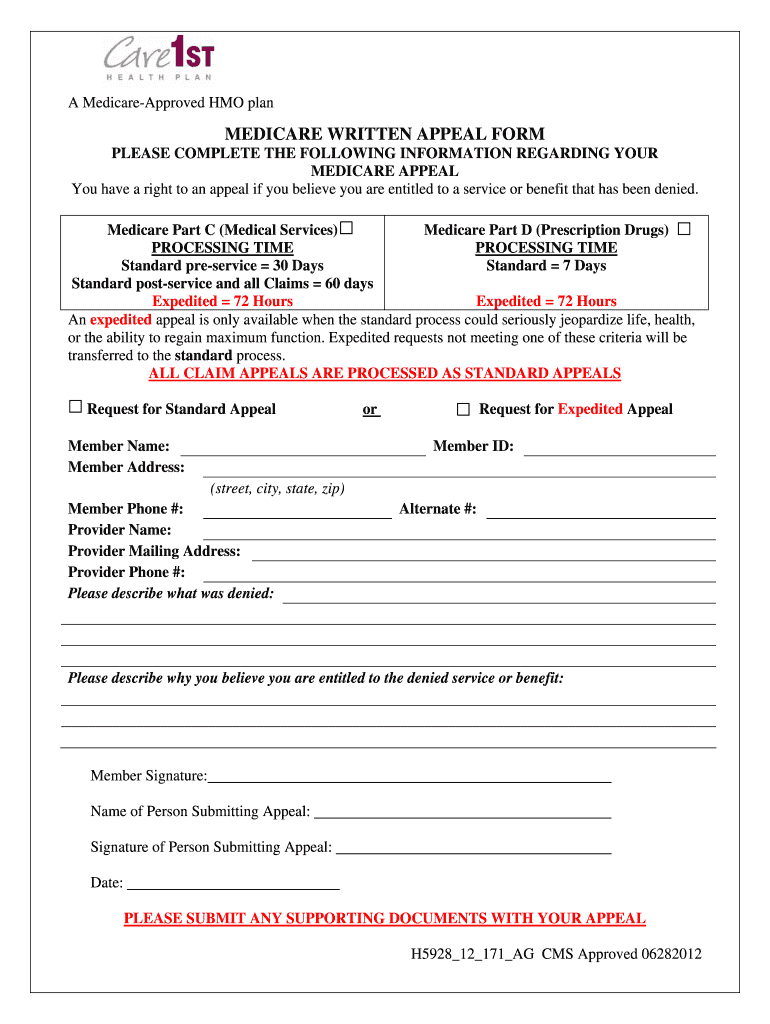
The Medicare Written Appeal Form serves as an essential tool for beneficiaries who wish to formally contest denied services or benefits under a Medicare-approved HMO plan. The form is a structured avenue through which members can assert their rights and seek a reconsideration of decisions made by their healthcare provider. By utilizing this form, individuals can provide detailed documentation of their circumstances, supplementing their appeal with necessary evidence to support their claims. Members must understand the significance of this document, as it is their primary means of challenging decisions that affect their healthcare services and benefits.
Types of Appeals
There are typically two categories of appeals that can be filed: standard and expedited. The standard appeal process is suitable for regular service denials and follows a predefined timeline and procedures. On the other hand, an expedited appeal is designed for cases where the normal process's duration could gravely impact the patient's health, requiring a faster resolution. The type of appeal affects both the procedural steps and the timelines for response, making it crucial to choose the appropriate category when submitting the Medicare Written Appeal Form.
How to Obtain the Medicare Written Appeal Form
Acquiring the Medicare Written Appeal Form is straightforward, with several options available to beneficiaries. The form can be downloaded directly from the Medicare website or obtained from a healthcare provider involved in the Medicare plan. Additionally, many HMO plan providers offer these forms through their customer service lines or online customer portals. It is advisable to verify the version to ensure compliance with the latest guidelines, as using an outdated form can lead to delays or issues in processing the appeal.
Steps to Complete the Medicare Written Appeal Form
Completing the Medicare Written Appeal Form requires careful attention to ensure all necessary information is accurately provided. Here is a step-by-step guide:
- Personal Information: Enter the beneficiary's full name, Medicare number, and contact information.
- Details of the Service or Benefit Denied: Clearly describe the service or benefit that was denied, including dates and details of any previous correspondence.
- Reason for Appeal: State why you believe the denial was incorrect, briefly explaining your situation or providing medical justifications.
- Attach Supporting Documents: Include any medical records, physician statements, or additional evidence that supports your appeal.
- Sign and Date the Form: Ensure that the form is signed and dated appropriately, as unsigned forms will not be processed.
Each section must be completed thoroughly, ensuring no sections are overlooked, which could lead to delays.
Why the Medicare Written Appeal Form is Essential
Using the Medicare Written Appeal Form is vital for members seeking clarification or reversal of denied services. This form is the official vehicle through which members can articulate their grievances. It provides beneficiaries with the means to ensure their rights are upheld under Medicare guidelines, fostering a transparent and fair process for reviewing denied claims. The formal appeal process also helps healthcare providers respond appropriately and offers an additional layer of accountability.
Rights and Protections
Filing a written appeal enshrines certain rights and protections for the claimant. These include timelines within which the provider must respond, ensuring that the process does not indefinitely delay needed healthcare services. Understanding these protections is crucial for all beneficiaries, fostering empowerment and education about their healthcare rights under Medicare.
Who Typically Uses the Medicare Written Appeal Form
The Medicare Written Appeal Form is predominantly used by Medicare beneficiaries who are confronted with denied claims. This includes older adults and eligible persons under Medicare-approved HMO plans seeking to resolve matters concerning healthcare service denials. Family members or legal representatives acting on behalf of beneficiaries also employ this form to assist with appeals. Understanding the typical demographics of utilizers can guide beneficiaries in seeking communal or professional advice when navigating the appeal process.


Key Elements of the Medicare Written Appeal Form
The form contains several important components that members must fill out correctly. These sections include:
- Identifying Information: Personal and contact details of the beneficiary.
- Claim Information: Specifics regarding the denied service or benefit.
- Supporting Justification: A detailed account of why the service or benefit should be reconsidered.
- Attachments: Space for additional documents that bolster the appeal, such as medical records or statements from healthcare providers.
Each element is critical for ensuring the appeal is submitted with all requisite data, allowing for a thorough evaluation by the HMO plan.
Filing Deadlines for the Medicare Written Appeal Form
Awareness of deadlines is crucial when filing the Medicare Written Appeal Form. Typically, beneficiaries have 60 days from the date they receive the initial denial notice to submit their appeal. Failing to adhere to this timeline may forfeit the right to appeal, underlining the importance of prompt response upon receiving a denial notice. However, exceptions for late submissions exist under specific circumstances, such as in cases where the beneficiary can provide a valid reason for the delay, which should be clearly stated within the appeal submission.
Form Submission Methods
The Medicare Written Appeal Form can generally be submitted in multiple formats, ensuring flexibility for the filer:
- Online Submission: Many HMO providers offer electronic submission through secure online portals.
- Mail: Traditional postal mail is still a widely used method, requiring copies of the form and any accompanying documents to be sent to the designated address.
- In-Person: Beneficiaries may deliver the form directly to their healthcare provider's office or Medicare service center.
Variability in the submission process ensures that beneficiaries can choose the method most practical for their needs, keeping in mind any specific instructions provided by their Medicare plan.