






Definition & Meaning
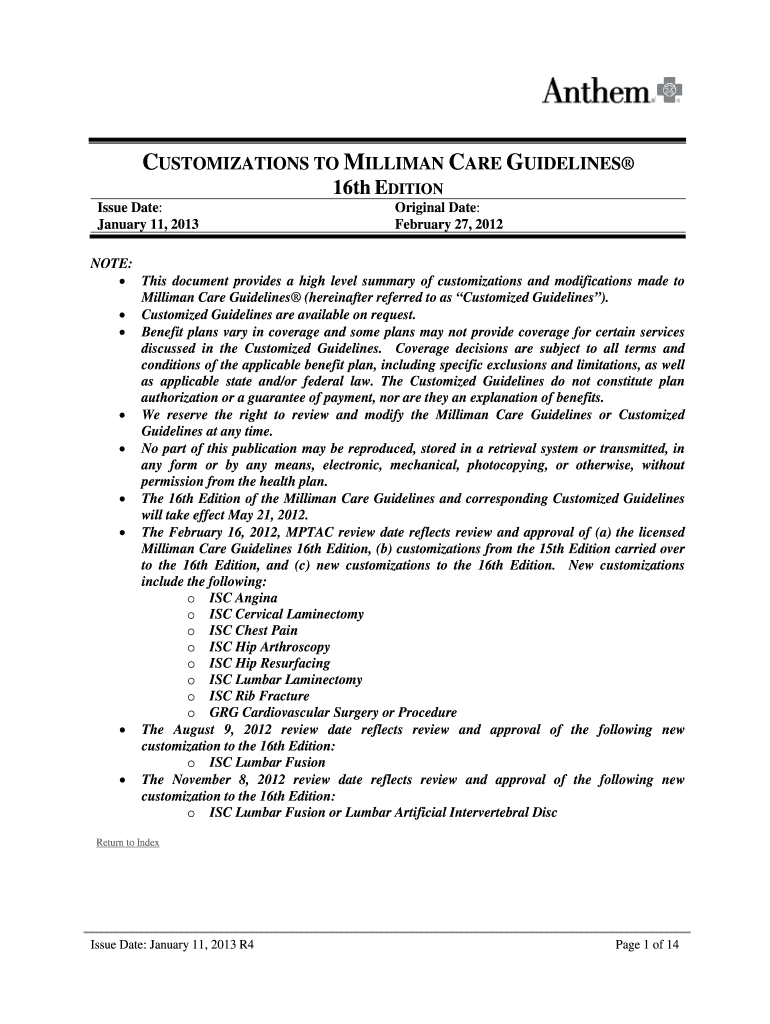
Customizations to Milliman Care Guidelines involve adjusting the standard clinical guidelines to suit specific organizational or regional needs. These guidelines are typically used by healthcare providers, insurance companies, and medical policy-makers to standardize patient care processes. Modifications may include considerations for local medical practices, available resources, or specific patient demographics, ensuring that care delivery aligns with established best practices while accommodating unique requirements.
How to Use the Customizations to Milliman Care Guidelines
The Milliman Care Guidelines can be customized by incorporating local clinical practices and regulatory requirements. Users apply these guidelines by first assessing their existing healthcare protocols and comparing them with the standard guidelines. Necessary adjustments are identified based on gaps or areas for improvement. Once custom changes are implemented, healthcare professionals can integrate these guidelines into their daily operations, ensuring that patient care is consistent, efficient, and compliant with established standards.
Steps for Implementation
- Assessment: Review current protocols against the standard guidelines.
- Customization: Identify and document necessary modifications.
- Integration: Apply changes within healthcare systems and processes.
- Training: Provide training for staff on updated guidelines.
- Evaluation: Continually assess the effectiveness of customized guidelines.
Key Elements of the Customizations to Milliman Care Guidelines
Customizations involve several critical components to ensure comprehensive and appropriate care:
- Clinical Indications: Tailor specific symptoms or conditions that determine the necessity of medical interventions.
- Care Pathways: Develop or adjust standard treatment pathways to align with local resources and expertise.
- Resource Allocation: Allocate necessary medical equipment and personnel based on customized guidelines.
- Documentation Standards: Modify documentation requirements to reflect any changes in the care pathways or clinical indications.
- Compliance Checks: Ensure all customized guidelines comply with local healthcare regulations and standards.
Important Terms Related to Customizations
Understanding key terms can aid in effectively implementing and adhering to these guidelines:
- Clinical Protocols: Structured plans dictating specific treatments for health conditions.
- Best Practices: Widely recognized methods that have been proven to lead to optimal outcomes.
- Regulatory Compliance: Adherence to healthcare laws and regulations within a specific jurisdiction.
- Patient Demographics: Statistical data relating to the population served by a healthcare provider, which can influence guideline customization.
Who Typically Uses the Customizations to Milliman Care Guidelines
The guidelines are utilized by a diverse group of stakeholders across the healthcare continuum, including:
- Healthcare Providers: Doctors, nurses, and clinical staff who directly engage in patient care.
- Insurance Companies: Organizations that require standard criteria to validate medical necessity for claims processing.
- Medical Directors: Professionals overseeing the development and implementation of clinical protocols.
- Patient Advocacy Groups: Organizations ensuring that patient care guidelines consider patient preferences and needs.


Why Should You Customize These Guidelines
Customizing the Milliman Care Guidelines can significantly improve the quality and efficiency of patient care. Benefits include:
- Tailored Care Delivery: Meet specific patient needs and demographic factors.
- Improved Patient Outcomes: Enhance the effectiveness of treatments through evidence-based adjustments.
- Efficient Resource Utilization: Allocate resources appropriately based on localized needs.
- Regulatory Compliance: Adapt guidelines to ensure compliance with local healthcare laws and standards.
Steps to Complete the Customizations
Completing customizations involves a structured approach to ensure accuracy and efficacy:
- Identify Needs: Determine the specific needs of the patient population and available resources.
- Draft Modifications: Develop a draft of necessary changes to existing guidelines.
- Stakeholder Review: Engage healthcare leaders and stakeholders to review proposed customizations.
- Implementation: Integrate finalized changes into clinical practice.
- Monitor and Adjust: Evaluate the impact of changes and make adjustments as needed based on ongoing assessments.
State-Specific Rules for the Customizations
Due to varying state regulations, it's important to customize guidelines with consideration for state-specific rules:
- Regulatory Variations: States may have different licensing requirements affecting clinical practice.
- Resource Availability: Availability of medical equipment or facilities may differ by state, necessitating adaptations.
- Local Health Challenges: Consider prevalent health issues in the area that may require adjusted care strategies.
Understanding these factors can help ensure that guidelines are both practical and compliant across different state healthcare systems.