
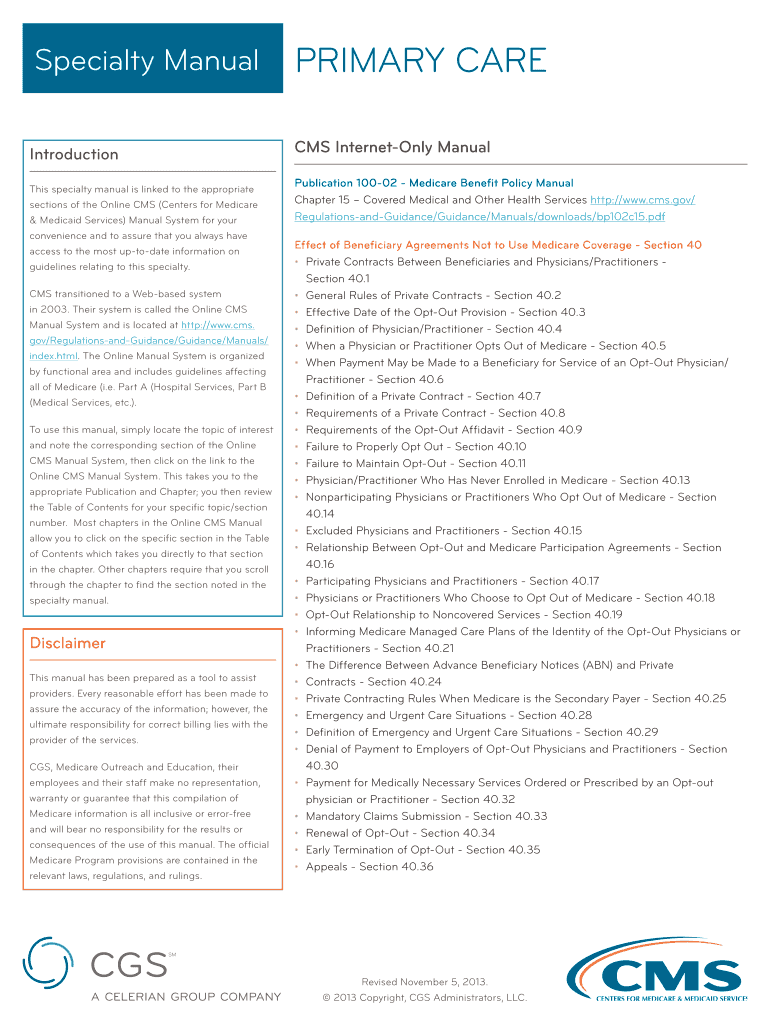







Definition & Meaning
The CMS Internet-Only Manual is an authoritative resource provided by the Centers for Medicare & Medicaid Services (CMS) containing the official guidelines, regulations, and instructions related to Medicare services. It is intended as a comprehensive repository of information for healthcare providers to ensure compliance with Medicare billing, coding, and service delivery guidelines. This manual plays an essential role in maintaining standardized practices across the healthcare industry, offering detailed insights into various Medicare-related procedures, policies, and requirements. Providers rely on this document for accurate billing and ensuring their practices align with federal regulations.
How to Use the CMS Internet-Only Manual
Navigating the CMS Internet-Only Manual involves accessing its vast collection of information structured logically for ease of use. Users can start by using the search function to locate specific topics quickly. The manual is divided into sections that cover different aspects of Medicare services, such as preventive care, hospice services, and billing requirements. To effectively use the manual:
- Identify the relevant section by entering specific keywords in the search bar.
- Utilize the table of contents for a structured approach to finding information.
- Bookmark frequently used sections for easy future reference.
- Stay updated with regular revisions and updates, which are periodically released by CMS.
Key Elements of the CMS Internet-Only Manual
The manual consists of various key elements essential for healthcare providers to understand Medicare requirements effectively:
- Billing Guidelines: Detailed instructions on correct billing practices for Medicare services, focusing on coding and reimbursement policies.
- Service Coverage: Information on the scope of services covered under Medicare, including qualifications and limitations.
- Regulatory Compliance: Outline of federal regulations governing Medicare services to ensure healthcare providers meet all legal obligations.
- Procedure Descriptions: Thorough explanations of approved medical procedures, aiding in appropriate service documentation.
Each section is designed to aid providers in delivering compliant and efficient healthcare services.
Important Terms Related to CMS Internet-Only Manual
Understanding specific terminology within the CMS Internet-Only Manual is crucial for effectively interpreting its guidelines. Some key terms include:
- Current Procedural Terminology (CPT): Codes used to describe medical, surgical, and diagnostic services.
- Medical Necessity: A criterion used to determine if a service is reasonable and essential for patient care.
- Medicare Administrative Contractor (MAC): A private firm that processes Medicare claims and performs audit functions.
These terms are foundational to navigating the manual and applying its guidelines in practical scenarios.
Legal Use of the CMS Internet-Only Manual
The legal use of the CMS Internet-Only Manual ensures compliance with federal Medicare policies. It serves as a legal reference point for:
- Accurate filing of Medicare claims: Ensures that providers are reimbursed appropriately based on correct service coding.
- Audit defense: Providers can reference sections of the manual during audits to justify services and billing.
- Policy implementation: Healthcare organizations use the manual to create internal policies aligning with federal standards.
Abiding by the guidelines in the manual protects healthcare providers from legal penalties related to non-compliance.
State-Specific Rules for the CMS Internet-Only Manual
While the CMS Internet-Only Manual provides federal guidelines, some state-specific variations may apply due to differing healthcare regulations:
- Medicaid Programs: Each state administers its version of Medicaid, which may vary from federal guidelines.
- Provider Licensing: State-specific licensing requirements can affect how providers implement CMS guidelines.
- Reimbursement Rates: Variations in state-managed insurance programs can lead to differences in reimbursement rates.
Healthcare providers must be aware of these state-specific elements to accurately apply CMS guidelines in their practice.
Examples of Using the CMS Internet-Only Manual
Practical examples highlight how providers leverage the manual in everyday settings:
- Billing Services: A cardiology clinic uses the manual to cross-reference codes during the submission of ECG procedures, ensuring correct reimbursement.
- Preventive Care Documentation: A family practice accesses preventive service guidelines to validate the coverage of annual physical exams.
- Audit Preparation: A hospital's billing department conducts regular reviews against the manual's claims submission protocols to prepare for potential audits.
These instances illustrate the manual's invaluable role in routine healthcare operations.
Penalties for Non-Compliance
Failing to adhere to the CMS Internet-Only Manual's guidelines can lead to significant penalties for healthcare providers:
- Financial Penalties: Incorrect billing may result in denied claims or reimbursement adjustments.
- Legal Consequences: Non-compliance might lead to audits, fines, or legal action from CMS.
- Reputation Damage: Continuous non-compliance can harm a provider's reputation and trust with patients and partners.
Understanding and applying the manual's guidelines is crucial to avoiding these consequences and maintaining a compliant healthcare practice.




