






Definition and Meaning
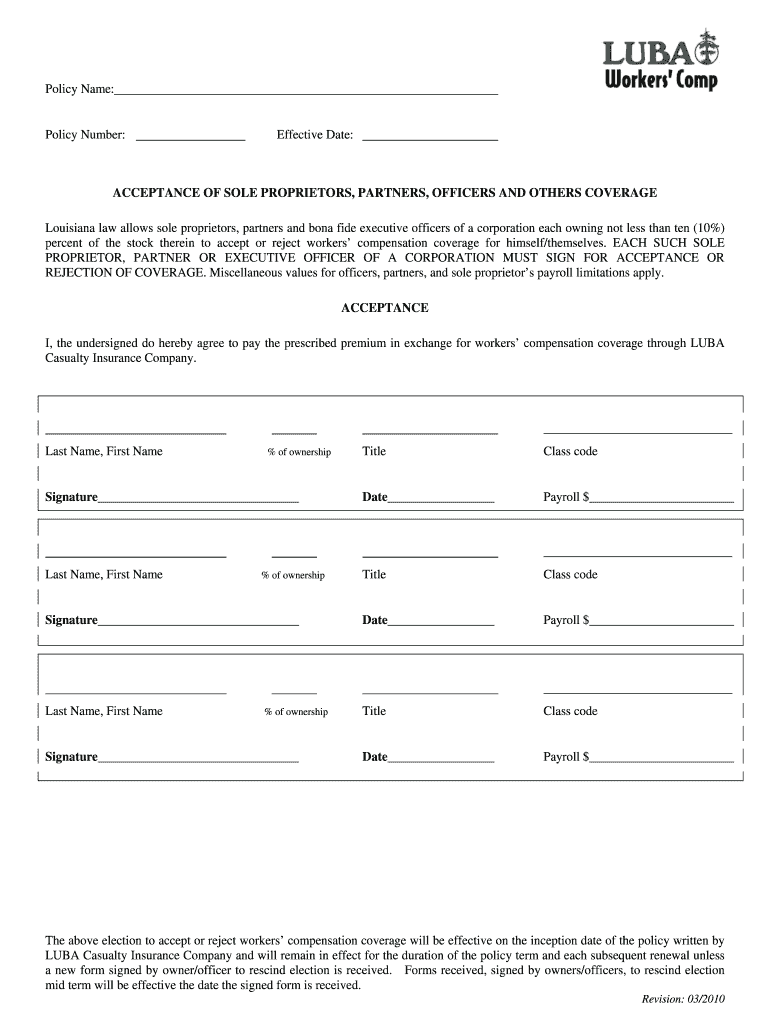
The "Acceptance of Sole Proprietors, Partners, Officers" form is a legal document used to determine whether certain individuals within a business, such as sole proprietors, partners, or executive officers, choose to accept or reject compensation coverage. This specific form is required in multiple jurisdictions, operating as a declaration of insurance preferences for these distinct roles within a business structure. The importance of the form lies in its ability to provide clarity on coverage decisions, influencing liability and protection levels for both the business and the individuals involved.
Key Elements of the Form
Essential Sections
- Identification Information: Includes fields for the individual’s name, business name, and ownership share, which aides in establishing the identity and role within the organization.
- Coverage Selection: A crucial component where individuals can choose to accept or reject coverage, affecting their compensation rights.
- Signature and Date: Required to validate the form and ensure that the documented decisions are legally binding.
Importance of Accurate Completion
Completing each section with precision is necessary, as errors may lead to questions of validity. Inaccurate information can result in misunderstandings or disputes concerning coverage.
Steps to Complete the Form
- Gather Necessary Information: Collect all personal and business details required for the form, including ownership stakes and decision on coverage acceptance.
- Review Coverage Options: Understand the implications of accepting or rejecting coverage to make an informed decision.
- Fill Out the Form: Carefully provide all relevant details in the designated sections, ensuring accuracy and completeness.
- Sign and Date: Authenticate the form to make it legally binding.
- Retain a Copy: For personal records and potential future reference.
Why You Should Consider the Form
Choosing whether to accept coverage affects not only potential compensation claims but also the legal responsibilities within the organizational structure. By completing this form, sole proprietors, partners, and officers can exert a proactive influence over their financial protection and regulatory compliance.
Legal Use and Compliance
Jurisdictional Requirements
The form is essential for compliance with state regulations where required. It ensures that businesses and individuals operate within legal boundaries concerning workers' compensation coverage.
Binding Nature
The signed acceptance or rejection on this form is legally binding, and failure to adhere to stated decisions can result in legal penalties.
Obtaining the Form
- Professional Advisors: Contact your legal or financial advisor for access to the most accurate version suited to your state and business type.
- Government Websites: Many state-specific forms are available through official state government websites for download.
- Business Associations: Membership in industry-specific organizations may provide direct access or guidance on obtaining these forms.
Who Typically Uses This Form
This form is primarily used by:
- Sole Proprietors: Individuals who run their business alone and need to make a personal decision regarding compensation coverage.
- Partners in Partnerships: Co-owners in a business who collectively decide on their compensation preferences.
- Executive Officers: High-ranking executives who represent key decision-makers within corporations and must determine their coverage election.
State-by-State Differences
Workers' compensation coverage forms, like this one, can vary significantly by state in the United States. Each state may have different:
- Coverage requirements: Specific mandates for what can or cannot be excluded from compensation scenarios.
- Eligibility criteria: Varying definitions of what roles are included under this form's purview.
- Submission protocols: Different states may require different processes for submitting or modifying these forms.
Understanding and adhering to state-specific regulations is crucial for ensuring full compliance and validity of the form and its decisions.