Definition & Meaning
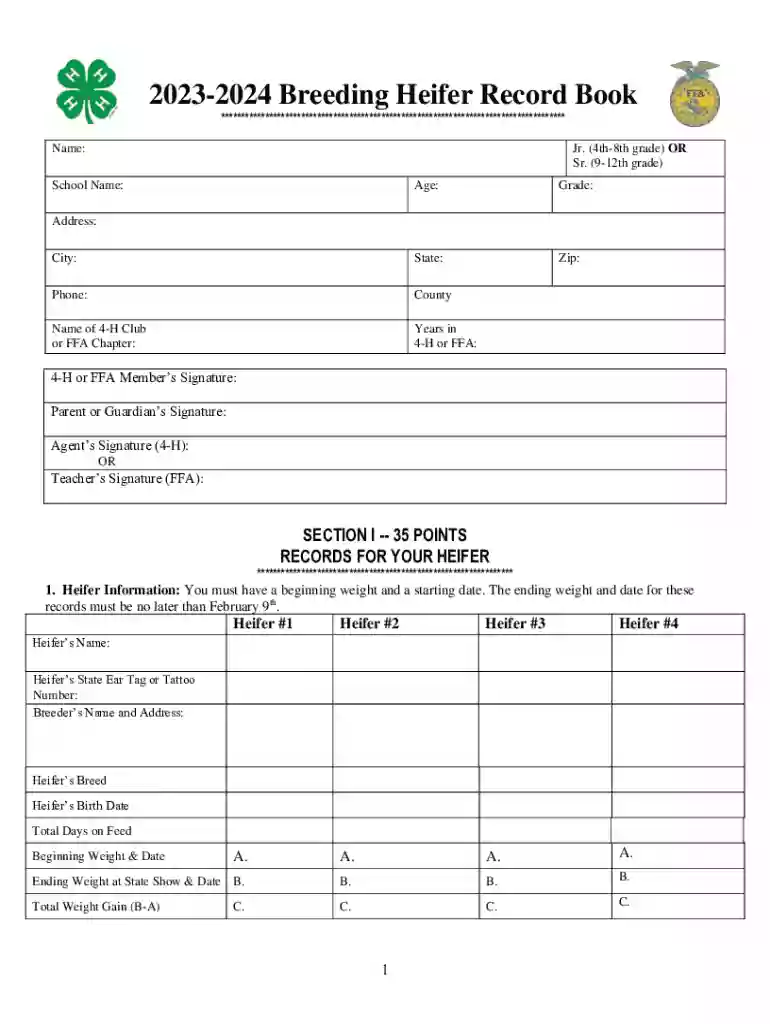
The 4H 1177 4-H Livestock Record Book serves as a comprehensive documentation tool designed for individuals involved in 4-H livestock projects. The document is instrumental in keeping track of various aspects of livestock management and helps participants in maintaining detailed records regarding their livestock, including breeding, feeding, health care, and financial transactions related to the project. This record-keeping practice not only assists in evaluating the progress but also in developing organizational skills and accountability among young participants.
Key Elements of the 4H 1177 4-H Livestock Record Book
A pivotal component of the record book includes several sections dedicated to different aspects of livestock management. Participants are required to fill in details such as:
- Livestock Information: This section requires the recording of the basic details of each animal, including breed, age, and identification numbers.
- Feed and Nutrition Records: Documenting the type and amount of feed provided, ensuring proper nutrition and feeding schedules are maintained.
- Health and Veterinary Care: Tracking vaccinations, treatments, and health check-ups to ensure the well-being of the livestock.
- Financial Records: Detailing expenditures and income related to the livestock project, which can include expenses for feed, veterinary care, and eventual sales revenues.
- Project Goals and Reflections: Participants are encouraged to set specific objectives for their projects and reflect on learning experiences and outcomes.
Steps to Complete the 4H 1177 4-H Livestock Record Book
Completing the 4H 1177 form involves several sequential steps to ensure comprehensive records are maintained:
- Initial Setup: Begin by entering essential livestock information at the start of the project.
- Routine Entry: Regularly update feed, health, and financial sections on a weekly or monthly basis depending on activities.
- Periodic Review: Evaluate the recorded data periodically to ensure accuracy and make necessary adjustments.
- Annual or Project-End Evaluation: Compile the data at the end of the project or year to reflect on the outcomes, learning, and improvements made.
How to Use the 4H 1177 4-H Livestock Record Book
To maximize the utility of the record book, it should be used consistently throughout the project period. Participants should:
- Make Timely Entries: Record details immediately after significant events, such as veterinary visits or feed purchases.
- Be Detailed and Accurate: Ensuring precision in entries helps in effectively tracking progress and making data-driven decisions.
- Reflect and Adjust: Use the data to reflect on successes and challenges, adjusting management practices as necessary for future endeavors.
Important Terms Related to 4H 1177 4-H Livestock Record Book
Several terms are crucial in the context of this record book:
- Heifer: A young female cow that has not born a calf.
- Breeding Records: Documentation of mating details, cycles, and outcomes.
- Expense Tracking: Systematic recording of all project-related costs.
- Performance Metrics: Metrics that assess the growth, weight gain, and health status of livestock.
- Project Evaluation: The final assessment of the project based on collected data.
Who Typically Uses the 4H 1177 4-H Livestock Record Book
The primary users of this record book are:

- 4-H Members: Young individuals involved in livestock projects who are looking to gain skills in agriculture and animal husbandry.
- FFA Members: Individuals in Future Farmers of America programs who wish to maintain structured records of their livestock activities.
- Adult Leaders and Educators: Facilitators and mentors who guide youth in understanding and utilizing agricultural practices through experiential learning.
State-Specific Rules for the 4H 1177 4-H Livestock Record Book
While the 4H 1177 form follows a general structure, specific rules may vary by state:
- Submission Deadlines: Different states may have varying deadlines for completing and submitting the record book.
- Award Criteria: The criteria for awards and recognitions may differ, with particular emphasis placed on certain aspects of livestock management, such as innovation or sustainability.
- Additional Sections: Some states might require additional sections or fields to be included as part of local agricultural standards or expectations.
Examples of Using the 4H 1177 4-H Livestock Record Book
Real-world applications of the record book can be seen through:
- Individual Achievement: A 4-H member who systematically records all aspects and reflects on their project's progress and learning can showcase their achievements in local fairs or competitions.
- Group Projects: Groups of participants working on a joint livestock project can utilize the book to ensure coordination and division of responsibilities among members.
- Educational Settings: The record book can be used as a teaching tool for agricultural education programs, providing a practical approach to learning about livestock management.
The 4H 1177 4-H Livestock Record Book is a pivotal tool in fostering organized documentation, encouraging transparency, and enhancing practical learning in livestock management for youth involved in 4-H and similar programs.