






Definition and Meaning of Bathroom and Toilet Facilities
Bathroom and toilet facilities refer to public or private areas designed for sanitation and personal hygiene. These facilities typically include essential components such as toilets, sinks, and sometimes shower areas, and are fundamental in ensuring health and hygiene standards in various settings like businesses, workplaces, and residential buildings. The term encompasses a range of features and amenities tailored to meet accessibility, safety, and hygiene regulations. Understanding the definition and scope of these facilities is crucial for compliance with regional building codes and ensuring accessibility for all individuals, including those with disabilities.
Key Components and Design Criteria
Bathrooms and toilet facilities feature several critical components, each designed to meet specific functional and regulatory requirements. These components include water closets, which must adhere to specific flush capacities and ergonomic designs to ensure comfort and utility. Lavatories, or sinks, are standard features, often equipped with automated faucets to conserve water and improve hygiene standards. Additionally, grab bars and diaper-changing tables are essential for accessibility, particularly in family-friendly or public venues. Compliance with established design criteria, such as the ANSI A117.1 standards, is necessary to ensure safety and accessibility.
How to Use Bathroom and Toilet Facilities
Using bathroom and toilet facilities can vary based on the type of venue and available amenities. The following guidelines ensure that individuals can effectively utilize these facilities within the scope of regular usage and specific accessibility considerations.
General Usage Guidelines
To use standard bathroom and toilet facilities effectively, one should be familiar with the location and operation of key fixtures. This includes understanding the flushing mechanism of toilets, typically activated via a handle or button. Proper usage of lavatories includes using soap dispensers and hand dryers, which are usually automated to promote hygiene.
Accessibility Features
Many modern facilities are equipped with features to assist individuals with disabilities. These include lowered sinks and mirrors, wider stalls for wheelchair access, and tactile signage for visually impaired users. It's important for users and facility managers to ensure that these features remain functional and unobstructed, enabling access and safe usage for all individuals.
Key Elements of Bathroom and Toilet Facilities
A comprehensive understanding of bathroom and toilet facilities requires familiarity with several key elements that define their construction and function.
Fixtures and Accessories
The core elements of any bathroom and toilet facility include water closets, lavatories, soap dispensers, towel holders, and hand dryers. Each of these components must meet specified standards that dictate their installation height, distance from other fixtures, and ease of use. Additionally, protective measures such as screens or dividers are often installed to enhance privacy and comfort.
Plumbing and Ventilation Systems
Effective plumbing systems are the backbone of any bathroom and toilet facility, required to handle various levels of water pressure and waste management efficiently. Ventilation systems, meanwhile, ensure adequate air circulation, necessary for reducing odors and preventing the buildup of moisture, which can contribute to mold growth.
State-Specific Rules for Bathroom and Toilet Facilities
State-specific regulations can significantly impact the construction and operation of bathroom and toilet facilities. Understanding these rules is essential for ensuring that facilities are both compliant and optimized for local requirements.
North Carolina Accessibility Codes
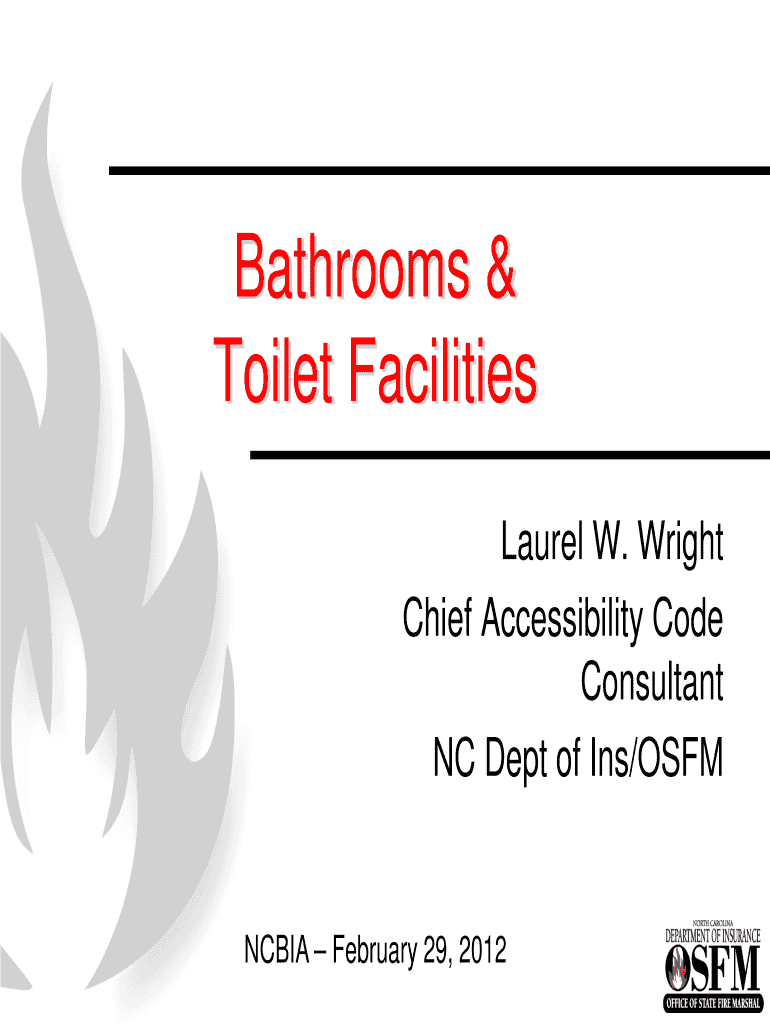
In North Carolina, accessibility codes such as the 2012 NC Building Code provide guidelines that influence fixture placement, the inclusion of gender-neutral facilities, and specific accommodations for children. These regulations are vital for ensuring that facilities remain accessible to individuals with disabilities and comply with broader federal standards like the Americans with Disabilities Act (ADA).
Examples of Using Bathroom and Toilet Facilities in Real-World Settings
Understanding the real-world application of bathroom and toilet facilities is valuable in assessing their role in society and identifying opportunities for improvement.
Public and Commercial Spaces
In commercial environments such as malls or airports, bathrooms are designed to handle high foot traffic while ensuring user comfort and accessibility. Features like touchless technology help reduce the spread of germs, while robust cleaning schedules maintain hygiene standards.
Residential Applications
In residential settings, bathroom facilities prioritize comfort alongside functionality. Design considerations often include aesthetic elements such as high-quality fixtures and custom tiling, balanced with practical aspects like efficient water usage systems.
Legally Binding Standards for Bathroom and Toilet Facilities
Ensuring compliance with building and accessibility standards for bathroom and toilet facilities involves understanding the legal frameworks that govern their design and use.
ANSI Standards and Building Codes
The ANSI A117.1 standards provide comprehensive guidelines for accessibility, ensuring all facilities offer equal access to individuals with disabilities. Local building codes may impose additional requirements that can influence design choices related to space layout and fixture height.
Important Terms Related to Bathroom and Toilet Facilities
Familiarity with vocabulary specific to bathroom and toilet facilities aids in navigation and understanding of regulations, compliance requirements, and design principles.
Commonly Used Terms
- Water Closet: A technical term for toilets, focusing on water efficiency and waste management
- Lavatory: Another term for sink, particularly in public restroom contexts
- Grab Bar: A safety feature dedicated to assisting users with mobility challenges, ensuring stability in the bathroom environment
Business Types That Benefit Most from Bathroom and Toilet Facilities
Certain business types benefit significantly from optimized bathroom and toilet facilities, improving customer satisfaction and operational efficiency.
Hospitality and Recreational Venues
Hotels and recreational venues like cinemas or amusement parks often feature premium bathroom facilities designed to cater to large groups of users simultaneously. These facilities may include family restrooms with larger stalls and child-friendly fixtures, accommodating a diverse clientele with varied needs.