






Definition & Meaning
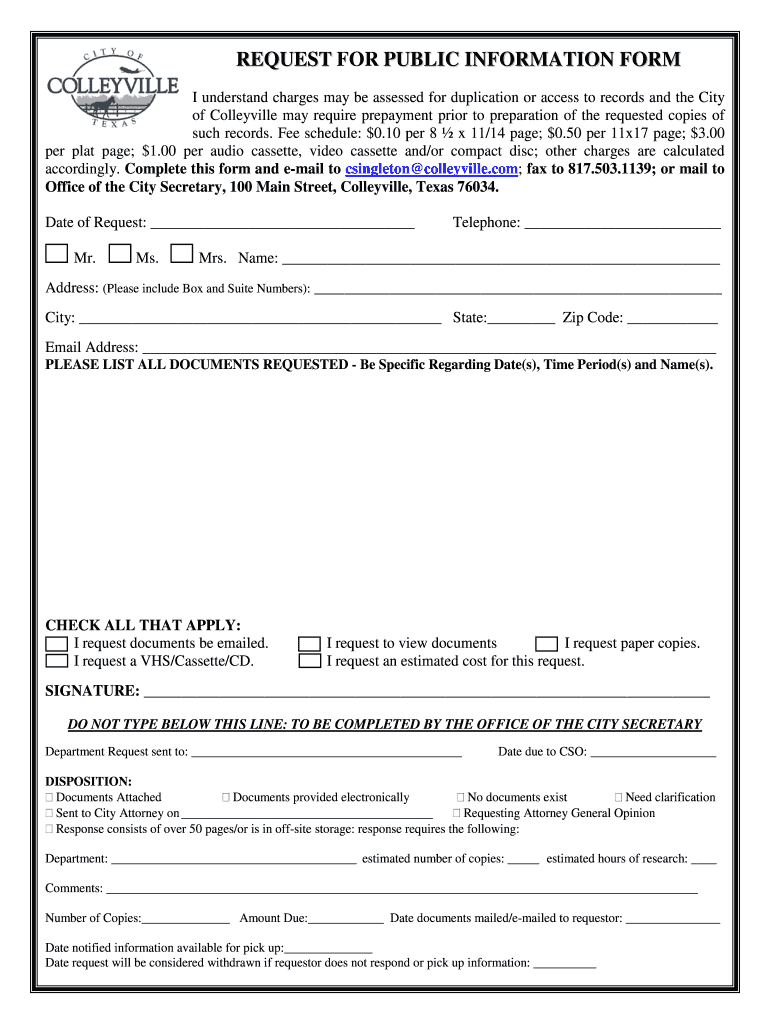
The Request for Public Information Form is a document used to request access to public records maintained by governmental bodies. It codifies the right of the public to obtain information held by the government, subject to specific exceptions. The form usually necessitates clarifying the type of information sought and identifying the requester, facilitating transparent access to public data. Agencies commonly handle such requests under Freedom of Information laws or specific state statutes, ensuring government accountability and transparency.
Steps to Complete the Request for Public Information Form
-
Identify the Records Needed: Begin by determining the specific documents or information you wish to access, ensuring that your request is as precise as possible to expedite processing.
-
Provide Personal Information: Enter details such as your name, address, and contact information on the form. This information is crucial for any follow-up communication or clarification needed by the agency.
-
Detail the Request: Clearly outline the documents required. Use dates, titles, or categories to define the scope effectively.
-
Specify Delivery Method: Indicate how you prefer to receive the records, whether it's through mail, email, or in-person pickup. Some agencies might offer online access as a delivery option.
-
Submit the Form: Submit the filled form via the methods specified by the agency, commonly mail, email, or an online submission portal.
-
Follow Up: Post-submission, if you do not receive a response within the expected timeframe, reaching out to the agency for updates can be beneficial.
Why Should You Request for Public Information Form
-
Government Accountability: Using this form helps ensure government operations remain transparent, fostering accountability and trust.
-
Research Purposes: Researchers often use the form to gather data pertinent to their studies, especially those involving policy analysis or public administration.
-
Journalistic Investigations: Journalists commonly file such requests to obtain information crucial for investigative reporting, ensuring the media's role as a public watchdog.
-
Legal Needs: Attorneys may request public records to obtain evidence or supplementary information beneficial for legal proceedings.
Legal Use of the Request for Public Information Form
The legal framework surrounding the use of this form is deeply entrenched in public records laws, such as the Freedom of Information Act (FOIA) in the U.S. It provides a legally recognized process through which individuals can access government-held data, barring certain confidential exemptions like national security, personal privacy, or trade secrets. Legal use encompasses compliance with submission protocols, fee payments if any, and adherence to appeal processes in instances of denial.
Key Elements of the Request for Public Information Form
-
Requester Information: Ensures the agency can communicate effective responses and ensures transparency in the request process.
-
Description of Records: A precise description is vital for accurate retrieval and processing, minimizing delays in response.
-
Preferred Format/Delivery Method: Options for receiving the documents that can include electronic copies, physical duplicates, or digital access links.
-
Fee Agreement: Acknowledgment of potential costs related to document reproduction or processing, promoting awareness and preparation for any associated charges.
Examples of Using the Request for Public Information Form
-
Environmental Data Access: Environmental groups may use the form to obtain records on pollution, waste disposal permits, or health metrics affecting community areas.
-
Veteran's Records Retrieval: Veterans or their families may request service records or benefits information to support claims or historical research.
-
City Council Meetings: Community activists often gather minutes, agendas, or voting records of city council meetings to lobby for policy changes.
Form Submission Methods (Online / Mail / In-Person)
-
Online: Many agencies now offer digital portals for submission, creating an efficient and eco-friendly approach.
-
Mail: Traditional mail remains an option for those preferring tangible documentation or lacking internet access.
-
In-Person: Direct submission at an agency’s office can be practical for individuals who require immediate acknowledgment or assistance with filling the form.
State-Specific Rules for the Request for Public Information Form
Every state or locality may impose distinct rules regarding the handling of public records requests. These can include variances in processing times, fees, and exceptions to disclosable data. Understanding the jurisdiction-specific regulations is crucial, such as Texas' Public Information Act or California's Public Records Act, which may have unique requirements. Familiarity with these helps ensure compliance and increases the likelihood of successful requests.
Penalties for Non-Compliance
Failure to comply with submission and form requirements can result in request denial or significant delays. Agencies may deny requests deemed vague, improperly submitted, or lacking fee arrangements. Additionally, repeatedly failing to adhere to instructions or falsifying requester information can lead to permanent access restrictions to public records or even legal actions depending on the intent and severity of non-compliance.