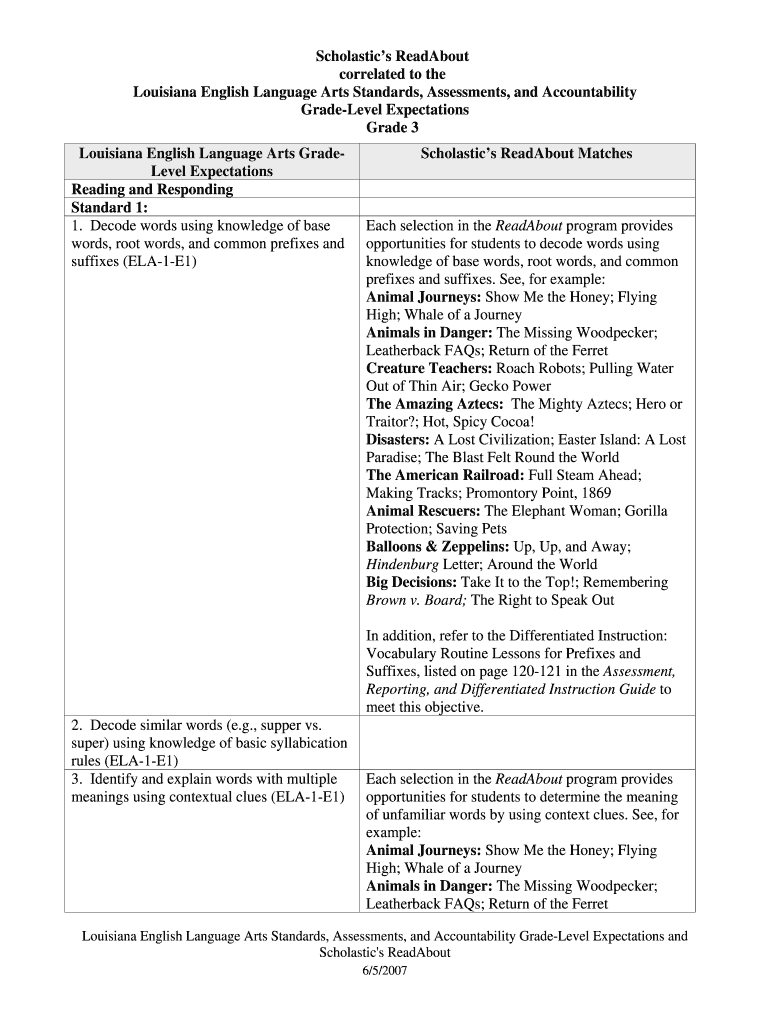







Definition and Purpose of Reading and Responding
Reading and Responding is a process essential to various professional and educational environments, focused on careful analysis and thoughtful feedback to texts and documents. It involves understanding the content, identifying key elements, and forming articulated responses. This approach is widely used to enhance comprehension and foster critical thinking. For instance, in an educational context, educators use it to develop students’ analytical skills. In professional settings, it can guide decision-making by ensuring all relevant information is considered and addressed.
How to Use the Reading and Responding Process
To effectively use the Reading and Responding methodology, follow these steps:
- Begin with a thorough read of the entire document to grasp the overall message.
- Identify the main points and any underlying themes or arguments.
- Note any terms or sections that are unclear or require further explanation.
- Formulate responses by summarizing key points and providing your interpretation or critique.
- Use annotation tools, like highlighting or adding comments, to interact with the document directly.
- Discuss your findings with peers for deeper insight or validation.
Steps to Complete the Reading and Responding Process
Engaging fully in the Reading and Responding process involves several key steps:
-
Initial Reading:
- Skim through the material quickly to understand the structure.
- Identify sections where deeper focus is needed.
-
Detailed Analysis:
- Read each section carefully, noting down key arguments and evidence.
- Use annotation tools to mark important areas.
-
Response Formation:
- Draft a response by combining your understanding with critical insights.
- Ensure your response is structured, presenting your points clearly and logically.
-
Review and Revise:
- Review your response for accuracy and depth.
- Revise to improve clarity and make sure all important aspects are covered.
Key Elements of the Reading and Responding Process
A comprehensive Reading and Responding approach includes several critical elements:
- Comprehension: Understanding the core message and details within the text.
- Analysis: Breaking down the text into its components to examine relationships and implications.
- Evaluation: Assessing the accuracy, relevance, and quality of the content.
- Response: Developing and articulating a well-reasoned reaction to the text.
Important Terms Related to Reading and Responding
- Annotation: Adding explanatory notes to a text.
- Comprehension: The ability to understand and interpret written material.
- Critique: A detailed analysis and assessment of something.
- Feedback: Constructive comments provided to improve understanding or performance.
Who Typically Uses the Reading and Responding Process
The Reading and Responding process is utilized in various sectors:
- Education: Teachers and students use this for developing literacy and critical thinking skills.
- Business: Professionals apply these skills for effective communication and decision-making.
- Research: Academics and scientists rely on it to assess literature and facilitate discourse.
- Law: Legal professionals use it for case analysis and argument development.


Examples of Using the Reading and Responding Process
Consider the following scenarios where Reading and Responding is applied:
- Educational Setting: Students analyze texts to write essays or participate in discussions.
- Business Meetings: Teams review reports and provide input for strategic planning.
- Peer Reviews: Researchers evaluate academic papers and offer constructive criticism.
Digital vs. Paper Version of Reading and Responding
Reading and Responding can be conducted both digitally and on paper:
-
Digital Version:
- Offers tools for annotation and real-time collaboration.
- Enables easy sharing and editing of responses.
-
Paper Version:
- Useful for note-taking and initial drafts.
- Preferred by some for focused, distraction-free analysis.
Each method has its merits, and the choice depends on personal preference and context. Digital tools like DocHub facilitate the process with advanced features for editing and collaboration.