






Definition and Meaning of Ed Tech Alignment ck062906 doc
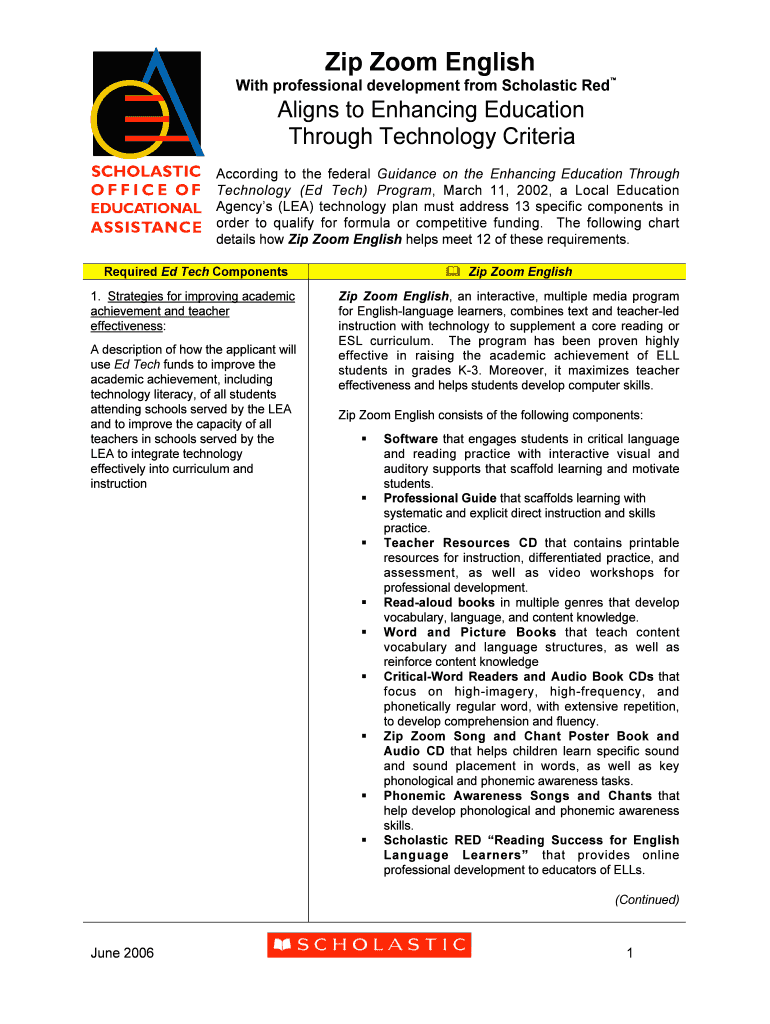
The Ed Tech Alignment ck062906 doc is a pivotal document designed to align educational technology initiatives with established standards and criteria. This document serves as a comprehensive guide to ensure that technology-enhanced educational programs meet specific benchmarks. These standards often align with federal or state educational guidelines, particularly focusing on improving outcomes for English-language learners (ELLs) through strategic technology integration. By utilizing this form, educators and administrators can evaluate whether current Ed Tech tools and programs adhere to mandated performance measures.
How to Use the Ed Tech Alignment ck062906 doc
Using the Ed Tech Alignment ck062906 doc involves several key steps to ensure that educational strategies are effectively meeting technological standards:
-
Review the Criteria: Begin by carefully reviewing the document to understand all the educational technology standards it encompasses. Each criterion will guide you in assessing the tech initiatives’ adherence to pedagogical frameworks.
-
Align Current Programs: Compare your existing educational programs against the outlined standards. This will involve mapping current technology tools and learning strategies to the specified requirements in the document.
-
Document Findings: Record your alignment findings, noting areas of compliance and those that require adjustment. Use this data to plan necessary changes in your programs.
-
Implementation of Changes: Make any needed adjustments to your programs or tools to adhere to the documented standards. This may involve adopting new technologies or modifying teaching methodologies.
-
Re-Evaluate Regularly: Education technology is continually evolving, so it’s important to revisit and re-evaluate your program's alignment periodically.
Steps to Complete the Ed Tech Alignment ck062906 doc
Completion of the Ed Tech Alignment ck062906 doc requires an in-depth process to ensure comprehensive compliance:
-
Preparation: Gather all relevant data and materials about your current educational programs and technologies.
-
Assessment: Thoroughly fill out each section of the document, providing detailed responses to each criterion. This involves the analysis of your program’s alignment with established Ed Tech goals.
-
Collaboration: Work with stakeholders, including teachers, technology coordinators, and administrators, to gain varied perspectives and insights into the program’s efficacy and alignment.
-
Documentation: Record detailed explanations along with evidence to support each response. This might include test scores, user analytics, or teacher testimonials.
-
Submission: Once completed, ensure the document is reviewed by a qualified party and submit it to the relevant educational authorities.
Key Elements of the Ed Tech Alignment ck062906 doc
Understanding the critical components of the Ed Tech Alignment ck062906 doc is essential for effective application:
- Criteria for Success: Clearly defined benchmarks and objectives that the educational technology must achieve.
- Assessment Tools: Mechanisms for evaluating the effectiveness of the technology against the standards.
- Compliance Sections: Areas where specific improvements or modifications are documented and proposed.
- Educational Impact Metrics: Methods for measuring the impact of technology on student learning outcomes.
Who Typically Uses the Ed Tech Alignment ck062906 doc?
The document is widely used by various educational stakeholders:
- School Administrators: To benchmark their school’s technology initiatives against statewide and national standards.
- Teachers and Educators: To tailor their teaching strategies to meet outlined technology-enhanced educational criteria.
- Program Evaluators: To assess the overall impact of Ed Tech tools on student performance and make recommendations for improvements.
- Policy Makers: To guide the development of policies that promote effective technology use in education.


Legal Use of the Ed Tech Alignment ck062906 doc
Adhering to the legal stipulations related to educational technology is a prominent function of the Ed Tech Alignment ck062906 doc:
- Compliance with Federal Regulations: Ensures that educational programs align with federal mandates like the No Child Left Behind Act.
- State Educational Board Requirements: Aligns programs with state standards, ensuring legal compliance in curriculum integration.
- Data Protection and Privacy Laws: Incorporates or references compliance with laws such as FERPA to protect student information within technology use.
Digital vs. Paper Version of the Form
The Ed Tech Alignment ck062906 doc is available in both digital and paper formats, offering flexibility and accessibility in documentation:
-
Digital Version: Allows for easy editing, sharing, and integration into cloud-based review processes. It also facilitates real-time collaboration and updates.
-
Paper Version: Provides a tangible format for traditional review processes and is beneficial in formal meeting settings or where digital access is limited.
Software Compatibility
The document is compatible with various software platforms to ensure ease of completion and integration:
-
Google Workspace: Fully supports Google Docs for collaborative editing and sharing.
-
Microsoft Office: Compatible with Word and Excel, allowing for offline completion and analysis.
-
DocHub Integration: Direct integration with DocHub enhances workflow through features like digital signature collection and document annotation, streamlining the completion process.