







Definition and Meaning
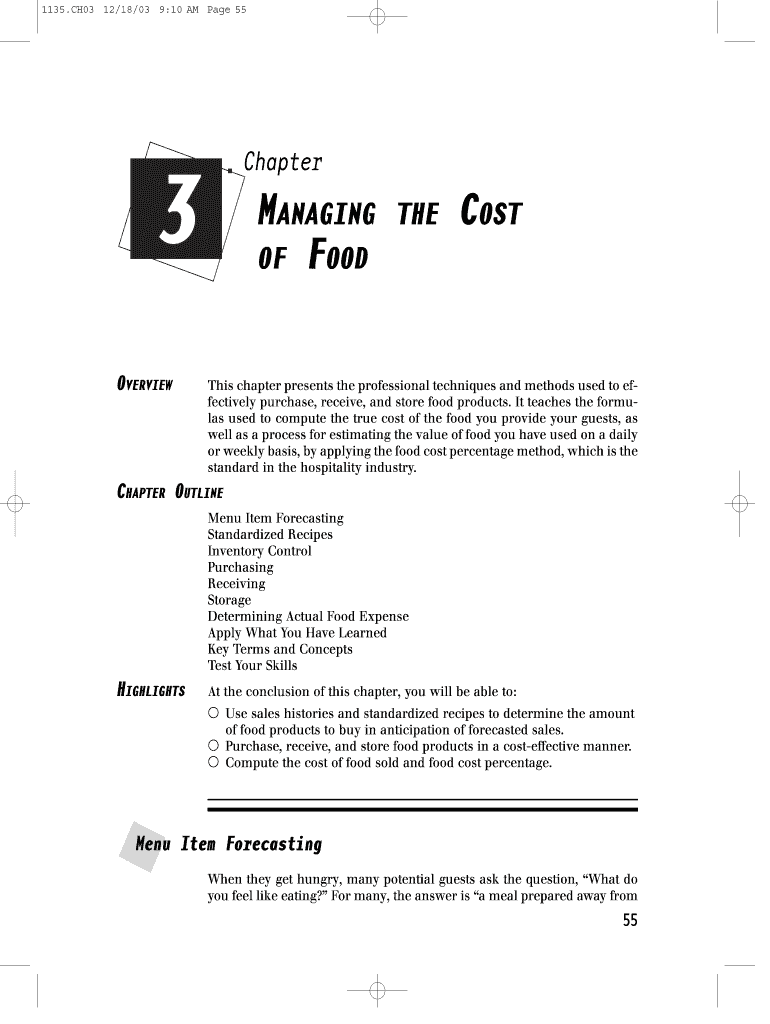
"Managing the Cost of Food - Wiley" serves as an insightful guide to efficient food cost management, primarily within the hospitality industry. This resource breaks down essential components, such as purchasing strategies, receiving protocols, and storing practices, all of which contribute to cost control. The document emphasizes procedure adherence, such as using standardized recipes and accurate sales record-keeping, as vital measures to minimize waste and optimize spending, ensuring profitability and efficiency in operations.
How to Use "Managing the Cost of Food - Wiley"
To effectively utilize "Managing the Cost of Food - Wiley," start by identifying the key areas in your operations where cost savings may be possible. This could include menu planning, inventory management, or purchasing. Follow the outlined techniques to adjust your practices, such as implementing forecasting methods for menu items, maintaining consistency through standardized recipes, and employing ethical practices in sourcing food items. These strategies collectively enhance your business's operational efficiency.
Important Terms Related to "Managing the Cost of Food - Wiley"
Understanding the terminology used in "Managing the Cost of Food - Wiley" is crucial. Terms such as "menu item forecasting," which involves predicting future menu demand, and "food cost percentage," a metric for comparing food cost to sales, are essential. "Inventory control" refers to maintaining the right amount of stock to reduce waste, while "standardized recipes" ensure consistency and predictable costs. Familiarity with these terms will aid in effectively implementing the guide's principles.
Key Elements of "Managing the Cost of Food - Wiley"
The guide outlines several fundamental elements critical to managing food costs effectively:
- Menu Item Forecasting: Predicting required stock based on anticipated sales.
- Standardized Recipes: Establishing fixed ingredient lists to maintain cost and quality consistency.
- Inventory Control: Tracking inventory to reduce spoilage and waste.
- Food Cost Percentage: Monitoring this ratio helps assess purchasing efficiency.
Each element requires deliberate application to yield financial efficiency within hospitality settings.
Steps to Complete the "Managing the Cost of Food - Wiley"
To successfully apply the principles of "Managing the Cost of Food - Wiley," follow these steps:
- Conduct a Menu Analysis: Identify bestseller items and cost-heavy dishes.
- Implement Standardized Recipes: Develop consistent recipe guidelines.
- Establish Inventory Practices: Regularly track and review stock levels.
- Analyze Sales Data: Use historical sales data for accurate forecasting.
- Adjust Purchasing Practices: Source ethically and responsively to demand changes.
These steps help streamline food cost management, enhance sustainability, and improve profit margins.
Who Typically Uses "Managing the Cost of Food - Wiley"
The primary users of this guide are professionals in the hospitality sector, including restaurant managers, chefs, and procurement officers. It is also valuable to culinary instructors teaching food management courses and students studying hospitality management. These individuals and institutions rely on the guide to develop practices that balance quality with cost-efficiency, fundamentally impacting their business strategy and educational syllabi.
Examples of Using "Managing the Cost of Food - Wiley"
Consider a restaurant that used to experience high waste levels and inconsistent product quality. By integrating the techniques from the guide, such as using standardized recipes and accurate sales histories, they managed to reduce waste and control food costs more effectively. Another example involves a catering business that improved its procurement process by forecasting demands and aligning its purchasing practices with real-time sales data, thus improving its profit margins and reducing costly excess inventory.
Business Types That Benefit Most from "Managing the Cost of Food - Wiley"
Businesses within the hospitality industry, like restaurants, hotels, and catering services, benefit significantly from the application of this guide. Those who routinely manage fluctuating food costs will find its strategies for procurement, inventory control, and waste reduction particularly helpful. By implementing these practices, such businesses achieve better cost management, leading to enhanced operational profitability and sustainable resource use.
Legal Use of "Managing the Cost of Food - Wiley"
Adhering to the principles laid out in "Managing the Cost of Food - Wiley" aligns with best practices in ethical sourcing and inventory management. This guide can help businesses maintain compliance with local and federal regulations concerning food safety and waste management. Implementing its recommendations supports businesses in their legal obligations, enhancing reputation and reducing risks associated with non-compliance in food handling and supply chain operations.




