





Definition and Meaning of the Certificate of Final Inspection Form
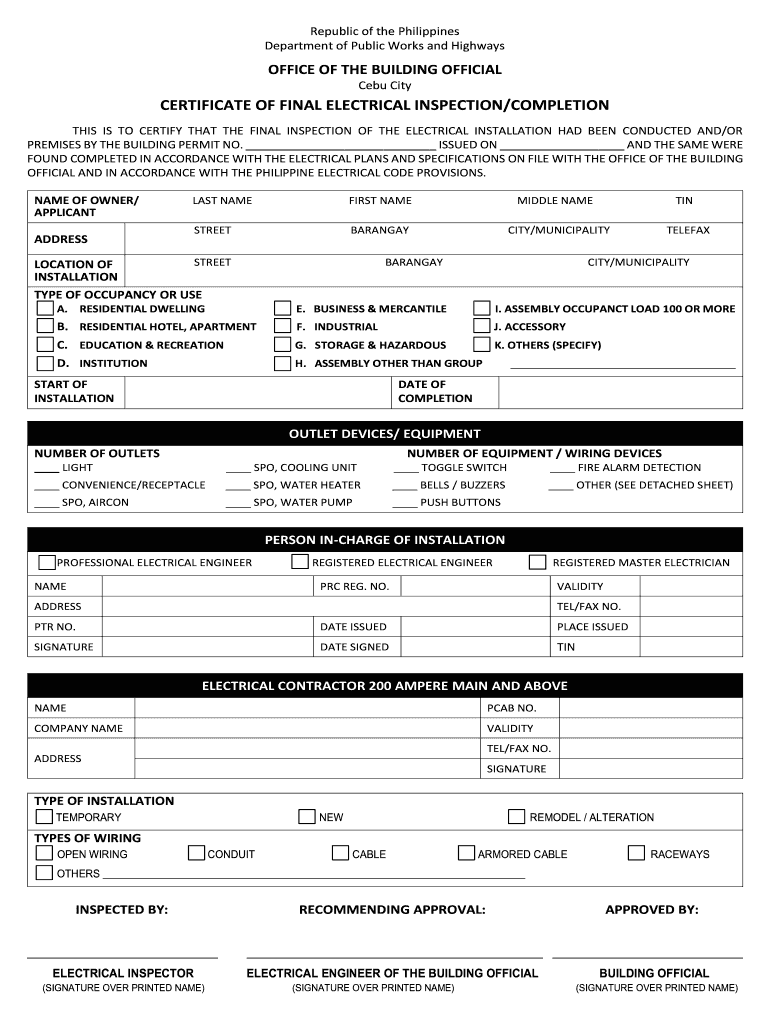
The certificate of final inspection form is a crucial document used to certify that a construction or installation project has been completed in compliance with all applicable regulations and codes. This form typically signifies that the project has undergone a final review by the appropriate inspection officials and meets the necessary safety and structural standards. It includes details about the work completed, the inspector’s observations, and any additional requirements for official approval. This certification is often required for legal habitation, operation of a building, or obtaining further permits.
Key Elements of the Certificate
The certificate contains several critical components that provide a comprehensive overview of the inspection process.
- Project Details: Information about the project location, name of the owner, and description of the work completed.
- Inspection Summary: A section detailing observations made during the inspection, highlighting compliance with relevant codes and any detected deficiencies or areas needing improvement.
- Inspector Information: Details of the official or authority that performed the inspection, including name, title, and contact information.
- Approval Status: Confirmation of the project's compliance with safety and regulatory standards, indicating whether the project has passed or requires further actions.
- Conditions or Restrictions: Any special conditions or restrictions imposed on the project, such as requirement for additional inspections.
How to Obtain the Certificate of Final Inspection Form
To acquire this form, the project owner or contractor must initiate a request with the local building or safety department. The process generally involves several steps to ensure a thorough evaluation.
- Prepare for Inspection: Ensure all aspects of the project comply with building codes and safety standards before requesting an inspection.
- Submit Application: Contact the appropriate authority and submit an application for a final inspection. This may require filling out preliminary information about the project.
- Schedule Inspection: After submission, coordinate with the agency to schedule a date for the final inspection.
- Undergo Inspection: Allow the inspecting authority to evaluate the project. They will scrutinize various elements against code specifications.
- Receive Form: Upon successful inspection, the form will be completed and issued, certifying project completion.
Required Documents
When applying for the certificate of final inspection form, you may need to provide several documents to support your application.
- Construction Permits: Original permits for construction or installation work.
- Project Plans: Approved drawings or plans that were reviewed by the inspection department.
- Completion Reports: Any documentation or reports that corroborate the completion of project stages.
- Previous Inspection Reports: Records of interim inspections conducted during the project lifecycle.
Steps to Complete the Certificate of Final Inspection Form
Completing this form requires careful attention to ensure accuracy and completeness, which is essential for gaining approval from inspecting authorities.
Step-by-Step Process
- Fill Out Identification Details: Enter project and owner information, ensuring correct spellings and data entries.
- Document Inspection Findings: Carefully document findings from the inspection in a clear and concise manner.
- Attach Required Documents: Include any necessary documents such as permits, plans, or previous reports which substantiate the project.
- Review for Accuracy: Thoroughly review all entered information for potential errors which could delay approval.
- Submit for Final Review: Once completed, submit the form to the issuing authority for their final endorsement and approval.
Legal Use of the Certificate
This certificate serves several legal functions in the completion and operation of a construction project.
- Verification of Compliance: It legally verifies the project was completed in accordance with all applicable codes and standards.
- Occupancy Approval: Provides necessary documentation for obtaining an occupancy permit for the building or structure.
- Transfer of Ownership: Can be necessary to finalize property sales or transfers, making it a critical document for real estate transactions.
- Insurance Benefits: Provides proof of compliance often required by insurance providers to validate building policies.
Who Issues the Form
Typically, this form is issued by local government departments responsible for construction oversight, such as the Office of the Building Official or a similar entity. These officials are responsible for evaluating compliance with local and state regulations and ensuring public safety standards are met before the form is issued.
Who Typically Uses the Certificate of Final Inspection Form
The form is an essential document for various stakeholders involved in construction, installation, and real estate projects.
- Contractors: Use the form to demonstrate completion and compliance of their work.
- Real Estate Developers: Require the form to ensure properties are legally ready for sale or occupation.
- Homeowners and Building Owners: Need to secure this form for legal habitation and structural assurance of their properties.
- Government Authorities: Use the document to ensure adherence to public safety and building standards.


Business Types Benefitting from the Form
Various business entities, such as real estate firms, construction companies, and property management groups, benefit from having this form. It ensures that their projects can legally proceed to the next stages, whether it be selling, leasing, or further development.
State-Specific Rules for the Certificate
Different states may implement specific rules and codes that affect how the certificate of final inspection form is issued and what it must include.
- Building Code Variations: States have unique building codes which inspectors must verify compliance against; understanding local codes is critical.
- Inspection Protocols: Varying procedures for conducting and documenting inspections can influence form completion.
- Additional Requirements: Some states may call for extra inspections or documentation before a certificate is issued.
Examples of Using the Certificate
Practical examples illustrate how integral the certificate is in diverse scenarios.
- Residential Construction: A new home build in California requires this certificate to be occupied legally.
- Commercial Development: Developers in New York may need this form to open a new office space.
- Public Buildings: Schools and hospitals using the form to ensure every safety measure is adhered to before opening doors to the public.
These examples underscore the form's essential role in validating a project's readiness for its intended use, ensuring not only compliance but also safety and legality.