
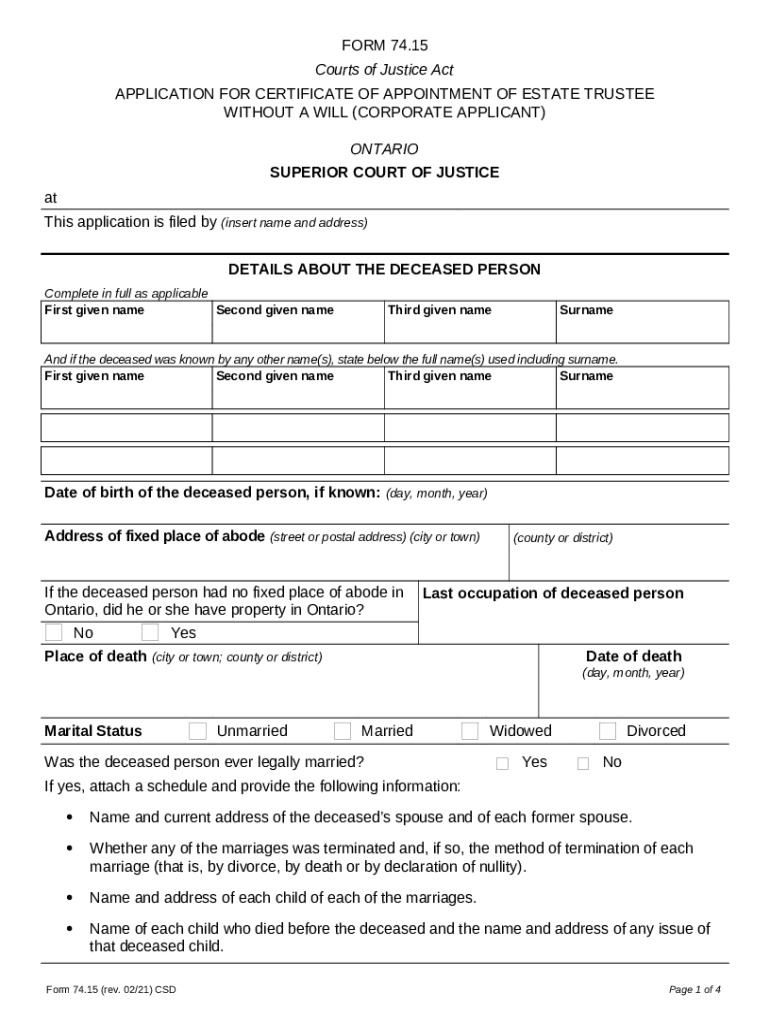







Definition and Purpose of the Application for Certificate of Appointment of Estate Trustee
The "Application for Certificate of Appointment of Estate Trustee" serves as a formal legal document used to appoint a trustee to manage and distribute the estate of a deceased individual. This certificate, sometimes called Form 74.15 in legal contexts, grants the appointed estate trustee or executor the legal authority to administer the estate. The application is essential when handling situations where the deceased did not leave a will, as it provides legitimacy to the administrative actions of the estate trustee and is often required for accessing the deceased's financial accounts, selling property, or managing assets.
Steps to Complete the Application
Completing the "Application for Certificate of Appointment of Estate Trustee" involves several crucial steps to ensure accuracy and compliance with legal standards. Below is a structured guide:
-
Gather Necessary Documentation:
- Obtain the deceased's death certificate, financial documents, and any relevant estate planning papers.
- Confirm the absence of a will if the application pertains to situations without a will.
-
Filling Out the Application:
- Begin by providing personal information about the deceased, including full name, date of birth, and date of death.
- Include detailed information about the estate, such as estimated value, assets, liabilities, and any known parties with interest in the estate.
-
Affidavit of Service:
- Prepare an affidavit affirming that all interested parties, such as potential heirs and beneficiaries, have been informed about the application.
-
Swearing the Application:
- Ensure the application is sworn before a notary public or an individual authorized to administer oaths, verifying the authenticity of the information provided.
-
Submission:
- Submit the completed application along with the required documents to the appropriate court or legal authority designated for estate matters.
Required Documents for Submission
Submitting the "Application for Certificate of Appointment of Estate Trustee" mandates compiling a comprehensive set of documents, which include but are not limited to:
- Death Certificate: Verifies the identity and death of the individual whose estate is being administered.
- Affidavit of Service: Confirms notification to interested parties.
- Proof of Assets: Documentation detailing the deceased's assets, such as bank statements, property deeds, and investment records.
- Affidavit of Estate Trustee's Duty: An affirmation by the applicant confirming their intent to fulfill the legal duties of an estate trustee.
Eligibility and Legal Considerations
Eligibility to apply for a Certificate of Appointment of Estate Trustee is typically determined by factors such as the applicant's relationship to the deceased and an absence of legal restrictions. The party applying must affirm their entitlement and demonstrate a legitimate connection to the estate.
Legal considerations involve ensuring compliance with privacy and tax obligations related to the estate's administration. This includes being aware of estate tax implications and adhering to jurisdictional requirements for estate processing.
Filing Methods for the Application
Applicants have multiple methods for submitting their application:
- Online Submission: Many jurisdictions offer digital platforms that allow for electronic submission of the application and supporting documents, streamlining the process.
- Mail Submission: Traditional mail submission remains an option, requiring physical copies of all necessary documents.
- In-Person Submission: Direct submission to the probate court may be required or preferred in some regions, particularly where verification of documents on-site is mandated.
Key Elements of the Application Form
The application form encompasses several critical elements:
- Identity of the Deceased: Full personal details and identification numbers.
- Scope of the Estate: Overview of estate assets and liabilities.
- Applicant Details: Information about the estate trustee, including contact information and their relation to the deceased.
- Sworn Affidavits: Legal statements affirming the accuracy of the information and commitment to estate responsibilities.
State-Specific Variations
Though the application form follows a general framework, there are state-specific variations that applicants must consider. Some states require additional documentation or impose unique procedural steps. Understanding and adhering to these state guidelines is crucial for the timely and proper processing of the application.
Penalties for Non-Compliance
Failing to submit the application accurately or neglecting required components can lead to significant penalties. Potential consequences include delays in estate processing, legal actions, or fines. Non-compliance can also affect the legal standing and responsibilities of the estate trustee.




