







Definition & Overview of the Comprehensive Physical Exam
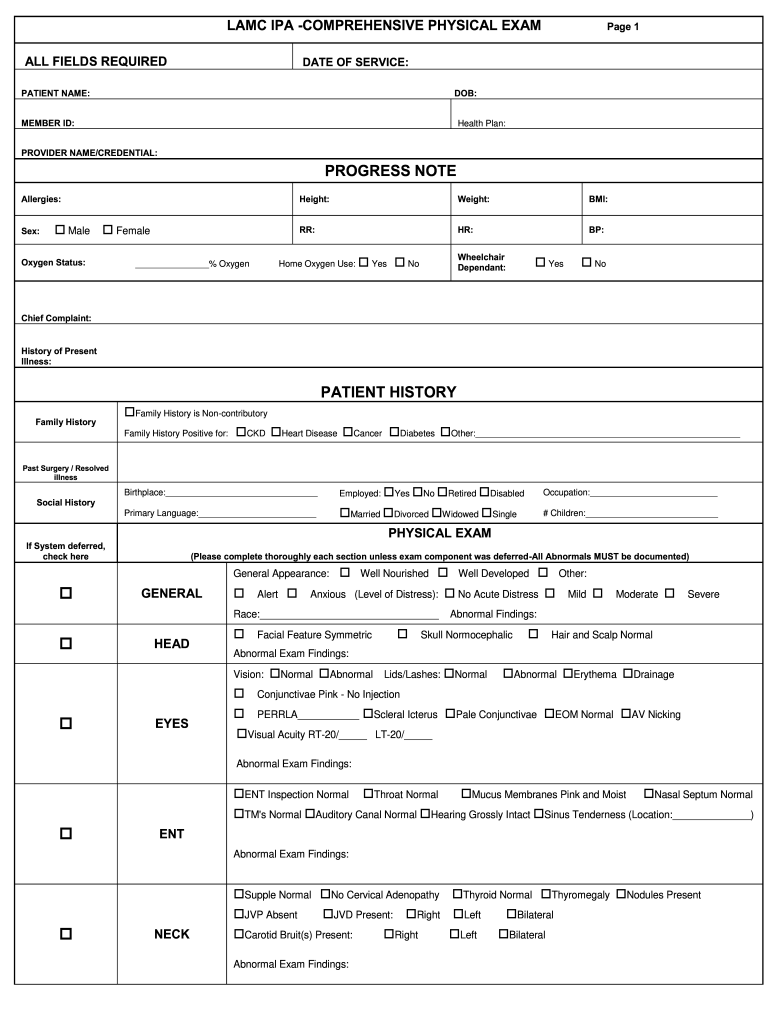
A Comprehensive Physical Exam (CPE) is a detailed evaluation conducted by healthcare providers to assess a patient's general health status. It typically includes a thorough review of a patient's medical history, a complete physical examination, and discussions about lifestyle choices and preventive measures. Unlike routine exams, a CPE is often more extensive, focusing on both immediate health concerns and potential future risks.
- Medical History Review: Involves collecting information on past illnesses, surgeries, allergies, medications, and family medical history.
- Physical Examination: Assessment of multiple body systems, including cardiovascular, respiratory, gastrointestinal, and neurological systems.
- Preventive Health: Discussion of immunizations, screenings, and lifestyle adjustments to encourage long-term well-being.
Key Elements of the Comprehensive Physical Exam
A CPE form typically includes several sections designed to capture essential health information.
- Personal Information: Includes sections for patient demographics such as name, age, contact information, and insurance details.
- Vital Signs: Measurements such as heart rate, blood pressure, temperature, and respiratory rate.
- System Evaluations: Separate areas for detailed assessments of systems like the respiratory and cardiac systems.
- Diagnosis and Management Plan: Space for healthcare providers to outline diagnoses and recommended treatments.
Steps to Complete the Comprehensive Physical Exam
Completing a CPE involves several critical steps to ensure a comprehensive assessment of health.
- Preparation: Gather previous medical records and list current medications.
- Patient Interview: Discuss medical history, current symptoms, and health concerns.
- Physical Examination: Conduct detailed checks of each body system.
- Analysis: Evaluate findings to identify diagnoses or conditions.
- Consultation: Discuss results with the patient and suggest preventive measures.
Importance of the Comprehensive Physical Exam
Conducting a CPE is crucial for both patients and healthcare providers.
- Early Detection: Identifies potential health issues before they develop into more serious conditions.
- Establishing a Baseline: Provides a health record for future comparisons.
- Routine Maintenance: Ensures ongoing monitoring of chronic conditions.
Who Typically Uses the Comprehensive Physical Exam
CPEs are used by a wide range of healthcare providers, tailored to suit various patient needs.
- Primary Care Physicians: Use CPEs for routine health maintenance.
- Specialists: Modify exams to address specific medical fields like cardiology or endocrinology.
- Occupational Health Practitioners: Conduct exams to assess fitness for work.

How to Obtain the Comprehensive Physical Exam Form
There are multiple avenues to obtain a CPE form.
- Healthcare Facilities: Forms are typically available through clinics and hospitals.
- Online Health Portals: Various medical organizations offer downloadable forms.
- Insurance Providers: Some might provide specific forms required for claim processing.
Legal Use of the Comprehensive Physical Exam
CPE forms serve several legal purposes in healthcare settings.
- Documentation: Provides legal record-keeping for medical history and procedures.
- Insurance Claims: Required documentation for healthcare claims and reimbursements.
- Employment Requirements: Necessary documentation for roles requiring physical examinations for safety and liability reasons.
Important Terms Related to the Comprehensive Physical Exam
Familiarity with certain terms is beneficial for understanding and completing a CPE.
- BMI (Body Mass Index): A measurement that uses height and weight to estimate body fat.
- Monitoring: Regular observation or oversight of health conditions.
- Chronic Disease Management: Ongoing care to manage long-term health conditions.
State-Specific Rules for the Comprehensive Physical Exam
Some states in the U.S. have specific requirements or variations for conducting a CPE.
- School Physicals: Certain states have unique forms for students.
- Occupational Health: State regulations might dictate specific examinations for employees in certain industries, such as commercial driving.
- Insurance Regulations: State laws might influence the specifics of how a CPE is conducted related to insurance claims.
Examples of Using the Comprehensive Physical Exam
Examining scenarios where CPEs are pivotal:
- Annual Physicals: Regular check-ups to ensure ongoing health.
- Pre-Employment Testing: Evaluations to determine if a candidate meets health requirements for a specific job.
- Pre-Surgical Assessments: Detailed exams to assess fitness for undergoing surgery.




