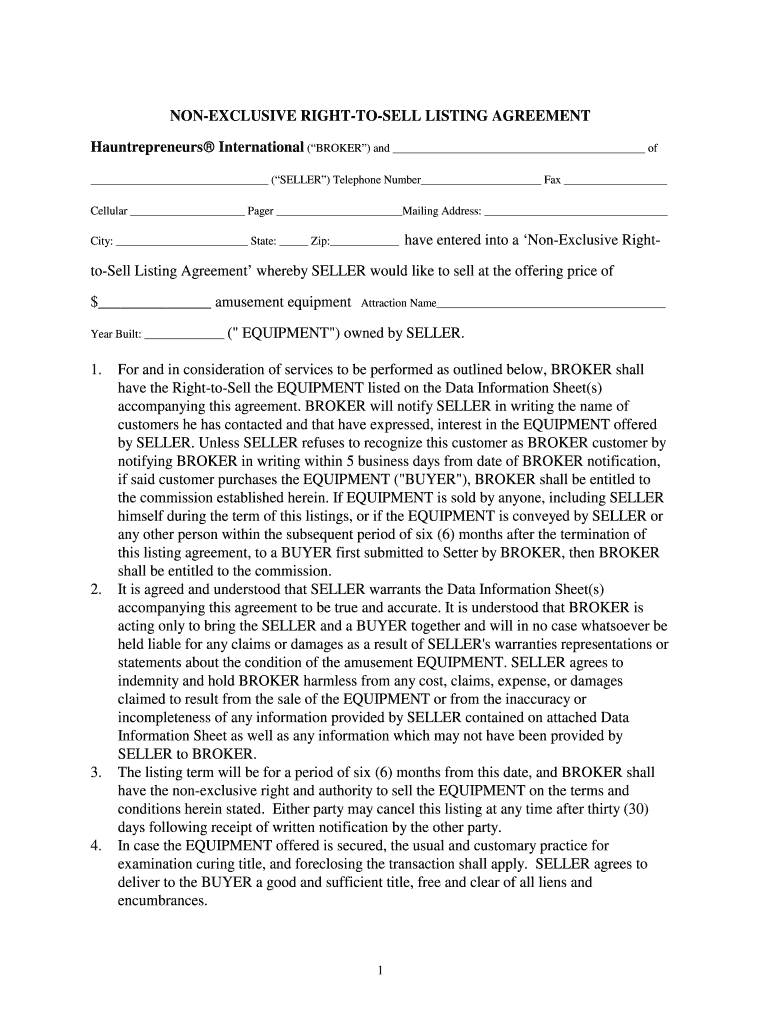







Definition & Meaning
A Non-exclusive Right-to-Sell Listing Agreement is a legal contract used between a broker and a seller, in this case within the scope of Hauntrepreneurs, to facilitate the sale of amusement equipment. This agreement grants the broker the right to market and sell the seller’s equipment, but it does not limit the seller from engaging other brokers or selling the equipment directly. The primary goal is to outline the roles and responsibilities of each party while detailing the conditions under which the sale will occur. Typically, it includes elements such as commission fees, marketing strategies, and the length of the agreement, providing both parties with clear expectations.
How to Use the Non-Exclusive Right-to-Sell Listing Agreement - Hauntrepreneurs
To use this particular agreement effectively, parties must ensure mutual understanding and agreement on all terms included. The seller should first determine the terms they are comfortable with, such as the duration of the agreement and acceptable commission rates. Both parties should meticulously review the document to avoid potential disputes. For instance, if a Hauntrepreneur wishes to sell specific amusement equipment, this should be clearly stated within the agreement. Additionally, the broker should use the agreement as a blueprint for their marketing and sales strategies, ensuring they align with any stipulations the seller has requested, such as restrictions on types of buyers or platforms used for promotion.
Steps to Complete the Non-exclusive Right-to-Sell Listing Agreement - Hauntrepreneurs
- Identify Parties Involved: Clearly state the full names and contact information of the broker and seller.
- Describe the Equipment: Provide comprehensive details about the amusement equipment, including make, model, and condition.
- Commission Structure: Outline the agreed-upon commission percentage or fee that the broker will receive upon sale.
- Duration of Agreement: Specify the start and end dates of the agreement, typically lasting six months.
- Broker Responsibilities: Detail the marketing and sales responsibilities that the broker will undertake.
- Seller Obligations: Define the responsibilities of the seller, including access provision for potential buyers if necessary.
- Signatures: Ensure both parties sign and date the agreement to make it legally binding.
Key Elements of the Non-Exclusive Right-to-Sell Listing Agreement - Hauntrepreneurs
- Commission Fees: The agreement delineates the broker's earnings, usually a percentage of the final sale price.
- Cancellation Terms: Include provisions for terminating the agreement if either party chooses to withdraw before the set duration ends.
- Indemnity Conditions: These clauses protect both parties from potential legal liabilities arising from the agreement's implementation.
- Confidentiality Agreements: Some agreements may include clauses that ensure proprietary or sensitive information is not disclosed outside the transaction.
Legal Use of the Non-exclusive Right-to-Sell Listing Agreement - Hauntrepreneurs
This type of agreement is legally protected under contract law, asserting that all parties must comply with outlined duties or face potential legal consequences. For Hauntrepreneurs, crafting a clear and comprehensive agreement helps ensure both broker and seller understand their legal rights and obligations. Legal assistance may be sought to ensure that all conditions within the contract adhere to state and federal regulations, thereby mitigating any potential disputes.
Who Typically Uses the Non-exclusive Right-to-Sell Listing Agreement - Hauntrepreneurs
Primarily, this agreement is employed by brokers and sellers within the specialized industry of amusement equipment sales. Brokers looking to expand their client base without geographical or exclusivity constraints favor this agreement as it allows flexibility in client acquisition and diverse product portfolios. Similarly, sellers who wish to maintain autonomy in selling their equipment often opt for non-exclusive agreements, allowing them to leverage multiple brokers or personal sales channels simultaneously.


Important Terms Related to Non-exclusive Right-to-Sell Listing Agreement - Hauntrepreneurs
- Brokerage: The act of facilitating a sale between the seller and potential buyer.
- Indemnity: A legal exemption from liabilities arising from certain actions during the execution of the agreement.
- Commission: The fee charged by the broker, usually a percentage of the sale price.
- Non-exclusivity: A condition allowing the seller to engage with multiple brokers or sell independently.
State-Specific Rules for the Non-exclusive Right-to-Sell Listing Agreement - Hauntrepreneurs
State laws can influence the structure and enforceability of these agreements. Some states might require specific disclosures or format adherence for the contract to remain valid. For instance, in states like California, real estate laws may influence certain elements such as commission caps or marketing restrictions. Sellers and brokers should consult state-specific regulations or legal professionals to ensure compliance with local laws, which can impact how agreements are drafted and enforced.
Versions or Alternatives to the Non-exclusive Right-to-Sell Listing Agreement - Hauntrepreneurs
The Non-exclusive Right-to-Sell Listing Agreement is just one format among several possibilities, each serving different strategic ends. Alternatives like Exclusive Right-to-Sell or Exclusive Agency Agreements are viable options, offering varying degrees of exclusivity and operational scope. Exclusive agreements often require more commitment from the broker, sometimes resulting in more intensive marketing efforts. Understanding these alternatives allows sellers to choose the agreement style that best suits their operational and strategic objectives.