






Definition and Meaning of a Rent to Own Contract
A rent to own contract, also known as a lease-option agreement, is a legal arrangement that combines rental of property with an option to purchase the property after a specified period. This hybrid agreement outlines the terms under which a tenant can rent a property while retaining the right to buy it before the lease expires. It targets individuals looking to purchase a home but who, due to various reasons such as financial constraints or insufficient credit scores, are not currently able to secure a mortgage.
- Lease Component: Under the lease segment, the prospective buyer rents the property for a set term, typically one to three years, during which they pay monthly rent. A portion of these rent payments, known as rent credits, may be applied towards the purchase price.
- Purchase Option: This section outlines the conditions for exercising the option to buy, including the agreed purchase price, which can be set at the time of agreement or based on a future appraisal.
How to Use the Free Rent to Own Contract - Sample Agreement Form
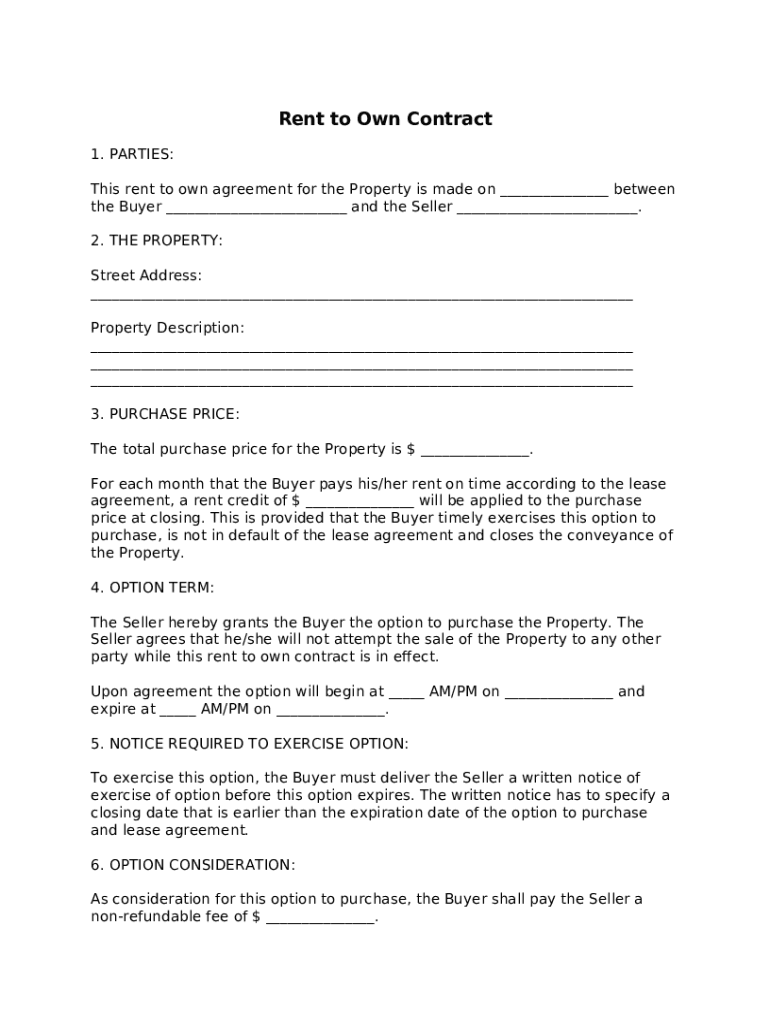
The sample rent to own agreement form is a structured template designed to facilitate understanding and crafting of a rent to own contract. It provides a framework for documenting the details of the agreement between the landlord (seller) and tenant (buyer).
- Initial Review: Begin by thoroughly reviewing the entire form to understand all sections and clauses.
- Customization: Modify sections to align with the specific terms agreed upon by the seller and buyer. This includes updating property details, rental terms, purchase price, and any additional clauses.
- Completion: Ensure all required fields, such as personal details of both parties, are filled in accurately.
Steps to Complete the Free Rent to Own Contract - Sample Form
Successfully completing the form requires careful attention to detail and adherence to legal standards.
- Fill in Personal Information: Enter the names, addresses, and contact details of both the seller and buyer.
- Describe the Property: Provide a comprehensive description of the property, including address, dimensions, and special features.
- Define Rent Terms: Specify the monthly rent amount, due dates, and any penalties for late payment. Include details on rent credits towards the purchase price.
- Outline Purchase Terms: Clarify the purchase price and conditions under which the buy option can be exercised. Include any deposit or option fees required.
- Specify Option Term: State the duration of the lease and the deadline for opting to purchase the property.
- Sign and Notarize: Both parties should sign the document before a notary public to ensure the legality of the contract.
Key Elements of a Free Rent to Own Contract - Sample Agreement Form
The rent to own contract contains essential components that should be understood clearly by both parties:
- Parties Involved: Identifies the seller and buyer, establishing their roles and responsibilities.
- Property Description: Details the property under consideration, avoiding any discrepancies or misunderstandings.
- Purchase Price and Terms: Sets a clear timeline and conditions for making an eventual purchase. Can include predetermined price or a price subject to future appraisal.
- Rent Calculation and Credits: Explains how rent payments contribute to the eventual purchase, clarifying how much will be credited.
- Option to Purchase: The buyer's right to buy the property within the lease period is central to the contract's intent.
Important Terms Related to the Rent to Own Contract
Understanding specific legal and contractual terms is crucial for both parties:
- Lease-Option: The agreement that provides an exclusive right to buy at a future date.
- Rent Credits: A portion of the rent allocated towards the purchase price, incentivizing the tenant to buy.
- Option Fee: An upfront, often non-refundable, fee paid for the opportunity to purchase the property.
- Default Clauses: Provisions that outline consequences of a breach of agreement by either party.
Legal Use of the Rent to Own Contract
A rent to own contract is legally binding and must comply with state-specific laws and regulations. Understanding these legal aspects ensures that the rights of both parties are protected.
- State Laws: Each state may have unique laws governing real estate transactions. It's crucial for sellers and buyers to comply with regional legislation.
- Contractual Obligations: Both parties must uphold their end of the deal. Failure to do so may result in legal consequences, such as forfeiture of option fees or loss of purchase rights.
- Consumer Protections: Laws protect buyers against unfair terms or fraud, ensuring the agreement is fair and transparent.
State-Specific Rules for Rent to Own Contracts
Different states impose varying requirements on rent to own contracts:
- Disclosures: Some states mandate sellers to disclose specific property information to protect prospective buyers.
- Registration: Certain jurisdictions might require recording the agreement with a governmental body for it to be enforceable.
- Fair Housing: Compliance with fair housing laws is essential, precluding discriminatory practices against potential buyers based on race, religion, or other protected characteristics.
Examples of Using a Rent to Own Contract
Real-world scenarios illustrate how rent to own agreements can be beneficial:
- Credit Building: A family unable to secure a mortgage due to poor credit utilizes the contract to rent while improving their creditworthiness, planning to purchase within three years.
- Property Testing: A tenant uses the lease period to assess if the home meets their long-term needs before committing to the purchase.
- Investment Strategy: Investors opt for renting with an intention to buy once property values appreciate, securing a price today for future benefits.