







Definition and Meaning of Septic System Inspection for Real Estate Transactions
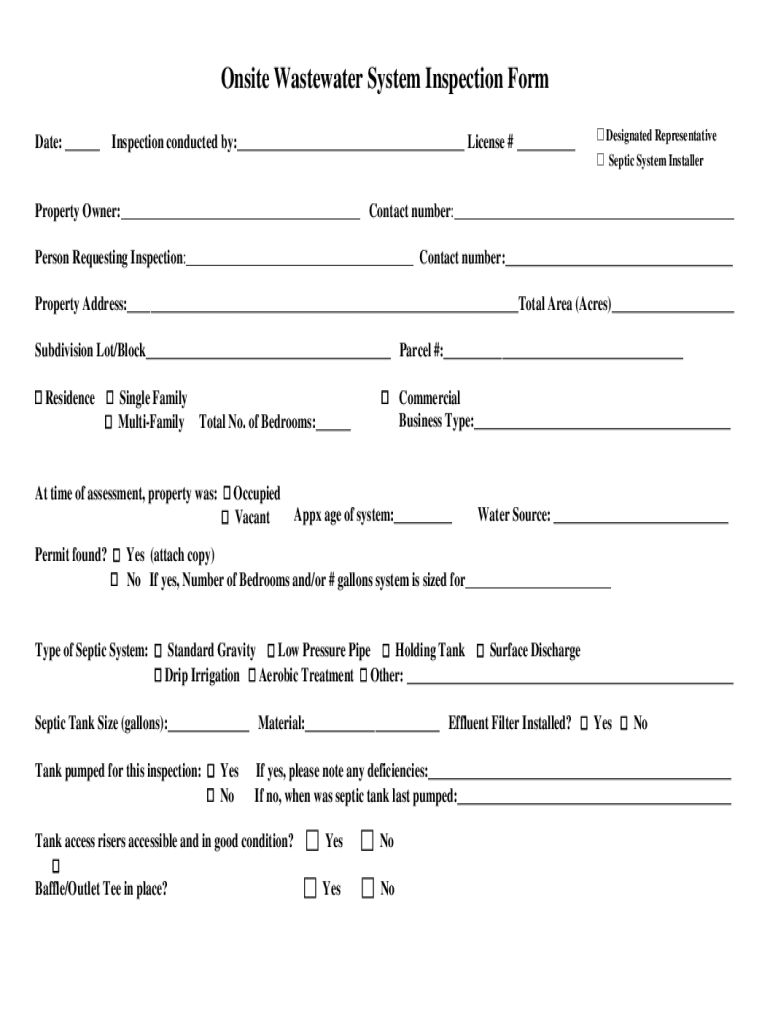
The "Septic System Inspection for Real Estate Transaction" form is commonly used to ensure that a property's septic system is functioning properly before the closing of a real estate deal. This inspection involves evaluating the overall health, efficiency, and adherence to regulations of the septic system to guarantee it meets local health standards. The main goal is to protect buyers and sellers by disclosing any potential issues that might affect property value or lead to future repairs. The evaluation includes examining system components like tanks, distribution boxes, and drain fields.
Key Elements of the Septic System Inspection for Real Estate Transaction
The form includes several critical sections that collect detailed information about the septic system. These include:
- Property Details: Includes address, owner’s details, and a description of the property size and layout.
- System Type: Identifies the type of septic system, such as conventional, aerobic, or alternative systems.
- Inspection Findings: A detailed report of the current condition of each component of the system.
- Maintenance Recommendations: Suggestions for improving system operation or addressing minor issues.
- Overall Functionality Assessment: A summary of whether the system is currently functional, with any limitations noted.
Steps to Complete the Septic System Inspection for Real Estate Transaction
- Gather Necessary Documents: Collect past maintenance records and system diagrams.
- Hire a Certified Inspector: Ensure the inspector is licensed and familiar with local regulations.
- Perform the Physical Inspection: The inspector will open various components of the system to check for signs of damage or malfunction.
- Review Findings with Inspector: Discuss any issues found, particularly those needing immediate attention.
- Fill out the Form: Enter all gathered information accurately into the form.
- Submit the Form: Provide copies to relevant parties, including potential buyers, sellers, and real estate agents.
Why Conduct a Septic System Inspection for Real Estate Transactions
Conducting a septic system inspection is crucial for multiple reasons:
- Mitigates Future Problems: Identifying issues before purchase can prevent significant repair costs.
- Protects Buyer Interests: Ensures that buyers are aware of the condition of the septic system, which can influence purchasing decisions.
- Compliance with Regulations: Many states require septic inspections as part of the real estate transaction process.
- Peace of Mind: Both buyers and sellers are reassured that the septic system is compliant with environmental standards.
State-Specific Rules for Septic System Inspection
Different states in the U.S. have varying requirements and regulations concerning septic system inspections. For example:
- California: Requires septic inspections under certain circumstances, such as the transfer of property ownership.
- Florida: Emphasizes inspections in environmentally sensitive areas to protect water quality.
- Massachusetts: Mandates a Title 5 inspection before the sale of any property with a septic system.
Understanding these rules is essential to ensure compliance and avoid legal issues.
Who Typically Uses the Septic System Inspection for Real Estate Transaction
The form is used by various stakeholders in the real estate process:
- Home Buyers: To evaluate if the property’s septic system meets their needs and expectations.
- Home Sellers: To provide transparency and expedite the sales process by demonstrating the system's condition.
- Real Estate Agents: To facilitate smoother transactions by ensuring all necessary inspections are completed.
- Lenders: Banks and mortgage lenders may require proof of a successful inspection for loan approvals.


Legal Use of the Septic System Inspection for Real Estate Transaction
Septic system inspections must be conducted within the legal framework established by local health departments and environmental agencies. This includes:
- Following Accurate Reporting Guidelines: Accurate and complete reporting is mandatory to avoid misrepresentation.
- Compliance with Local Codes: Ensure all findings and suggestions align with state and local septic system codes.
- Documentation Maintenance: Keep detailed records of inspection reports and any subsequent repairs or upgrades.
Examples of Using the Septic System Inspection for Real Estate Transaction
- Scenario 1: A family purchasing a rural home requests an inspection and discovers the septic tank needs replacement due to cracks. The seller agrees to cover the costs, allowing the sale to proceed.
- Scenario 2: A seller proactively conducts an inspection to streamline the sale process. The report returns clean, giving buyers confidence to submit favorable offers.
- Scenario 3: An inspection reveals a minor issue in a drain field, prompting negotiation adjustments and setting a timetable for repairs post-sale.




