
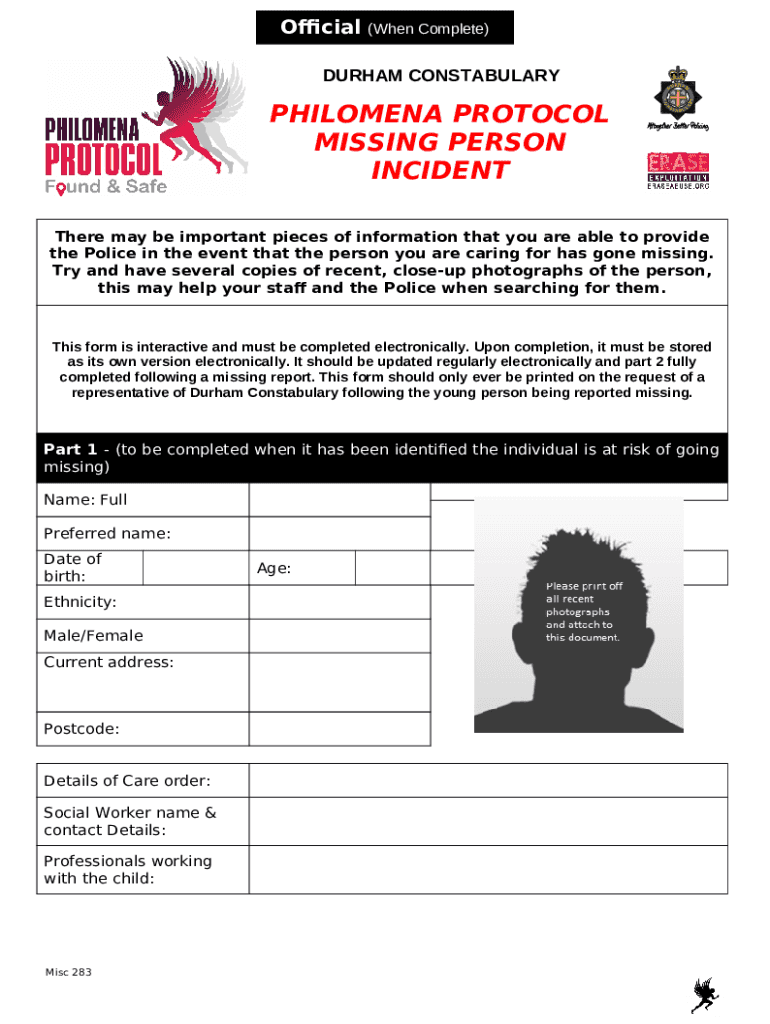







Definition & Meaning
The Philomena Protocol, developed by Durham Police, is a strategic framework designed to address missing person incidents concerning children in care. It serves as a structured guide for the collection and organization of critical information about at-risk individuals. By systematically gathering personal details, care orders, and historical data on previous incidents, the protocol assists law enforcement in expediting search efforts and protecting vulnerable children. The implementation of the Philomena Protocol underscores the vital role of streamlined communication and efficient information management in safeguarding child welfare.
How to Use the Durham Police's Philomena Protocol to Help Children in Care
Utilizing the Philomena Protocol effectively involves several key steps to ensure comprehensive information management:
- Data Collection: Begin by gathering pertinent information about the child, including name, date of birth, and physical characteristics.
- Care History: Document details of past care arrangements, including any existing care orders or legal directives.
- Missing Person Reports: Integrate previous incident reports to provide context and identify patterns or recurring issues.
- Communication Channels: Establish contact with significant individuals in the child’s life, such as family members, caregivers, and social workers, to compile potential leads.
- Form Digitization: Utilize electronic means for data input and form updates to ensure accuracy and accessibility.
- Integration with Police Systems: Seamlessly integrate information from the protocol into broader police reports and systems to facilitate a coordinated response.
Steps to Complete the Durham Police's Philomena Protocol to Help Children in Care
Completing the Philomena Protocol involves a sequential approach to ensure comprehensive data gathering and document preparation:
- Initial Assessment: Identify the necessity of the protocol by evaluating the risk factors that suggest a higher likelihood of the child going missing.
- Form Accessibility: Obtain the protocol in its latest version, ensuring all stakeholders have access to the most up-to-date form.
- Detail Entry: Input all required information into designated fields, ensuring accuracy and completeness.
- Cross-Verification: Review and cross-verify the entered data with existing records to eliminate discrepancies.
- Regular Updates: Implement procedures for periodic reviews and updates of the protocol, especially after notable changes in the child’s circumstances or care arrangements.
- Secure Submission: Send the completed form securely, maintaining confidentiality and integrity of sensitive information.
Key Elements of the Durham Police's Philomena Protocol
Several critical elements form the backbone of the Philomena Protocol:
- Identifying Information: Includes basic details such as name, age, and a physical description of the child.
- Legal Documentation: Encompasses any care orders, court directives, or legal notes relevant to the child’s custodianship.
- Incident Log: A history of past occurrences where the child went missing, along with detailed notes and outcomes.
- Contact Network: A compilation of significant contacts like relatives, friends, or professionals linked to the child's welfare.
- Assessment of Risk Factors: An analysis of elements such as the child’s behavior, emotional state, and environmental influences that could impact their propensity to go missing.
Legal Use of the Durham Police's Philomena Protocol
Understanding the legal framework surrounding the Philomena Protocol is crucial for its correct application:
- Statutory Compliance: Ensure adherence to laws governing child protection and welfare in the formulation and execution of the protocol.
- Data Protection: Follow regulations related to the handling and storage of personal data, maintaining confidentiality at every stage.
- Law Enforcement Collaboration: Work within established legal boundaries to share necessary information with law enforcement agencies, ensuring that the protocol supports but does not overstep legal obligations.
Who Typically Uses the Durham Police's Philomena Protocol
The primary users of the Philomena Protocol include:
- Law Enforcement Officers: Engage with the protocol to manage missing person cases more efficiently.
- Social Workers and Caregivers: Use the protocol to document and communicate the care history and status of vulnerable children.
- Legal Professionals: May refer to the protocol in legal proceedings or child welfare assessments.
- Child Protection Agencies: Implement the protocol as a part of broader child safeguarding strategies to monitor and protect at-risk individuals.


State-Specific Rules for the Durham Police's Philomena Protocol
While the Philomena Protocol is a specific tool utilized by Durham Police, similar frameworks may exist across various jurisdictions with localized adaptations:
- Jurisdictional Variations: Recognize that each state or country may have its own guidelines and rules, affecting how the protocol or similar documents are applied.
- Regulatory Differences: These variations can include differences in reporting requirements, legal thresholds for intervention, and mandatory notifications.
Examples of Using the Durham Police's Philomena Protocol to Help Children in Care
Real-world applications of the Philomena Protocol demonstrate its effectiveness:
- Case Study 1: A child frequently went missing from care. Employing the protocol allowed for rapid data collection, contact of crucial networks, and successful recovery.
- Case Study 2: In a complex legal scenario involving custody disputes, precise documentation via the protocol informed both police action and subsequent legal decisions.
- Case Study 3: By regularly updating the protocol forms, a care facility was able to identify patterns leading to strategic interventions before a child could go missing again.




