
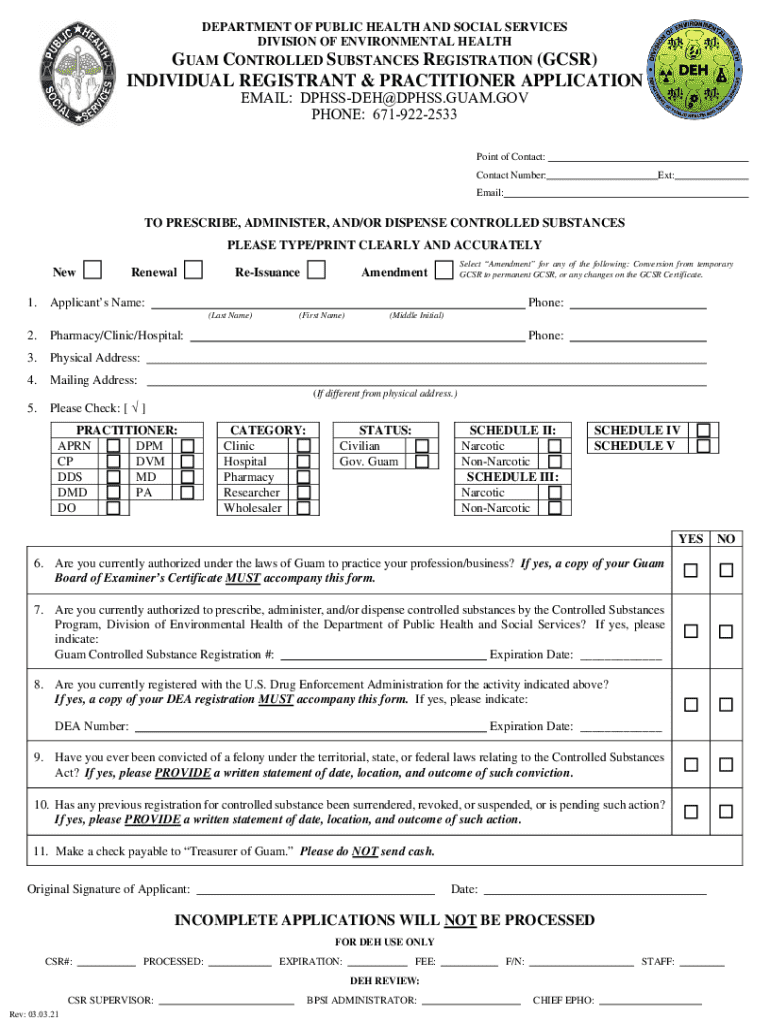







Definition and Purpose of Guam Controlled Substances Registration (GCSR - DPHSS)
The Guam Controlled Substances Registration (GCSR), managed by the Guam Department of Public Health and Social Services (DPHSS), is a regulatory requirement for individuals and practitioners involved in handling controlled substances within Guam's jurisdiction. This registration aims to monitor and control the distribution, manufacturing, and dispensing of scheduled drugs to ensure compliance with legal standards, prevent misuse, and protect public health. By registering, entities demonstrate their adherence to regulations governing controlled substances and their commitment to responsible practice.
Eligibility and Requirements for GCSR
To obtain a GCSR, applicants must meet specific eligibility criteria and adhere to the stipulated requirements. The primary applicants include healthcare practitioners, researchers, pharmacies, and manufacturers involved in the handling or prescribing of controlled substances. Key eligibility considerations include:
- Professional Licensing: Applicants must hold a valid professional license in their respective field, whether it be medical, pharmaceutical, or research-oriented.
- Personal Information: Submission of personal details, including legal name, contact information, and professional certifications.
- Background Check: Disclosure of any prior legal issues related to controlled substances, ensuring that registrants have a clear professional record.
How to Obtain Guam Controlled Substances Registration (GCSR - DPHSS)
Obtaining a GCSR involves several steps, from application submission to final approval by the DPHSS. The procedure is as follows:
- Application Submission: Complete the GCSR application form, available on the DPHSS website, ensuring all sections are duly filled.
- Attach Required Documents: Include necessary documentation such as copies of professional licenses, proof of identity, and any supplementary materials required.
- Fee Payment: Pay the applicable fee, which varies based on the type of registrant and the nature of controlled substance activities proposed.
- Submit Application: Applications can typically be submitted online or via mail, depending on the DPHSS's current submission protocols.
- Await Approval: Processing times may vary; ensure all information is accurate to avoid delays.
Key Elements and Considerations for GCSR
The GCSR encompasses imperative elements that registrants must understand and adhere to:
- Registration Validity: Licenses are subject to renewal, generally on an annual basis. Timely renewal is crucial to maintain compliance.
- Record Keeping: Registrants must maintain comprehensive records of all transactions involving controlled substances.
- Adherence to Guidelines: All activities must comply with both local and federal regulations concerning controlled substances.
Legal and Compliance Aspects of GCSR
Holding a GCSR ensures that controlled substances are managed legally and ethically. Compliance with GCSR involves:
- Regular Audits: DPHSS may conduct inspections to verify compliance.
- Violations and Penalties: Non-compliance with GCSR requirements can lead to fines, license suspension, or revocation.
- Controlled Substance Schedules: Understanding the categorization of substances to ensure correct handling and prescribing.
Who Typically Uses the Guam Controlled Substances Registration
The GCSR is primarily used by professionals in the healthcare and pharmaceutical industries, including:
- Doctors and Nurses: Those who prescribe or dispense medications.
- Pharmacists: Individuals responsible for managing pharmacy operations.
- Researchers: Academic or corporate researchers conducting studies involving controlled substances.


Steps to Complete the GCSR Application
Completing the GCSR application accurately is crucial for successful registration:
- Gather Documentation: Collect all necessary documents before starting the application.
- Complete the Form: Fill out the application form, ensuring all sections are thoroughly addressed.
- Review Details: Double-check all entered information for accuracy.
- Submit Application: Send the completed form and documents to the designated DPHSS office.
- Follow-up: Monitor the application's status and respond promptly to any requests from DPHSS for additional information.
Important Terms and Conditions Related to GCSR
Understanding key terms and conditions associated with the GCSR is essential:
- Controlled Substances: Substances that have regulatory restrictions due to potential abuse or dependence.
- Registrant Obligations: Duties related to the security, tracking, and reporting of controlled substances.
- Renewal Process: Requirements and timeline for renewing GCSR to prevent registration lapses.
Form Submission Options for GCSR
Applicants can submit GCSR applications through several methods, dictated by current DPHSS guidelines:
- Online Submission: Many find this method convenient, offering immediate confirmation and tracking.
- Mail Submission: Traditional option for those preferring hard copy applications.
- In-Person Submission: Direct contact for immediate clarification of issues or queries.
Common Issues and Resolutions in GCSR Application
Applicants may encounter common hurdles during the GCSR process:
- Incomplete Documentation: Ensure all required materials accompany the application.
- Incorrect Information: Errors can delay processing; verify all entries.
- Delayed Responses: Timely communication with DPHSS expedites resolution of any application issues.
Importance of the GCSR for Practitioners
The GCSR serves as a safeguard for responsible practitioners and institutions:
- Public Health Protection: Ensures substances are used safely, minimizing risks of diversion or abuse.
- Ethical Standards: Fosters accountability and professional integrity among registrants.
- Legal Assurance: Compliance with legal requirements reduces exposure to legal risks or sanctions.
State-Specific Regulations and Differences
While the GCSR is specific to Guam, similar controlled substances regulations are observed across U.S. territories and states, each with unique adaptations:
- Jurisdictional Adjustments: Modifications specific to Guam address local health priorities and drug trends.
- Interstate Transfers: Coordination with other U.S. regions for substances transported across jurisdictions.
Understanding these regulations ensures that practitioners are equipped to manage controlled substances, contributing positively to public health outcomes while remaining compliant with legal mandates.




