






Definition & Meaning
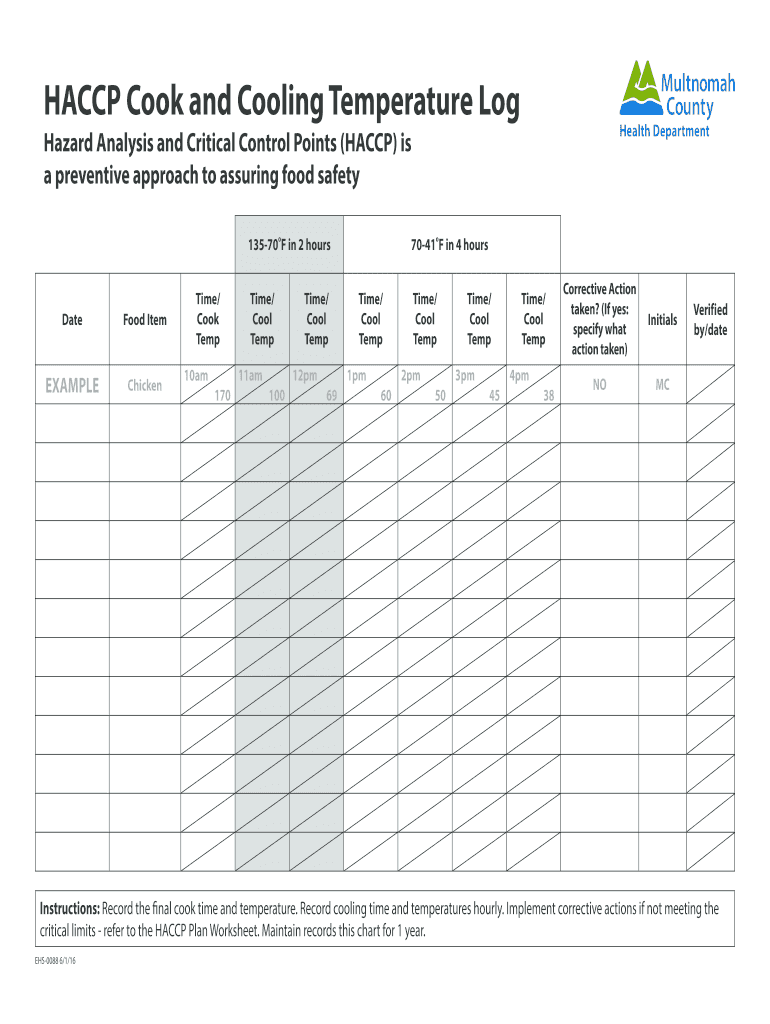
The HACCP Cook and Cooling Temperature Log is a critical tool used in the food service industry to ensure the safety of food through consistent monitoring and recording of cooking and cooling temperatures. The term HACCP stands for Hazard Analysis Critical Control Point, a systematic preventive approach to food safety that identifies potential hazards in food production processes and implements measures to eliminate or reduce those risks to safe levels. In this context, the temperature log is used to document the times and temperatures at which food is cooked and cooled, ensuring compliance with safe practices and regulatory standards.
Key Elements of the HACCP Cook and Cooling Temperature Log
The HACCP Cook and Cooling Temperature Log typically includes several vital components that facilitate thorough record-keeping and compliance with safety standards:
- Food Item Identification: A section to specify the type of food being monitored.
- Cooking Temperature Recording: Fields to log the exact temperatures the food reaches during cooking.
- Cooling Temperature Recording: Sections to record temperatures at different stages of cooling.
- Date and Time Stamps: Accurate logging of when each temperature check occurs.
- Corrective Actions: Documentation of any steps taken if critical temperature limits are not met.
These elements help ensure that all necessary data is captured systematically for safety audits and regulatory inspections.
How to Use the HACCP Cook and Cooling Temperature Log
Using the HACCP Cook and Cooling Temperature Log effectively involves a systematic approach to recording temperature data. Here is a detailed breakdown of the process:
- Identify Food Items: Begin by noting the specific food items being cooked and cooled.
- Monitor Cooking Temps: Regularly check and log temperatures at critical points during the cooking process.
- Document Cooling Procedure: Record the time and temperatures at various stages of cooling to ensure proper handling.
- Take Corrective Measures: If temperatures fall outside of safe ranges, document the corrective actions taken and adjust procedures as necessary.
- Maintain Records: Store the completed logs in a secure location for a minimum of one year for compliance and audits.
These steps help in maintaining consistent food safety standards.
Steps to Complete the HACCP Cook and Cooling Temperature Log
Completing the HACCP Cook and Cooling Temperature Log requires attention to detail. Here is a comprehensive sequence of steps:
- Pre-Cooking Preparation: Verify the accuracy of thermometers and calibrate if necessary.
- Temperature Recording: During cooking, use a calibrated thermometer to check that temperatures reach specified critical limits and record these in the log.
- Cooling Monitoring: After cooking, begin monitoring the food's cooling process, ensuring that it reaches safe temperatures within required time frames.
- Corrections and Adjustments: Note and correct any deviations from critical temperature limits promptly.
- Final Review: After data collection, review the log to ensure completeness and accuracy.
Following these steps ensures that the log serves its purpose as an effective food safety management tool.
Why Should You Use the HACCP Cook and Cooling Temperature Log
Utilizing the HACCP Cook and Cooling Temperature Log is essential for several reasons:
- Food Safety Compliance: Maintains alignment with health and safety regulations.
- Risk Mitigation: Identifies potential safety hazards early, preventing foodborne illnesses.
- Regulatory Evidence: Provides verifiable records during safety audits or inspections.
- Quality Control: Ensures food products meet safety and quality standards.
- Operational Efficiency: Promotes consistency in food preparation processes.
These advantages make it a vital component of any food safety management system.
Important Terms Related to HACCP Cook and Cooling Temperature Log
Some key terms are essential for understanding the HACCP Cook and Cooling Temperature Log:
- Critical Control Point (CCP): A stage in the food processing process where control is necessary to prevent or eliminate hazards.
- Thermometer Calibration: Ensuring the accuracy of temperature measuring devices.
- Corrective Action: Steps taken to rectify deviations from critical limits.
- Hazard: A biological, chemical, or physical agent in food with the potential to cause adverse health effects.
These terms form the foundation of comprehending and implementing a HACCP-based food safety plan.
Examples of Using the HACCP Cook and Cooling Temperature Log
Real-world scenarios reflect the utility of the HACCP Cook and Cooling Temperature Log:
- Restaurant Kitchens: Chefs consistently log cooking and cooling temperatures during peak service hours to maintain compliance with safety standards.
- Catering Services: Staff use temperature logs to assure clients of food safety during large events with once-cooked, reheated dishes.
- School Cafeterias: Food service workers follow strict temperature monitoring procedures to ensure student meals are safe for consumption.
These examples illustrate the log's practical applications across various food service operations.
Who Typically Uses the HACCP Cook and Cooling Temperature Log
The primary users of the HACCP Cook and Cooling Temperature Log include:
- Restaurants: To ensure all menu items are cooked and cooled to safe temperatures.
- Food Manufacturers: To comply with regulations governing the safety of mass-produced food items.
- Institutional Food Services: Including schools, hospitals, and nursing homes, where food safety is paramount due to vulnerable populations.
These users rely on the logs to protect consumers and maintain operational standards.